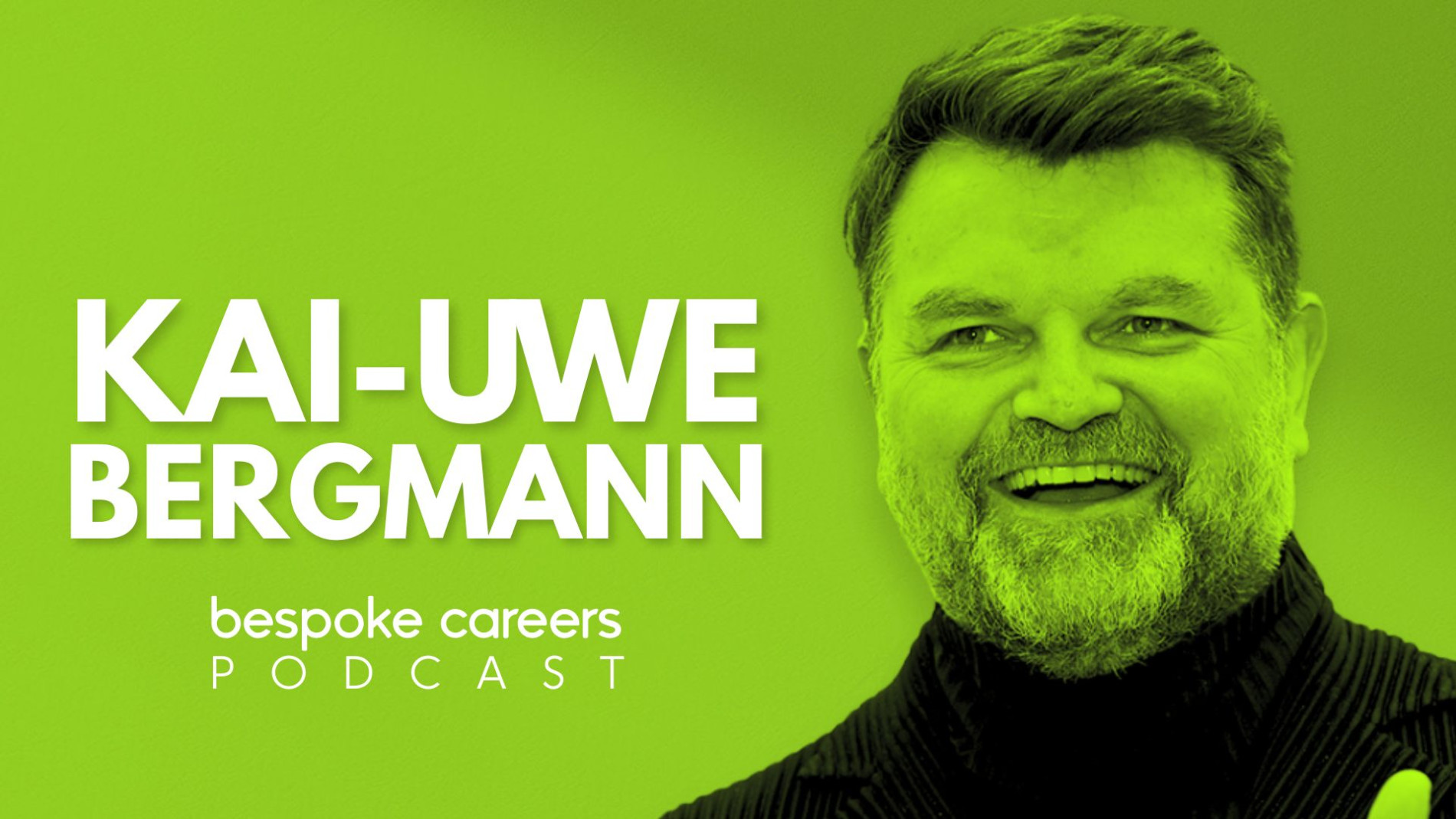
How We Scaled BIG Globally – Kai-Uwe Bergmann
Kai-Uwe Bergmann discusses his journey from medieval German towns to global partnership at BIG while exploring how craft, culture, and a relentless curiosity shape the built environment.
Kai-Uwe Bergmann is a Partner at Bjarke Ingels Group (BIG), where he leads global business development and oversees urban design and landscape projects. Known for his strategic approach to “the political scale,” Bergmann has been instrumental in scaling BIG from a Copenhagen-founded practice into a global force operating in over 40 countries. He is a primary contributor to Manhattan’s “Big U,” a 10-mile coastal resiliency project designed to protect the city from future climate events.
BIG, often described as “pragmatic utopian,” focuses on transforming complex societal challenges (from energy and food distribution to affordable housing) into opportunities for design innovation.
Bergmann’s personal journey, spanning from a German upbringing to an apprenticeship in glassmaking and stone masonry, informs his belief that architecture is a “limitless” field that requires the investigative skills of a detective and the foresight of a strategist.
On the choice of architecture…
Fundamentally it is an omnivorous appetite to learn and to experience. I think I chose architecture in many ways because it is limitless. It is endless. You can continue to bring in other facets of life, anthropology, biophilia, and craftsmanship. There are so many different ways of getting into the field and making it something that is interesting to you. That was something that caught my interest very early on. It was there in school when I studied about six different fields and continued to assemble a lot of different experiences. I went out after I studied and I apprenticed in different materials. Then I finally found a place of nirvana because BIG is so omnivorous in its approach to design.
On growing up between cultures…
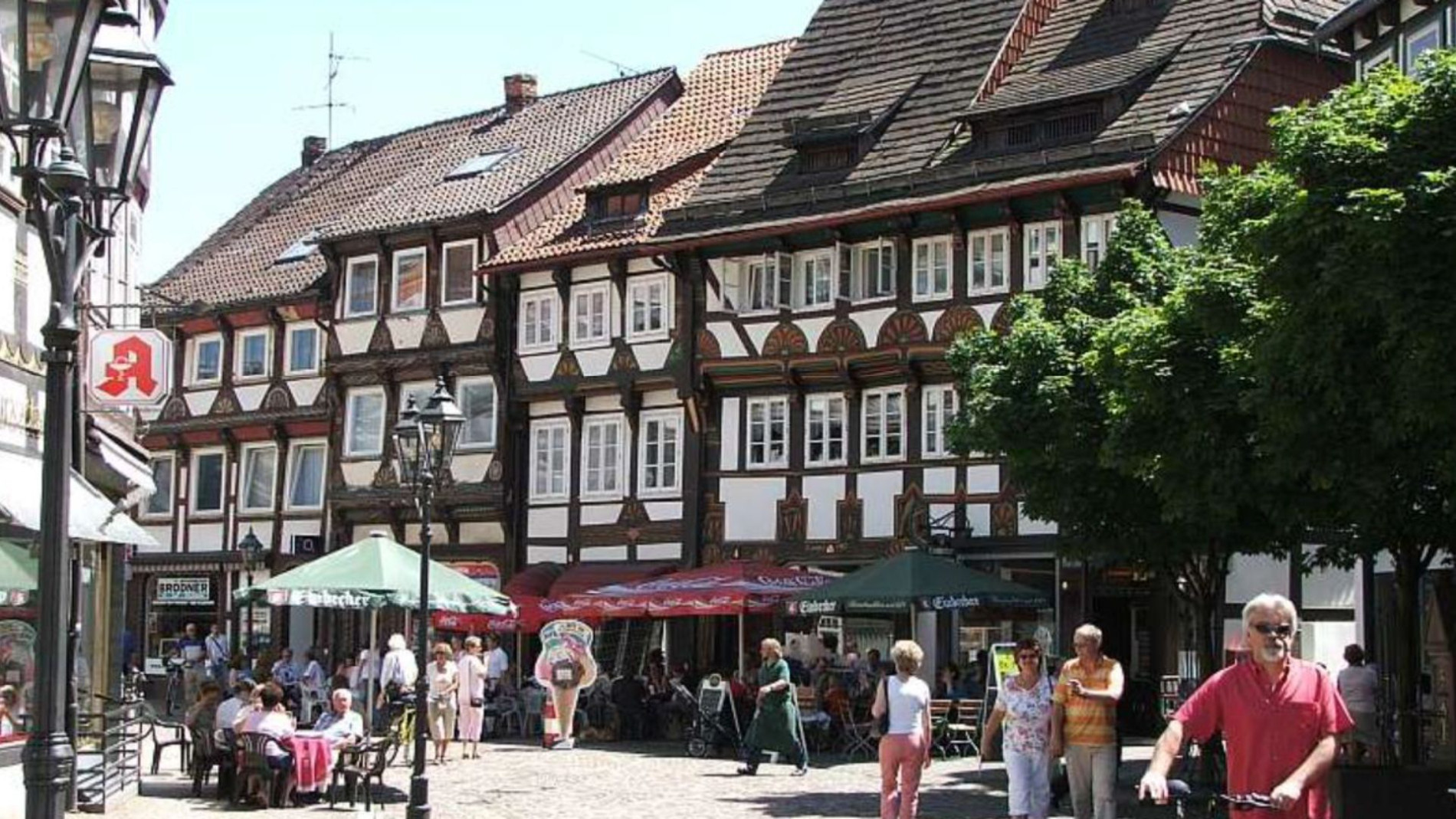
It was really being steeped in a kind of medievalness where I was born, from medieval architecture and castles to the timber frame houses. To then actually come to a place like Georgia, a mill town in the middle of nowhere, and to a country that is at once a very young country but also the oldest democracy, it has a certain legacy. I began to become really fascinated by American history and getting really into all of the different ways of actually becoming a country. I discovered the indigenous populations and the history of people who crossed the Bering Strait and populated the Americas to begin to actually understand the complexities of this new place that I called home. Because I came over so young, I felt at home in both places. In the United States I felt American and then in Europe I felt very much connected to the place that I was born.
On the immigrant perspective…
Any immigrant that leaves a home, maybe also places of comfort, or is experiencing the tremendous change of entering into a new environment and a new culture can relate to this. It really did prepare me for discovery. I immediately connected with the other immigrants in my hometown and we were only about five different nationalities because it was a very small town that was quite Southern. There was one Korean family, one British family, one Indian family, and one German family. We found each other and we created our own set of rules and values and things that our parents had brought with them. There was a lot of sharing between us. It was incredible because it also prepared me to seek those things when I went out into the world.
On early inspirations…
It is probably a story that you hear a lot, but the incredible tool of Lego and the limitless possibilities were my start. You are building worlds and building futures. That quickly moved into traveling with my parents. Whenever we traveled, we went to see architecture. We went to see cathedrals and castles. We went to see incredible landscapes and geographies. When I was thinking of a profession, that omnivorousness of appetite and at the same time being inspired so much when I was in these spaces in my teens made architecture something for me. There were really no architects in this town of LaGrange, Georgia that I knew of. I never interacted with an architect and never knew about Frank Lloyd Wright whatsoever, but I was drawn to the idea of building these types of spaces.
On material apprenticeships…
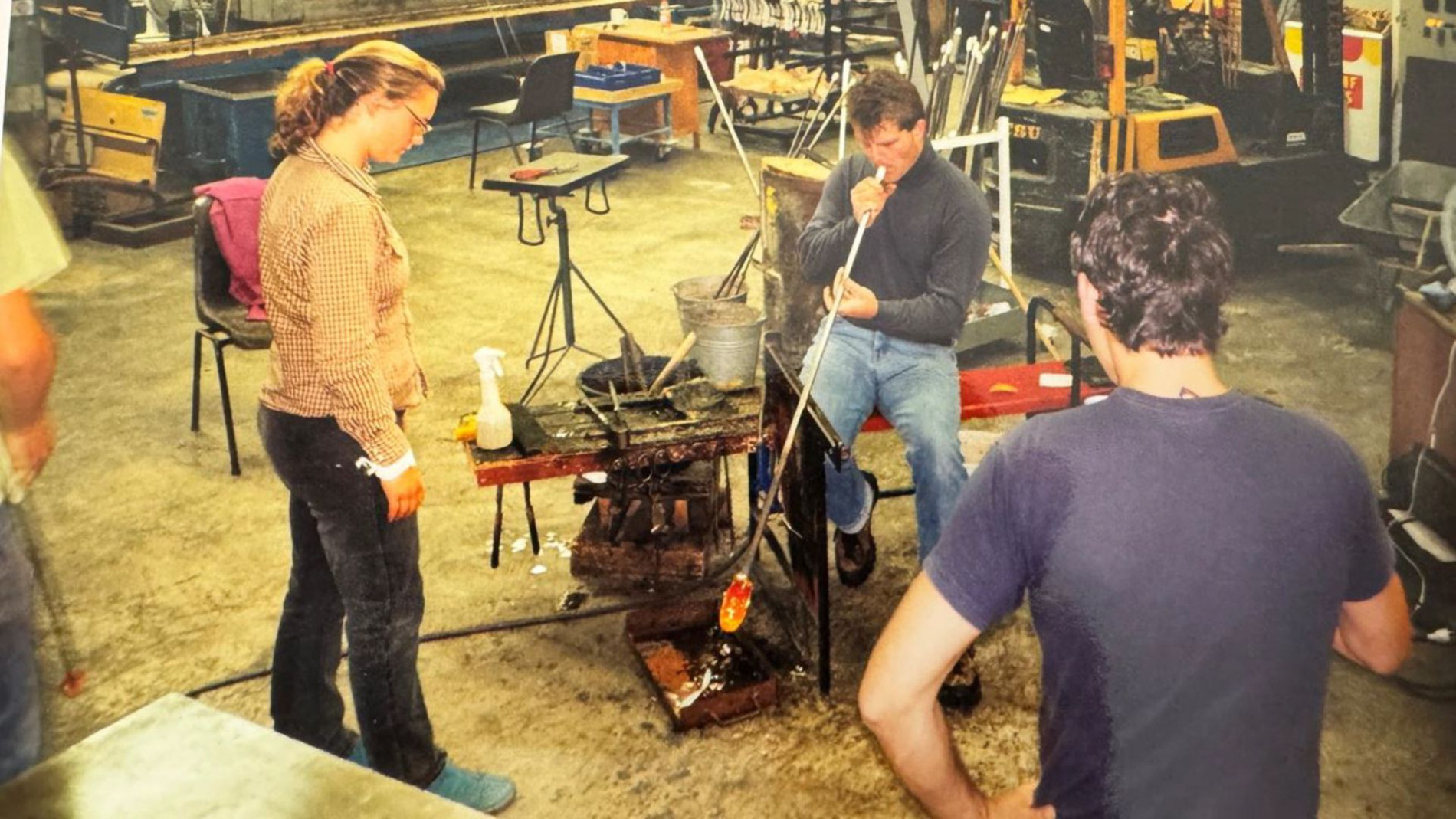
I did choose the schools and universities that I attended to experience certain things. In Virginia, which was a liberal arts college where I started learning about architecture, I had an incredible example in Thomas Jefferson’s Rotunda and the Lawn as to what architecture could actually aspire to. Then I went to Los Angeles which was just this place in the nineties where you could try out anything and everything. It seemed a place that attracted a lot of great design talent. My connection to the Southern California Institute of Architecture actually brought me to Europe where I became a teaching assistant in their Swiss program. That allowed me to have a home base while I started looking for different apprenticeships. The glass blowing was one of about five different materials that I delved into, but certainly the glass was the most magical because you could make anything. I hung out in the glass scene for about three more years after I completed the apprenticeship.
On career experimentation…
I think you can really do great things in crisis. We had a financial crisis back in the early nineties when I finished my first undergraduate degree. There was not a lot of work and I think unemployment was around 20 or 30 percent for architects. Therefore I stayed in school and I went to my apprenticeships. It was within that crisis that it asked me to consider different pathways. It made me not work for an architect because there were not a lot of those opportunities. It makes you begin to be creative in the way that you start a career.
I often say that I do not look negatively at an early career designer hopping from one thing to the next. In a way, if you are dabbling or you are experimenting and you are finding your own way, it is a great way to learn. I spent six months here and six months there. I was assembling skill sets that I had a sort of confidence were leading me to some place that I did not yet know. It was the assembly of all of those different experiences that have shaped who I am and the respect that I have for all of these different craftspeople and trades. It is important to be open to experiences and not to force things. Let them just sort of percolate and develop into something. The beauty of our profession is that you learn a set of tools that you can do anywhere. Learning how to speak in a sort of design language and learning how to use a few of the technological tools lets you have a journey.
On meeting Bjarke Ingels…
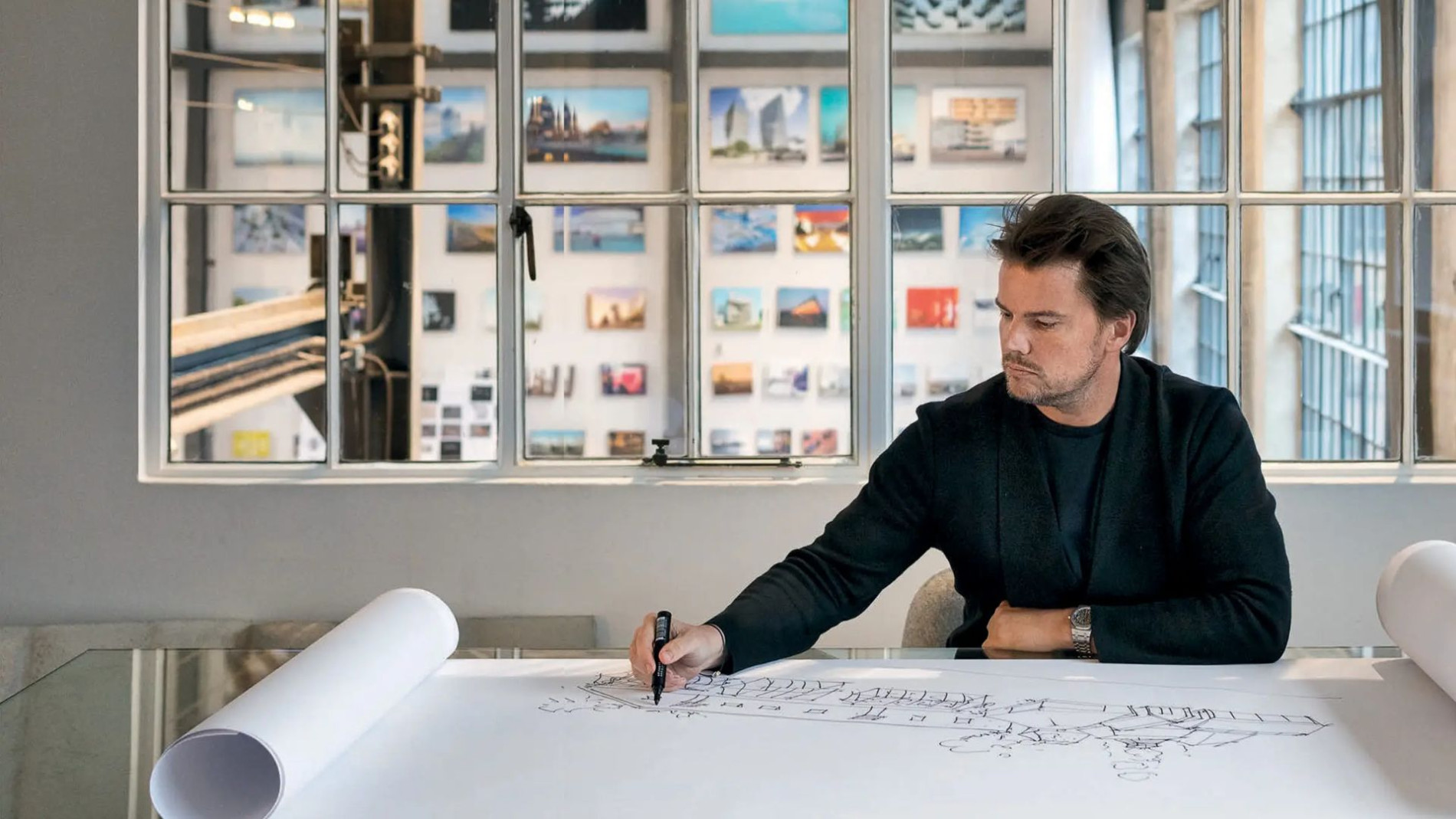
The first encounter was actually at the Venice Biennale back in 2004. I just returned from the Biennale last week where we are closing the latest edition with an installation. What is wonderful about those opening days in a Biennale is that the entire global world of designers is there. You are just bumping into people that you have only read about. Bjarke was one of those personalities I had yet to really read about, but I heard that there was something interesting going on in Scandinavia. He and Julien De Smedt had just won the Golden Lion for the Stavanger Concert House. They were probably both about 29 years old. I mentioned to him that I was intending to move to Copenhagen and he just simply said to look him up when I was there. That approachableness and openness led to a conversation. The conversation led to a collaboration that has been going on for now 20 years.
On the growth of the firm…
I of course could not see all of what was to come in that initial conversation. What I could see was someone that I already had a connection with without knowing. He worked on the Seattle Public Library at a time where I was living in Seattle and OMA won that commission. They were finding Seattle’s soul. Sometimes you actually have to find it through other voices. The Seattleites themselves would never have derived or come up with that concept. The concept came because bookish learning is central to the Seattle climate where it rains so much. So you are sitting inside with a nice book half the time. In experiencing that connection, it was someone that I already knew. That developed into a collaboration where we really complement one another and do what the other person needs or is happy to do. That goes beyond just the two of us to the whole partnership and the collective consciousness of everyone at BIG. The projects mirror those who participate in their creation.
On the political scale of urbanism…
It is remarkable that I got so deep into the materiality of the profession and of building, but I discovered once I started working that where I really excel is the scale of urbanism. I call it the political scale. When you are coming up with ideas, they need to actually be able to go beyond a certain election cycle. People from different backgrounds and different viewpoints all need to see something within the idea or the vision that they can then promote and push forward. It is something that I relish and get very excited about.
The Big U is a great example of that within my history now of 12 years of working on the coastal protection of Manhattan. To imagine coming over as a Scandinavian architect to New York and to be given the opportunity to mold and to touch 10 miles of contiguous waterfront is something very rare. I do like the ability to work at these different scales from the largest to an exhibition or a book or a piece of something that you touch as a product.
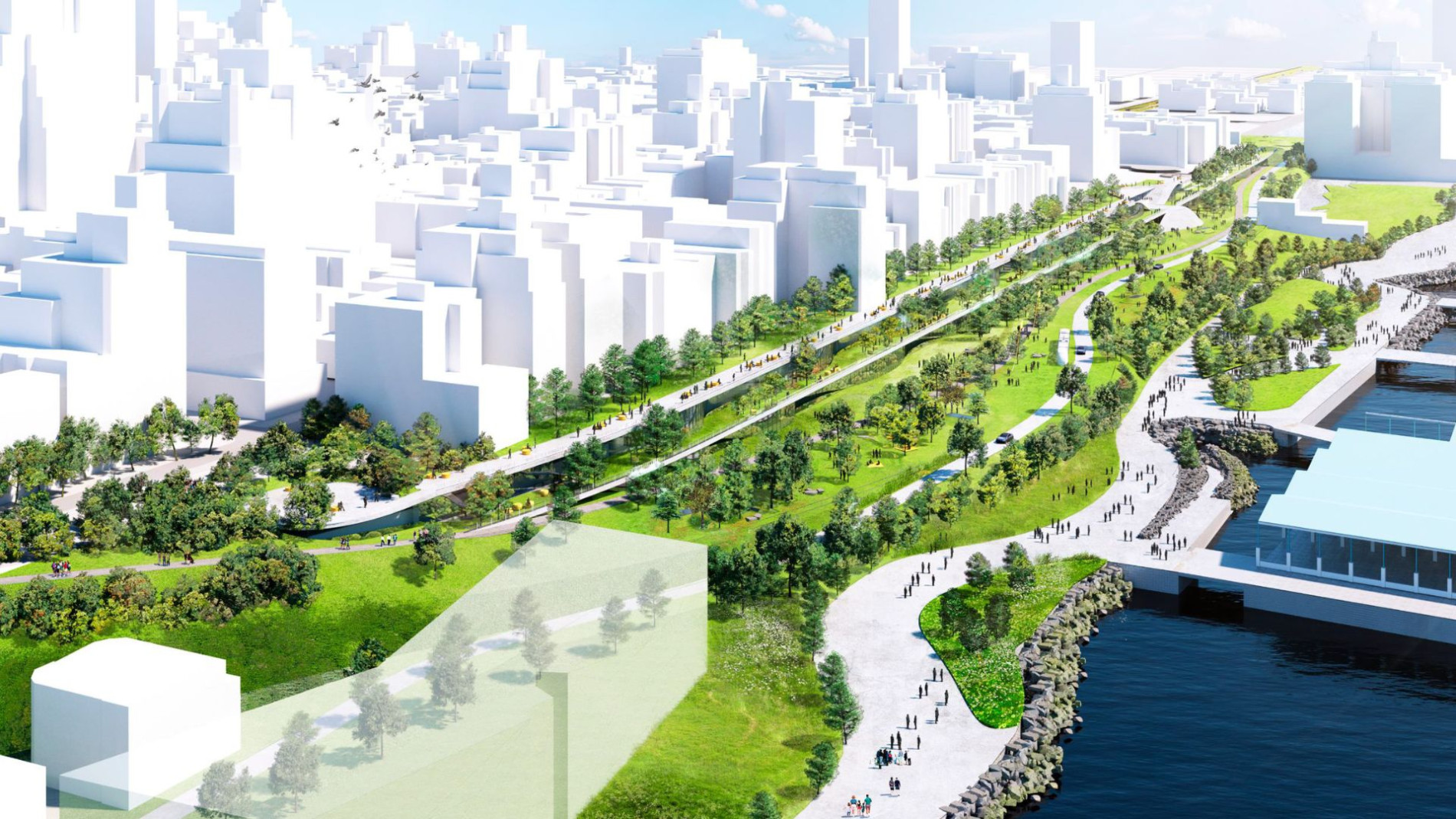
The Big U, Manhattan
On project acquisition…
If you go back even before I joined and you look at some of the thinking that Bjarke and Julien planted, like the Superharbor, you see the approach. The idea was that you would design a new harbor in the North Sea that would facilitate better connectivity. There was an airport, there were trains, and there was distribution and logistics all thought out. They would take the place of the nation state harbors, the deep harbors like Hamburg that you continuously have to spend money to dredge out. What I find is that there is a kind of confidence or a no fear attitude. We do not think we have to do something 10 times before we are allowed to do it. We really just come up with ideas and put those ideas out there.
We continuously start to ask the question of just how design can contribute. BIG takes part in the most challenging conversations that we have, whether those are energy, food distribution, or affordability. We design a lot of housing, but a good portion of that is also affordable housing and making homes for all. To me it is a commitment to address the biggest challenges that we have and not to shy away from things. It can be any typology. That no fearness allows us to do a first airport in Zurich, a first stadium in Las Vegas, or a first restaurant with Noma. You do not have to wait your turn to be able to contribute those ideas to a certain typology.

Athletics Las Vegas Ballpark
On managing self-doubt…
Of course there is self-doubt, there are moments of anxiety, and there is continuous questioning. I think that is a process of the kind of iterative design. My role is to ensure that the larger team is supported because these things are not done in silos or just by ourselves. It is a team of professionals and you are looking for certain experts. By assembling the right ingredients, you are setting yourself up for success or failure or a combination of both. That is what we spend a lot of time doing, ensuring that we have the right people and teams to support us.
On diverse backgrounds…
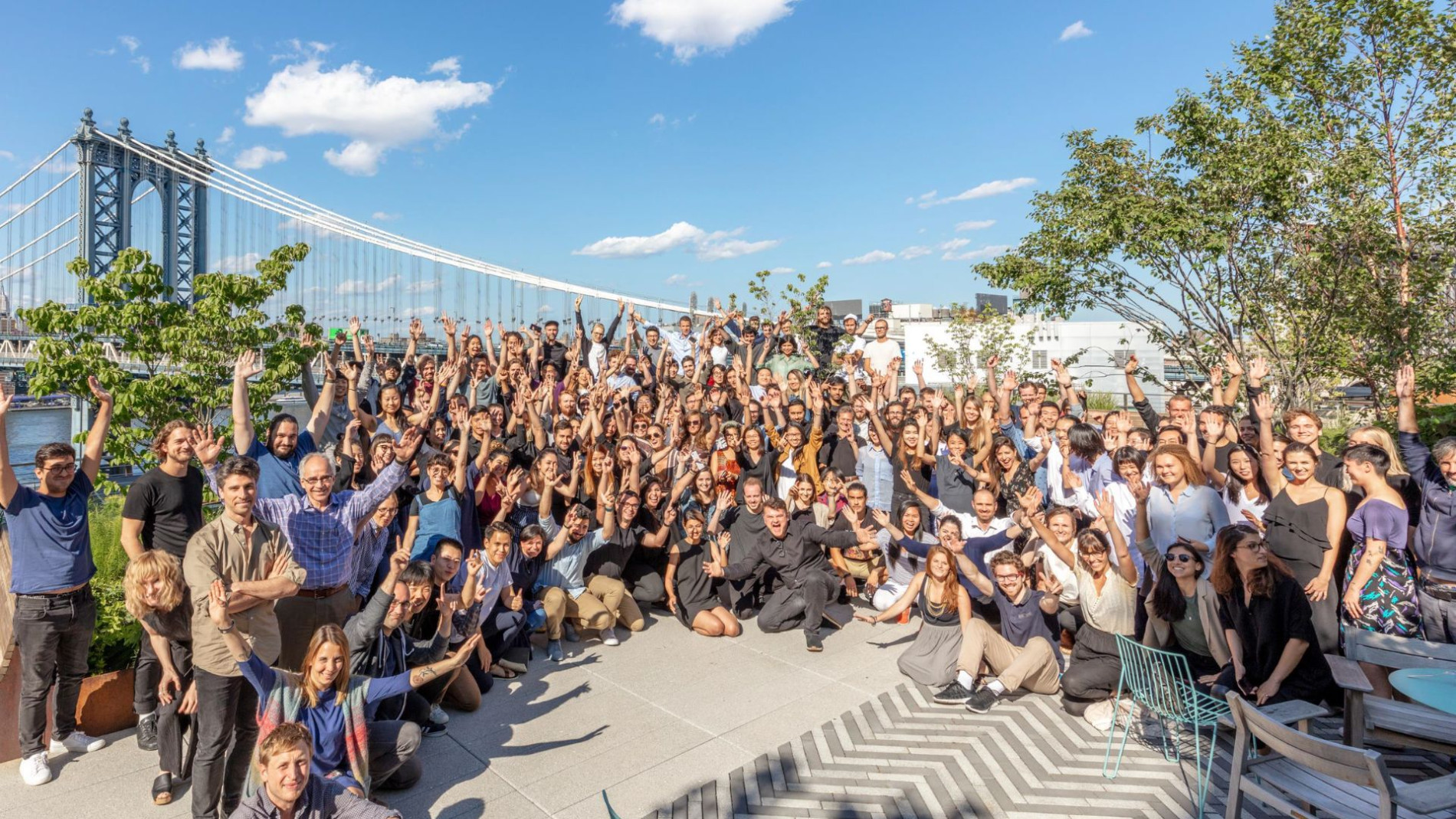
I was amazed once to look back at just how many different degrees and areas of study we had represented. There were over 40 different types of degrees from mathematics to dance to product design to architecture and landscape backgrounds. It was a much broader exposure which is extremely important when you are working with very different types of clients. In so many ways we are a mirror of society and we need to think of that broad set of obligations and responses. That is what Bjarke also has done very early on, assembling a very international and a very broadly exposed group of designers that we bring to each project.
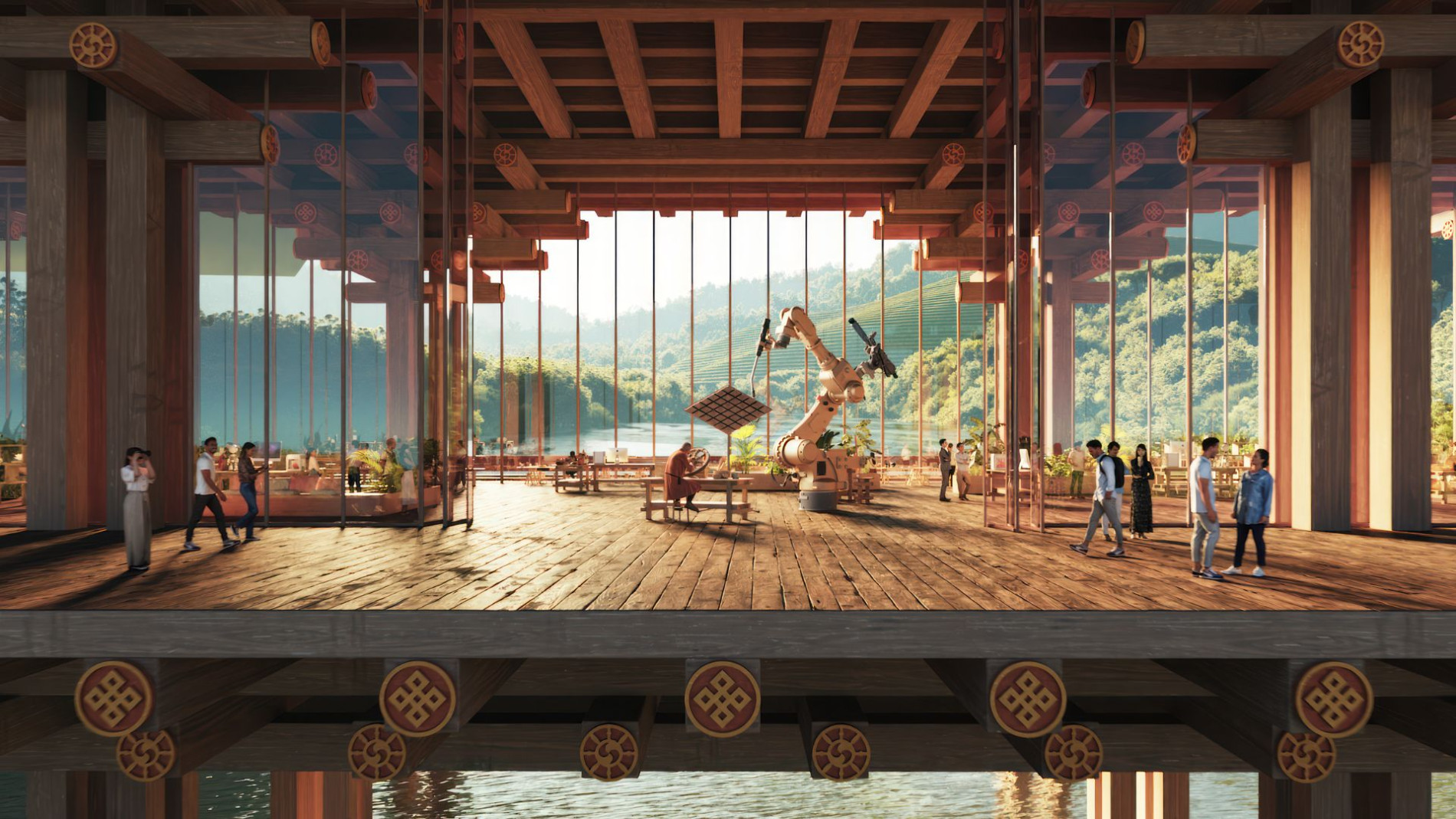
On the ‘Mindfulness City’ in Bhutan…
Bhutan is a great example of where it is both a deep analysis of Bhutanese architecture, which really does not have many historical examples or studies of. It is very timely to actually look at its vernacular traditions and what is still very much a learned profession. I think that there was not a licensed architect in Bhutan until sort of the mid 1980s. As a profession it was just something that was handed down from generation to generation.
By deep diving into that, we then began to look at some of the very new elements. They had elements of the temples and the dzongs, which are sort of the fortresses, and very unique bridges. Those were things that were uniquely Bhutanese. Now there were new elements of a hydrological dam, an airport, and larger bridge infrastructures. Bringing that level of scale required a kind of new interpretation or an upsizing of the Bhutanese traditions. That bridge is possible because of working with local traditions and craftsmen and bringing some knowledge that we have with woodworking and thinking on the scale of airports to Bhutan. It is a rather healthy exchange.
On sincerity in design…
I think very much it is about exchanges. As in any exchange, maybe the right and wrong or what works and what does not is not for us necessarily to decide for a society or for a culture. But it is important to engage and it is important to be able to have ideas that sprout from both. When I look at Chandigarh as an expression of a new Punjabi state, finding an architectural spatial comment on what that was was a way for a European architect to engage with an Indian value system. If you dig a little bit deeper, you learn that the brother of Corbusier, Pierre Jeanneret, actually moved there and spent 12 years of his life overseeing the construction. That is a personal commitment that is beyond words. It is not a concept that is just flown in for others to build. The commitment and authenticity are extremely important in order for it to be legitimate and a success.
On learning entrepreneurship…
A simple thing on the grounds of UCLA back when I was in school, the architecture school was in Perloff Hall and the business school was just opposite on the other side of the quad. What I did was I took all the classes that I had to for my architectural degree and then I would also go over to the business school and sit in the back. I took as many business classes as I could. Entrepreneurship, consumer behavior, business economics, and macroeconomics were my basic knowledge of how to run a business and how to become entrepreneurial. These are things that architecture school does not prepare you for. By the time that I then entered into the profession, I was always looking for how one could make the right decisions to create the greatest framework for creativity. I continuously was looking for ways to leverage whatever we were doing as an office to a different market.
On Baku…
I traveled to Azerbaijan and the middle of Central Asia and learned that before communism, Baku was home to the Nobel brothers who discovered the oil in the region. They built the first drilling well, the first oil tanker, and they came up with the distribution. But what they also did is they built hospitals, provided free education for their employees, and built a park system along the Black Sea that still exists today. The residents viewed Scandinavians as folks who care and folks who bring things back. When I was there, I assumed a Scandinavian role and they misread that as me being a fellow Swede. In that way we were able to actually pick up a lot of work. This was back in 2008 and for anyone who knows, that was a financial hardship. To pick up a lot of work in Baku at that time was critical for us to keep everybody in the office going.
That experience teaches you the importance of history. One should spend the time to really understand the place and the complexities and the layers of how any place has come to be. History will always play a major role in any future decisions as well. If architects are at fault for coming up with naive solutions, I would say it is because there was not enough time given to actually understand the circumstances. You have to be a detective, a historian, and interested in people to really become a very good architect.
On the role of AI…
The current insistence on a technology driven approach was actually very similar to when I was in school where the first CAD programs were just coming out. There was this shift away from hand drawing to drawing by computer. At that time in the late eighties and early nineties there were also discussions of no longer needing people, that in the future architecture would be paperless and architects would basically just be drafts people. We have accelerated that technological approach, but if we understand that this is a tool, it is really to begin to learn how to harness it and to use it. The idea that this is going to wipe out the profession or get rid of people is a little drastic. The profession will change and adapt. If the tools can keep us from having to do very mundane tasks, so much the better. We can use our thought where we have the greatest value. All the things we have been discussing, understanding place and people and critical thinking, are not in the tool itself.
On the office as a language model…
Bjarke very recently said that he feels his way of interacting with all of us within the office is that he has literally been prompting all of the different designers. We are the extension. If you view us as the large language model, then Bjarke is prompting for certain responses but does not quite know what those responses are until there is that iterative process back. He works with several approaches and can distinctly see which approach is the right one for him and for BIG. It is interesting to think that we have already been working in that same way two decades before the arrival of ChatGPT.
On scaling the firm…
We are around 800 plus designers, architects, landscape architects, and product designers. It is a big group now globally spread around six main offices. We provide an environment for everyone to pull in their expertise and their interests. We have a quite large digital technology group that is investigating a lot of the AI tools. We are really experimenting with all of these and it seems almost with each week that people bring new tools to our attention. We are sharing a lot of that experimentation with the larger group and holding workshops in each of our offices. We feel that is the best way to collectively see what works within our process. It is still an evolving question as to how this all will play out.
On the office DNA…
We have the luxury of having Bjarke as the source and he is engaged with all of the offices. All of the projects, whether they are in design and concept or later phases, connect with and present the work regularly to Bjarke and to the design partners. That is a way of creating a consistent design language. Structurally, there are multiple ways for us to create a common culture. We are happy to move between offices and we are able to do joint exercises and study trips. These are things that hold the DNA of a collective approach, a kind of Scandinavian set of values that we share. Bjarke and BIG have always been able to communicate quite well and the way that the projects are communicated makes them very accessible to not only architects, but to a larger audience. We want to communicate what we do to a larger group.
On personal balance…
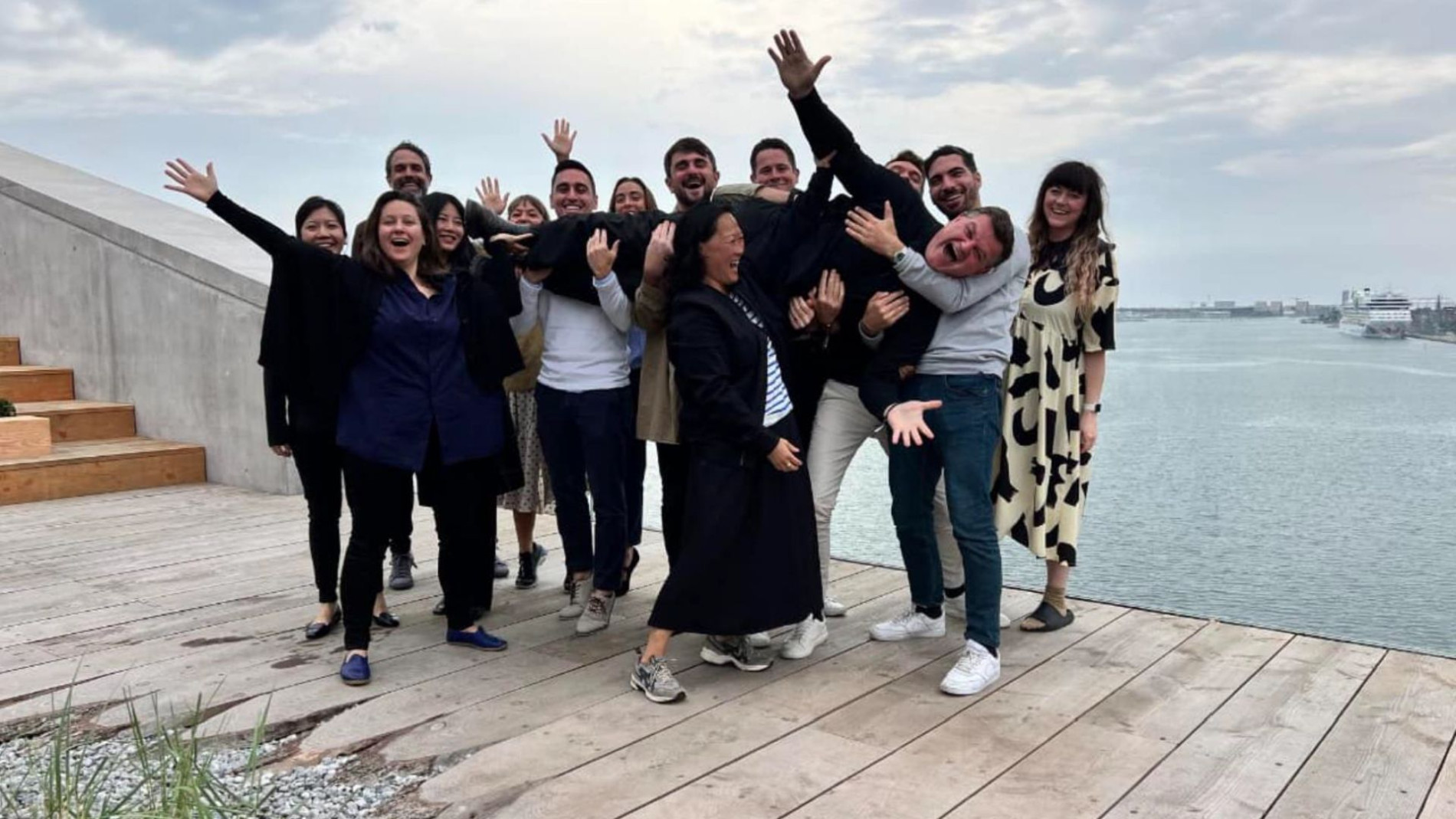
A few of the partners are global and have a responsibility of engaging with all of the offices. I do find that to be really important so that we do not end in a siloed view of what we all do. It is a balance. I cannot sit on a lot of boards or do a lot of teaching in addition to doing what I do at BIG and having two kids to raise with my wife. That is important to me, that I am also able to be there for them. They bring so much to my life and it is in a way what I have been waiting for for so long. And yet it is also the ability to live that dream that I have had personally of being involved in these projects and making sure that we get as many opportunities of doing great work everywhere.
On the client-architect relationship…
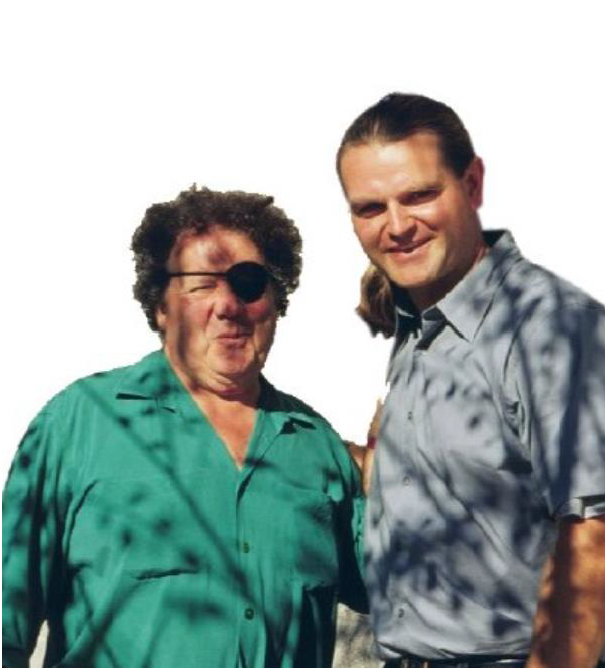
Kai-Uwe and Dale Chihuly
One experience really stuck with me while working with the glass artist Dale Chihuly. One of the installations was at the Tower of David Museum in Jerusalem. Adjacent to the museum there is a gate through a big wall built by Suleiman, an older Ottoman Empire general. Suleiman had two architects who designed the wall for him. There were a few secret entrances in and out of the wall and when the wall was finally finished, they were the only ones besides him who knew where those were, so he killed both of them. He placed their graves right inside the entrance to Jerusalem. You walk in, look to your left, and there are two turban monuments to the two architects that designed the wall.
To me, that meant that one should always get to know the clients that you are working with and never get to where it is only knowledge that sits between yourself and them. It is still a very unique relationship between clients and architects. You still have to be very careful of who you work with. That stuck with me in terms of always making sure to vet and to understand the experiences that were offered.
On infectious energy…
I have hopefully brought an infectious energy that both feeds me and that I also in turn give back. No two days are the same and therefore you have to be very agile and able to pivot and do whatever is asked for. That could be mopping the floors when there is a break in the plumbing to really strategizing and thinking about the future when COVID hits. I think that it is that ability to be ready for anything and hopefully to come at it with a positivity that people can rely on and feed off of.
On the lack of a plan…
There is no five year plan. I do not want to say it is unstrategic or not thought out, but it is the ability to adapt and to look for rays of hope or rays of light within adversity. Adversity is around every corner, also within the negativity that architects have to confront. If you were to run a football club and you would have 10 percent of your shots on goal go through, you would be at the bottom of every league. Architects typically have a winning rate of one out of ten. You are at the end of the day responsible for the path that you choose, the decisions you make, and the future that you will experience.
Search for architecture and design jobs here
Latest architecture and design jobs around the world

Looking to hire top talent
 or advance your career? Let's talk.

We connect exceptional firms with talented professionals.
Let’s discuss how we can help you achieve your goals. Get in touch with the team today.
Related Posts

Here is what our industry experts have been seeing in Brisbane
Architects and designers in Australia have a wide range of events occurring in 2026. From networking events, opportunities for learning and even some socialising, the calendar is shaping up to be a varied and interesting mix of events.
Anticipating future hiring needs can be challenging for an architecture firm or design studio. Employers can always benefit from recruitment planning, even before new vacancies materialise.
Whether you have a large project on the horizon or not, the need to recruit employees will fluctuate at times. Having good practices and strategies in place can help you be more agile when new staffing requirements arise.