
Why (Most) Architects Don’t Make Much Money – Phin Harper
Writer, critic and curator Phineas Harper discusses their career journey and the importance of collective action in the built environment.
Phineas Harper has never been content to stay in one lane. The London-based writer, critic and cultural leader has moved fluidly between journalism, curation, youth work and sculpture, always with social purpose at the centre.
In their relatively short career, they’ve served as Chief Executive of Open City, Deputy Director of the Architecture Foundation, Deputy Editor of the Architectural Review, Chair of the Design Council Homes Taskforce, Co-Founder of New Architecture Writers, Co-Founder of Turncoats, and Co-Chief Curator of the 2019 Oslo Triennale.
Phin has also become one of the Built Environment’s most followed voices on social media, creating short, pointed videos that bring complex questions about housing, heritage, climate and public space to audiences well beyond the profession.
In this conversation, Phin calls out a sector that is often overworked and under-connected to the public it serves. Their’s is a hard hitting stance on the state of architecture and design now and into the future.
On the personal toll of being outspoken…
I think anybody who thinks about politics and big issues, whether that is climate change or inequality, can’t not feel that to some extent when you go home and are trying to get to sleep at night. All journalists, particularly war journalists or people covering really challenging issues, feel it at some level. I am trying to be an architectural journalist who doesn’t lean out.
On the risk of being a critical voice…
It is tricky in this sector sometimes to be an outspoken, critical voice. Architects are not always the most political or the most politically eloquent people. Sometimes you do feel quite exposed. I have had backlash in the past from people who did not want to hear the critiques I was making or did not align themselves with the politics I was exploring. That is a challenge personally, but you have to do it. If you are passionate about something and it is important, you cannot morally shy away from speaking up and speaking out.
The people I admire most, both practitioners and journalists, are those who engage with politics one way or another. Someone like Peter Barber is a fantastic housing architect but also a really thoughtful political thinker who is happy to present his work in a contemporary political context. I think that gives it more weight. He does not shy away from it. The work speaks for itself, but he can layer in another level to make it more urgent. He will open a lecture talking about the housing crisis, homelessness and the crisis of temporary accommodation. That is really commendable. I would love to see more practitioners who are willing and able to take those kinds of risks and situate their work in that language.
On upbringing and formative values…
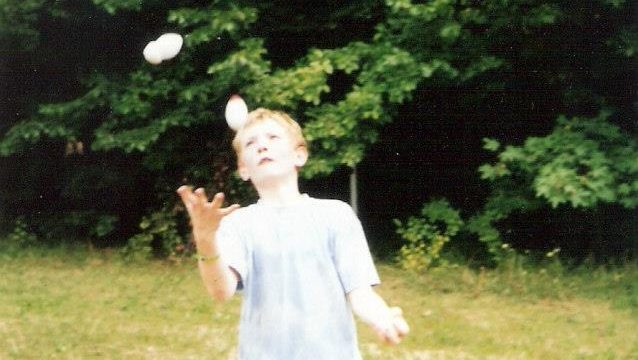
I was home educated and did not go to school until I was 15 or 16. My parents had a strong sense of a liberal Christian morality. They were churchgoers, but they had a very progressive interpretation of the Bible. I also grew up in Woodcraft Folk, which is a 100 year old British youth charity that has strong political values. Between a left wing camping organisation and Christian parenting, those things formed my values and my sense of right and wrong.
On discovering the social purpose of architecture…
I used to think architecture was skyscrapers and posh people’s houses. I did not know any architects growing up. I was interested in it because I liked art and design, but I was not necessarily passionate about it because I associated it with rich people. I was working in Nigeria for the British Council on a placement and I picked up a copy of the Architectural Review in the Kano British Council Library. It happened to be a special edition dedicated to the Aga Khan Awards.
Those architectural awards for buildings in the Muslim world have a really strong social agenda. It was not shiny buildings. It was the refurbishment of a marketplace or the rebuilding of a mosque. I suddenly realised how architecture can be so much more than just fancy projects for fancy people. It can have a real social purpose. A year later, I enrolled in architecture school in Cardiff and have been with it ever since.
On entering the profession during a recession…
When I went to architecture school, I thought I was going to be on a vocational path and design buildings. It was bad luck that I graduated during the 2008 financial crisis. People were not hiring many Part Is at that time. I was struggling to get a job in Edinburgh, Newcastle and Birmingham. I was not getting much traction and then somehow ended up getting a job as an editorial assistant at the Architectural Review.
I think I was quite a strange candidate in the interview. I had a huge rucksack with me, a six string ukulele and a sheaf of community newspapers. I think they were quite intrigued by me. I did not know anybody in publishing or anybody in London at that time. Somehow I ended up getting this job and thought it was quite a thing to get a position at the Architectural Review, so I’ll stick with it.
On lessons from the Architectural Review…
The Architectural Review is a very distinguished magazine that has been going for well over a century. It has an incredible global network of contributors. They find people from all over the world to write about buildings. That sense that you need to go to a place to really get it and write about it was something I learned quite quickly.
I was very lucky to be under the editorship of Catherine Slessor, one of the best architectural writers in the UK. I learned a lot from her. She had such a depth of knowledge about popular culture that she would weave into heavy pieces about architecture in a way that gave it life and made it more accessible. Her editorials each month were breathtakingly well written and often written five minutes to midnight under intense pressure.
On having an impact outside of design…

I have always thought there are many ways to have an impact. You do not have to be an MP to have an impact on politics or a film star to have an impact on filmmaking. You do not have to be an architect to have an impact in the built environment. If you have power or an opportunity, you should use that to the best of your ability to affect positive change. That is almost a moral responsibility.
If you are a talented designer who is good at working with builders or negotiating with a client, you should use those skills to create amazing places. If you are a good communicator and you are good at writing or presenting, you should use those skills. Think about the things you are passionate about and use them to do as much as you can for the good of the world.
On the craft of writing…
I was always seen as the one who could not write in the family. My little siblings were seen to be much better at writing. I think anybody can get good at something with practice. I honed my skills at the Architectural Review and I am still practicing. One of the great things about working at the Guardian as a freelance opinion writer is that they have really good editors. You file a piece that you think is quite good, and they send it back tweaked. You are always learning how to improve your craft.
On the value of architectural critique…
Some practitioners really see the value in critical writing. People like Steph MacDonald and Tom Emmerson at 6a are really literary people who love books and the culture of books. There are lots of skilful architects where writing is almost part of their practice. But that is not true across the board. A lot of architects just do not care about writing. They like to be published because it is nice, but whether they are even reading the pieces is another matter.
That is not a criticism of architects in particular. We have a moment in society where people are not subscribing to newspapers and magazines as much as they used to. Society is losing interest in writing, or at least not putting their money where their mouth is. If people want to support independent journalism and critical writing, they should subscribe to something. It could be a Substack. Peter Apps, who wrote Show Me the Bodies about the Grenfell Tower fire, has a fantastic Substack. Everyone who is listening to this should go and subscribe to something today.
On the pressures of practice…
The architects I know are hugely overworked. They work really hard and put in a lot of passion and effort. They do not always have time to read an entire copy of the Architects’ Journal every week. There is an economic question too. It is expensive to make good quality media and pay printers and distributors. Some architects are under a lot of financial pressure and fees are not as high as they used to be. I empathise with the challenge of supporting independent journalists in addition to all the other costs they juggle. But if we lose the media, we will have a poorer industry and a poorer society.
On the New Architecture Writers program…
New Architecture Writers is a free mentoring and writing program specifically targeted at aspiring design and architecture critics of colour. It came from the fact that when I was at the Architectural Review with Tom Wilkinson, we were struggling to recruit and commission black and brown writers. There were a few we would go back to, but there was not a big pool of young voices from diverse backgrounds.
At the Architecture Foundation, I thought I could use the charity as a vehicle to bring forward a new generation of more diverse critics. The program is now in its seventh cohort and has completely changed the landscape of design criticism in the UK. Our graduates are writing for Dezeen, Wallpaper, the RIBA Journal and the Spectator. It has been hugely successful in a relatively short amount of time.
On their tenure at Open City…
When I started at Open City, the Open House Festival was quite dominated by older, middle class, white, wealthy people. It seemed like an opportunity to do more with those programs. Is it really a charitable cause to persuade the residents of a council estate to open their homes for free to rich white tourists? Maybe not. We could make that program work a little harder to have a social purpose.
I tried to focus more on marginalised and underrepresented communities. Open City is a relatively small charity, but it is widely known. We used that power to make a positive contribution to the diversity of the design professions. The youth programs were about bringing more diverse voices into the built environment professions. The hope was that if these professions were more representative of the society they serve, they would make better decisions in line with community needs.
The festival and walking tours were about public advocacy and feeding people’s natural curiosity. People are fascinated by buildings but often feel quite removed from them. The magic of the festival was to say that you can come into this place, learn about it and then do something with that knowledge, whether that is getting involved in local planning or joining a civic society.
On changing perspectives through experience…
When I was chief executive of Open City, I put my own flat in the festival every year. I should practice what I preach. One time, an older lady who lived in a nearby tower came round. She said she had walked past the estate every day for decades and always thought it was really ugly. But after coming inside, meeting me and seeing what the flats were like, her perspective completely changed. It is very rare that anybody fundamentally changes their mind about something in contemporary life. Yet in half an hour, the act of going inside a building and meeting some people had changed her perspective on a big chunk of her neighbourhood. We should do more of that.
On the wall between the public and practitioners…
There is a big wall between the general public and most contemporary architectural practice. It is partly because the country is dominated by a small number of large property developers who build the lion’s share of our housing. Those companies seem untouchable. It is very David and Goliath. I think that puts people off architecture at large. You might be a lovely community architect doing a public realm upgrade, and the general public sometimes treats you with the same contempt they would treat a massive, faceless corporation.
We are fatigued by poor quality new construction. It is hard to appreciate the difference when something is well considered and well crafted. This makes it harder for the good architects and property developers because they are starting with a skeptical audience. The responsibility for journalists and architects is to explain that there is a difference between good and bad. Not all new development is bad. If we can have a more sophisticated public dialogue about what kind of development we want, it would be positive for our landscape and our professions.
On the police involvement in design…
The vast majority of Londoners have no idea that the Met is regularly involved in the design of their homes, schools and playgrounds. In Suffolk, climbing flowers were cut down on a pergola in a park because the police said local gangs were hiding drugs in the flowers. This is patently absurd when what we are describing is a group of brown people hanging out in a park.
On the need for better communication…
Architects have to be good communicators. At Open City, I ran public speaking training specifically for built environment professionals. I had sat through so many lectures at the Architecture Foundation that were not very well delivered. One very talented architect did not look at the audience for the entire hour. It is not just about getting practitioners involved in politics. We need to train people in how to communicate and win over an audience. The RIBA goes into Parliament to advocate for the profession, but as I understand it, they do not always do a very good job at seducing committee members or helping them understand things from a different perspective. You cannot just bludgeon your audience over the head. You need to bring them along on the journey.
On the protection of function…
In the 1980s, there was a bonfire of protections and functions across many sectors. It was part of a Thatcherite deregulation idea that they hoped would create innovation, but that experiment has not worked. In places like Germany, many more functions are protected. Carpentry, roofing and bricklaying are protected functions. Sure enough, they have a much higher standard of new construction than we have here where anybody can lay a brick or put a tile on a roof without being accredited. If we want really good architecture, we need to make sure the people designing and making buildings are properly trained and regulated. At the moment, anybody can fulfill the functions of an architect, so it is no surprise we get poor quality.
On the crisis of construction quality…
The quality issue is a reason why people struggle with development. I grew up on a new build estate. The quality of construction was poor. I remember door handles coming off in my hand because the material they made the door from was so weak. It has been 20 years since they finished that estate and the roads have still not been adopted because the developer never brought them up to the standard required for the council to take responsibility. Those of us who have grown up in these places understand they are not being well made. We are skeptical when the government says they are going to build new towns in partnership with these huge property developers. Until we crack construction quality and ensure all new buildings are built to a decent minimum standard of craftsmanship, people are going to be hard to persuade.
On the power of architectural filmmaking…
Architectural filmmaking is an effective way to reach a broader audience. Ian Nairn’s films traveling across England in a narrowboat really stand the test of time. Film is a powerful medium. Grand Designs is not the most intellectually rigorous program, but it is hugely popular and compelling. Social media gives us an opportunity to reach a big audience and change someone’s perspective on a housing estate.
When I was at Open City, I introduced a video first strategy. We were commissioning little video tours that were getting hundreds of thousands of views. Now that I have left, I am trying to do the same thing. It is about conveying an idea. It is easy to take someone on a video tour of Trellick Tower, but what is more interesting is how I can change their understanding of a place they might think is ugly. I made a short film about a self build scheme from the 70s on the River Thames made using salvaged materials. It was a way to ask if more buildings should be made like that today. Filmmaking is just another form of architectural communication.
On the importance of narrative and humour…
The best architects are outstanding communicators. If you want to win a job or persuade a skeptical community, you need to think about how you are communicating. With my films, I try to make it feel DIY and immediate, because that is how I would want to be shown around a place.
The same applies to writing. The best architecture writing today is often quite funny. Owen Hatherley is probably the best British architecture writer living, and his books are hard hitting and political but always have jokes thrown in. Vittles is a food magazine with a real sense of urbanism, and it is also extremely funny. Architects should learn from that. We do not show enough personality. Humour is a powerful tool to make people feel relaxed and bring them into a narrative.
On life as a freelancer…
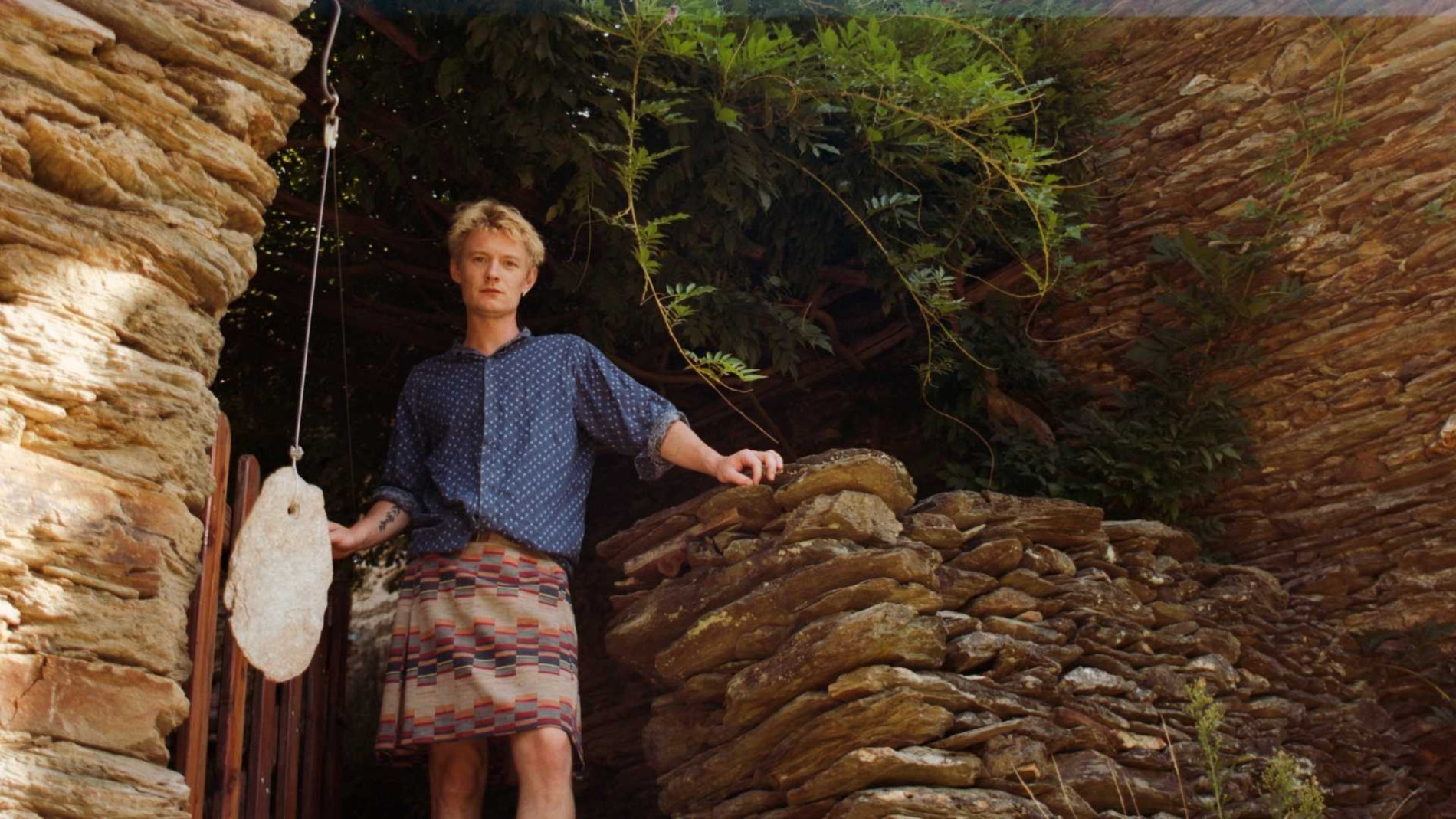
I am lucky to have a stimulating job. I make sculpture and it is a privilege that people buy my art all over the world. I write for the Guardian, Dezeen and Wallpaper, and I make these films. The thing I miss from my previous roles is being part of a team. In architectural practices and charities, you have a little gang invested in a project together. Now that I am freelance, I have more freedom but I miss collaborating. I still run Turncoats, which is a stand up comedy debate, and I teach in architecture schools, so there are ways of finding a team.
At the Guardian, I am not the architecture critic, I am one of a number of opinion columnists. They come to me when there is an urban design flavor to a story, but I also write about youth work, peace activism and wearing skirts. It is nice to step outside of design. But if you are thinking about contemporary life, you have to be thinking about urban issues. There is no way to do political thinking without architecture and urbanism in the mix. It is a tragedy that so many of our political leaders do not have a perspective on city making.
On the need for trade unions…
The architecture profession faces different challenges in different contexts. In the UK, we lack strategic coordination across the sector. We are not members of trade unions, but we should be. That is the big thing that would change most people’s lives working in practice. In Australia in the 50s and 60s, construction workers banded together through trade unions to stop the overdevelopment of inner city parks. They refused to work on those projects because they believed urban parks were important for community life. We could not do that in the UK because we do not have that coordination. If you are working in this sector, you should join a trade union and use that collective power to make construction less ecologically harmful or improve labor conditions.
On the versatility of architectural training…
I was always excited to employ someone who had a bit of architecture on their CV. Architecture graduates are so skilful and adaptable. They can jump across different projects, they are good under pressure and they understand long term project management. Even if you do not want to be an architect, studying architecture is a really good thing to do. Not everyone who studies English literature becomes a writer. It is a versatile training that makes you extremely employable.
On the value of walking tours…
The things that stick with me most from architecture school are the walking tours. We went to Coventry, Copenhagen and Barcelona. All of those trips were stimulating because your body is out of the studio and you are moving around experiencing a new place and its community. That is how you grow your brain and develop new ideas. Even if you are not in architecture school, go on some walking tours.
On future goals for the national agenda…
I have never had a strategic plan for my career. I try to take interesting opportunities and use whatever platform I have to do good work with community benefits. I would love to persuade mainstream media to speak more about urban issues. When I graduated, people did not use the phrase housing crisis. Now they do. I have contributed to a change in that national dialogue.
I want to keep trying to get mainstream tastemakers and producers to see there is a huge appetite for this. Ordinary people are so interested and up for the conversation, they are just not given the opportunity enough. Wouldn’t it be good if we had architects on Question Time or Newsnight?. That is what I am aiming for. If we can build up a younger generation of articulate voices who can join the dots between political and urban issues, those are the people who will get booked for BBC shows and make urban issues part of the national debate.
On the myth of the leftist architect…
People assume a lot of architects are on the left, but that is not true. Lots of architects are on the right. Sometimes what is described as a disinterest in politics is actually motivated by a different political agenda. We have seen this with global issues where people say not to speak out about Gaza or Ukraine or Brexit because they do not want to alienate audiences. Sometimes those demands are made by people who just have different political values. It is a mix of having your head in the sand and not wanting to upset a client. We would have a healthier industry if we were able to acknowledge these different perspectives rather than avoiding the conversation entirely.
On honesty, wealth and privilege…
Honesty is better than dishonesty. We would have more meaningful debate if we were honest about our politics and backgrounds. I thought I was quite rich growing up in a large new build house where all the children had their own bedroom. Then I came to architecture in London and realised I am not rich at all compared to some. If you have only ever been to private schools and traveled the world as a child, that affects your perspective.
The profession is bad at acknowledging privilege. If we could be more open about those things, it would help make the profession more accessible. If you are from a background that is not particularly wealthy, it can feel confusing why others are succeeding while you are struggling. Understanding that it is not your fault and it is an unfair society would help people feel more confident.
On the public perception of the profession…
Most people in Britain still think architecture is a really well paid, posh career. When we met children through Open City and asked if they considered architecture, they would say yes because they want a fast car. I would have to tell them they would probably be arguing with the highways team about a market upgrade in Romford. Architects are workers. They are often working class people getting paid decent but not high wages and working very hard for them. If the public had a better understanding of the reality of architecture, it would make them more sympathetic.
On working in relation to values…
If you are not working in relation to your values, what are you doing? I am not saying I am perfect, but I am trying to make everything I do connect back to the core ideas of how you make a more equitable and open society. I am not sure where it will take me next. I recently applied for chief executive of the Design Council and did not get it. I am interested in how I move back into an institution and have a team again. That would be an exciting next step. For now, I am happy writing, filmmaking and trying to instigate change in the open.
Search for architecture and design jobs here
Latest architecture and design jobs around the world

Looking to hire top talent
 or advance your career? Let's talk.

We connect exceptional firms with talented professionals.
Let’s discuss how we can help you achieve your goals. Get in touch with the team today.
Related Posts


Bespoke Careers has officially established a presence in the Washington D.C. market, appointing Lauren Cavanagh as the dedicated consultant for the region.
Former architects Charlie Caswell and Adam Dainow discuss transitioning into property development, the necessity of relinquishing design control, and the five-year grind of building a business from the ground up.
Anticipating future hiring needs can be challenging for an architecture firm or design studio. Employers can always benefit from recruitment planning, even before new vacancies materialise.
Whether you have a large project on the horizon or not, the need to recruit employees will fluctuate at times. Having good practices and strategies in place can help you be more agile when new staffing requirements arise.