





20 January 2026
4 Employers React to Real Architecture Portfolios
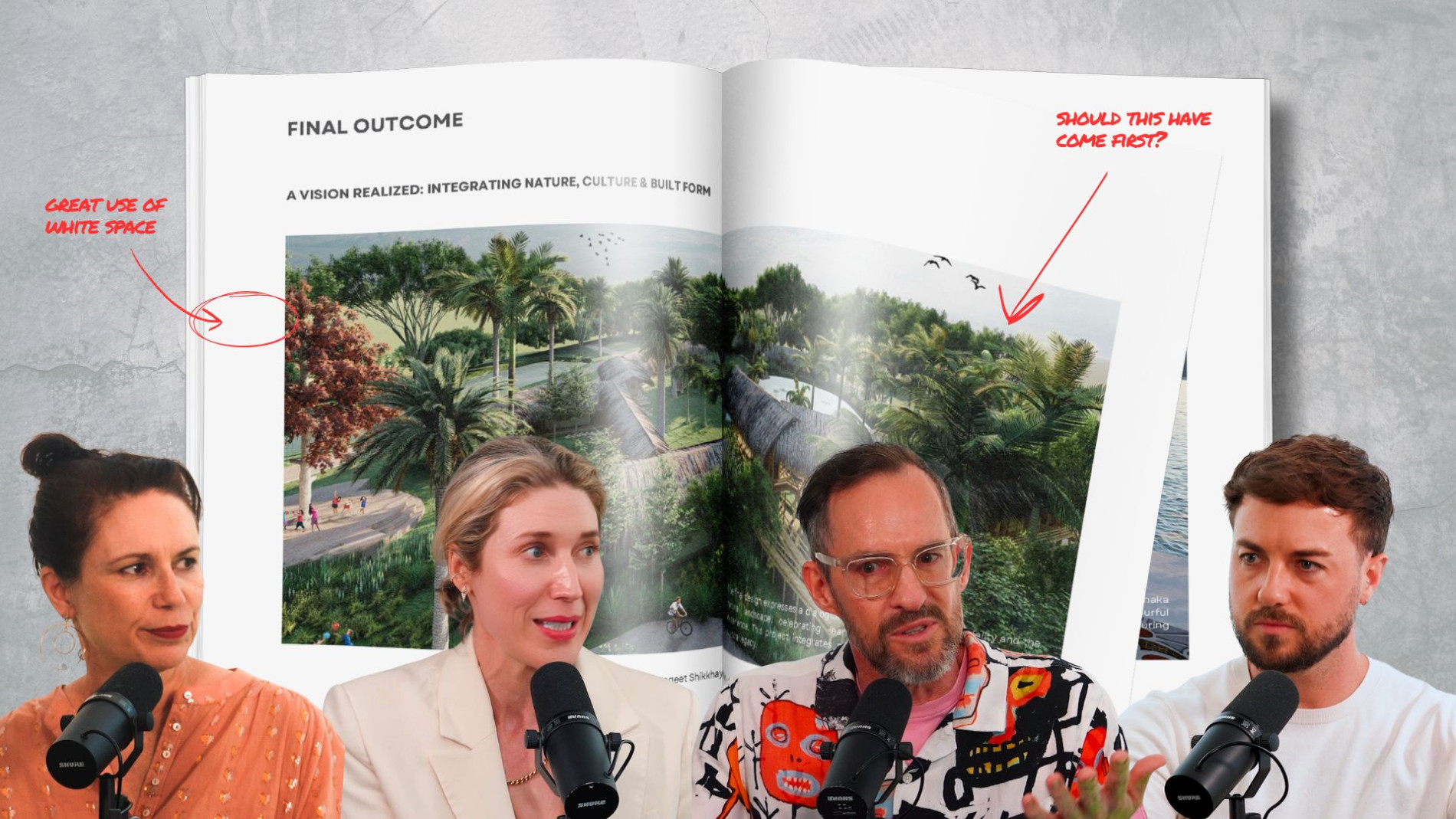
Bespokers Ryan Barton, Krista Shearer and Misty Waters sat down with Woods Bagot Senior Associate, Matt Reynolds to discuss what makes a great portfolio.
In architecture, we are trained to obsess over the details of a building, yet we often overlook the details of how we present ourselves.
Even small things like a spelling mistake can be a signal to a hiring manager that a candidate may lack the self-checking discipline required for technical practice.
Matt Reynolds, Krista Shearer, Misty Waters and Ryan Barton recently sat down to review three real portfolios, looking for the friction points between a designer’s intent and an employer’s reality.
The common pitfalls are often the result of misplaced effort. Many designers present “huge, glossy projects” but provide no context regarding their specific role, rendering the work effectively useless for evaluation.
A portfolio is a piece of communication design before it is a gallery of work.
If the layout is chaotic, an employer may never move past the visual noise to consider the actual content. To find success in a competitive pile, the strategy must be one of precision.
The goal of a portfolio is not to tell your entire career story, but to provide enough clarity and intrigue to earn an interview.
Here are five tips from real employers to help you get started.
1. Start Strong
-
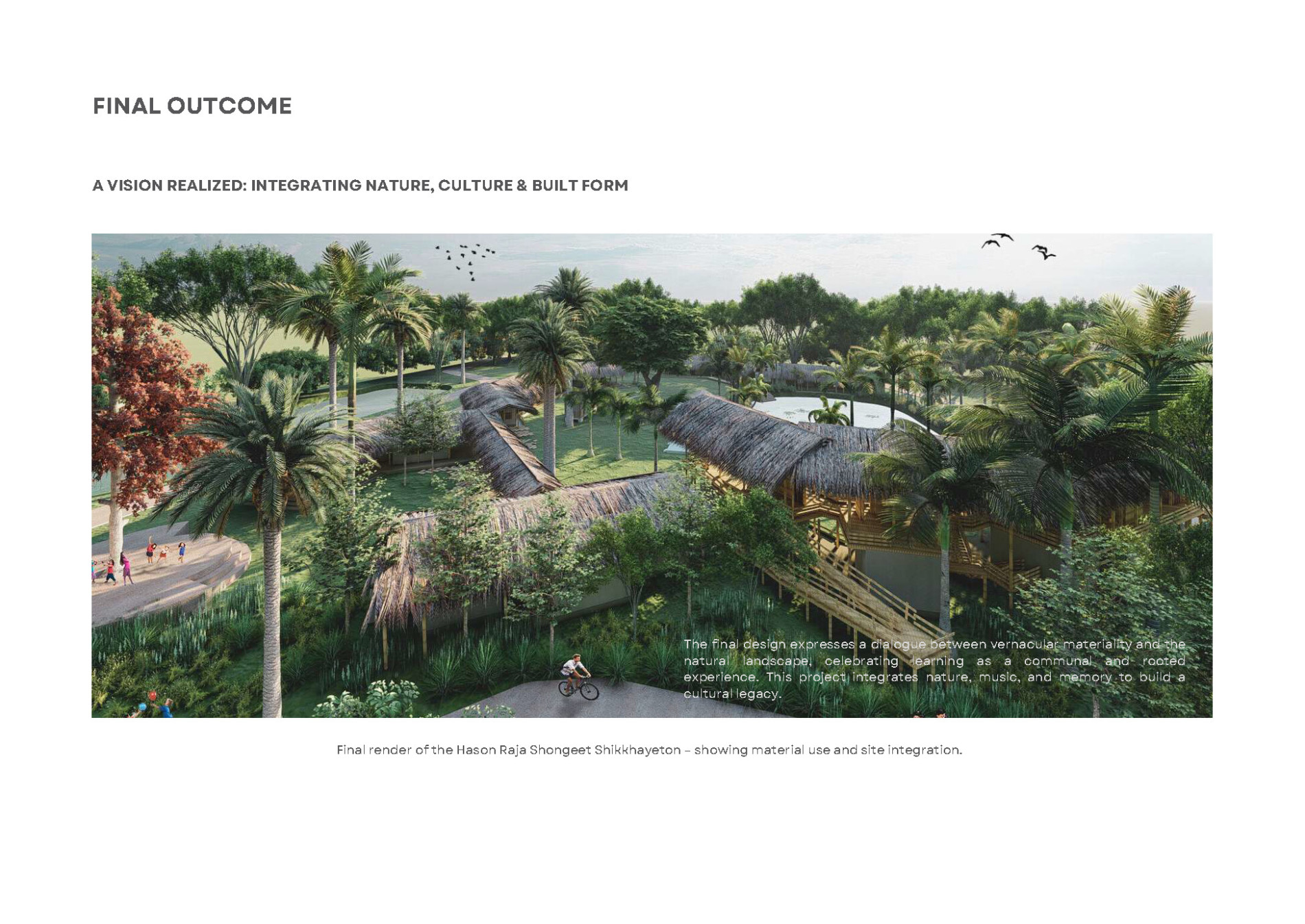
Begin each project with your strongest wide-angle “hero shot” to capture immediate attention.
-
This primary image establishes context and provides a visual anchor that helps employers ground subsequent plans and diagrams.
Aasif Shadman
2. Consistency
-
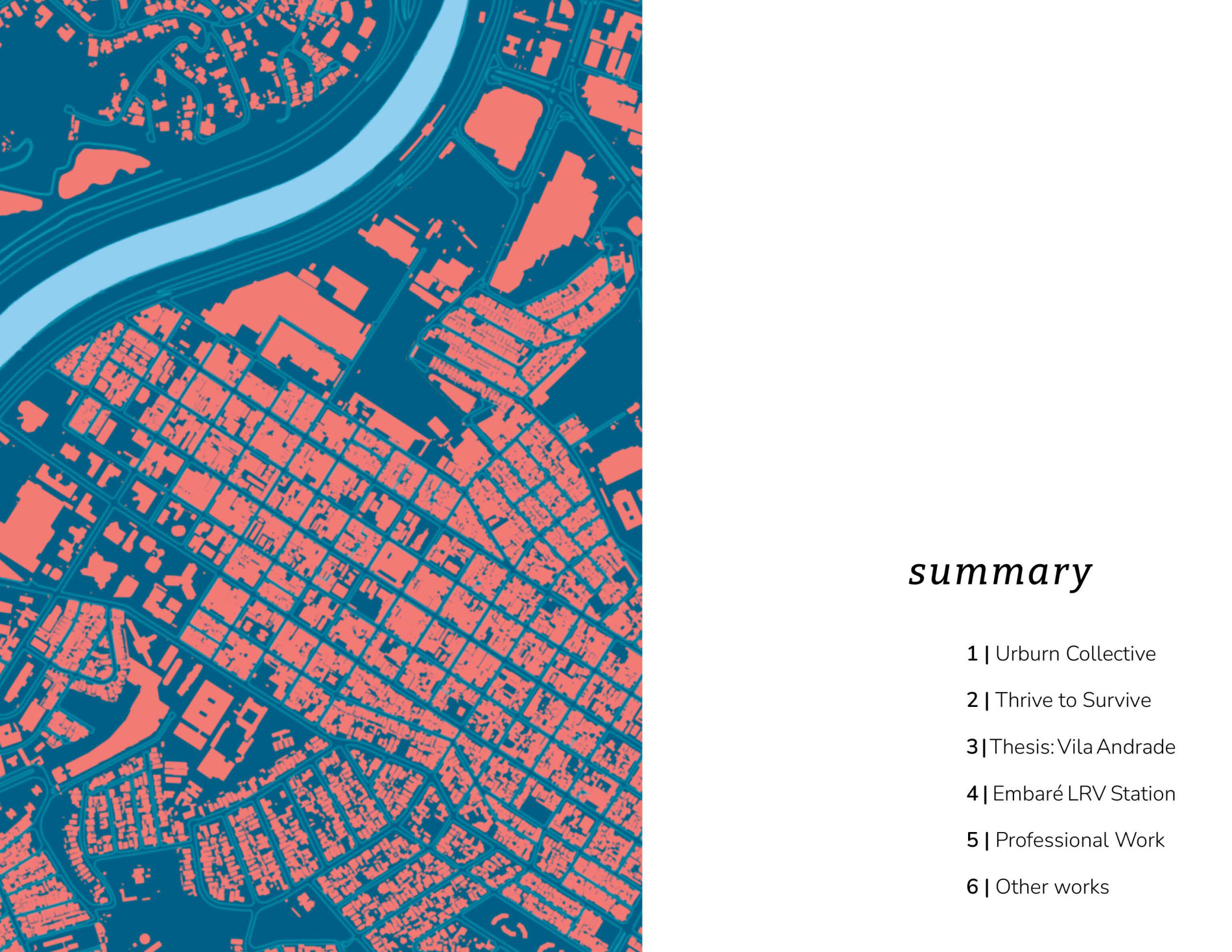
Develop a recognisable rhythm by using consistent cover pages, standard font hierarchies, and clear logos for software.
-
Uniformity allows hiring managers to focus on the quality of the work itself rather than struggling to navigate the document.
3. Label Projects Clearly
-
Clearly distinguish professional work from personal or student projects.
-
For professional projects, define your specific contribution.
Beatriz TL Soares
4. Use Bullet Points
-
Avoid the “essay trap” by replacing long paragraphs with bullet points or leader text that points to specific elements in an image.
-
Let graphics, diagrams, and image sequences do the heavy lifting to communicate the project’s story.
- The portfolio is about capturing attention and landing an interview. You can discuss your projects at length at interview.
5. Show Technical Work
-
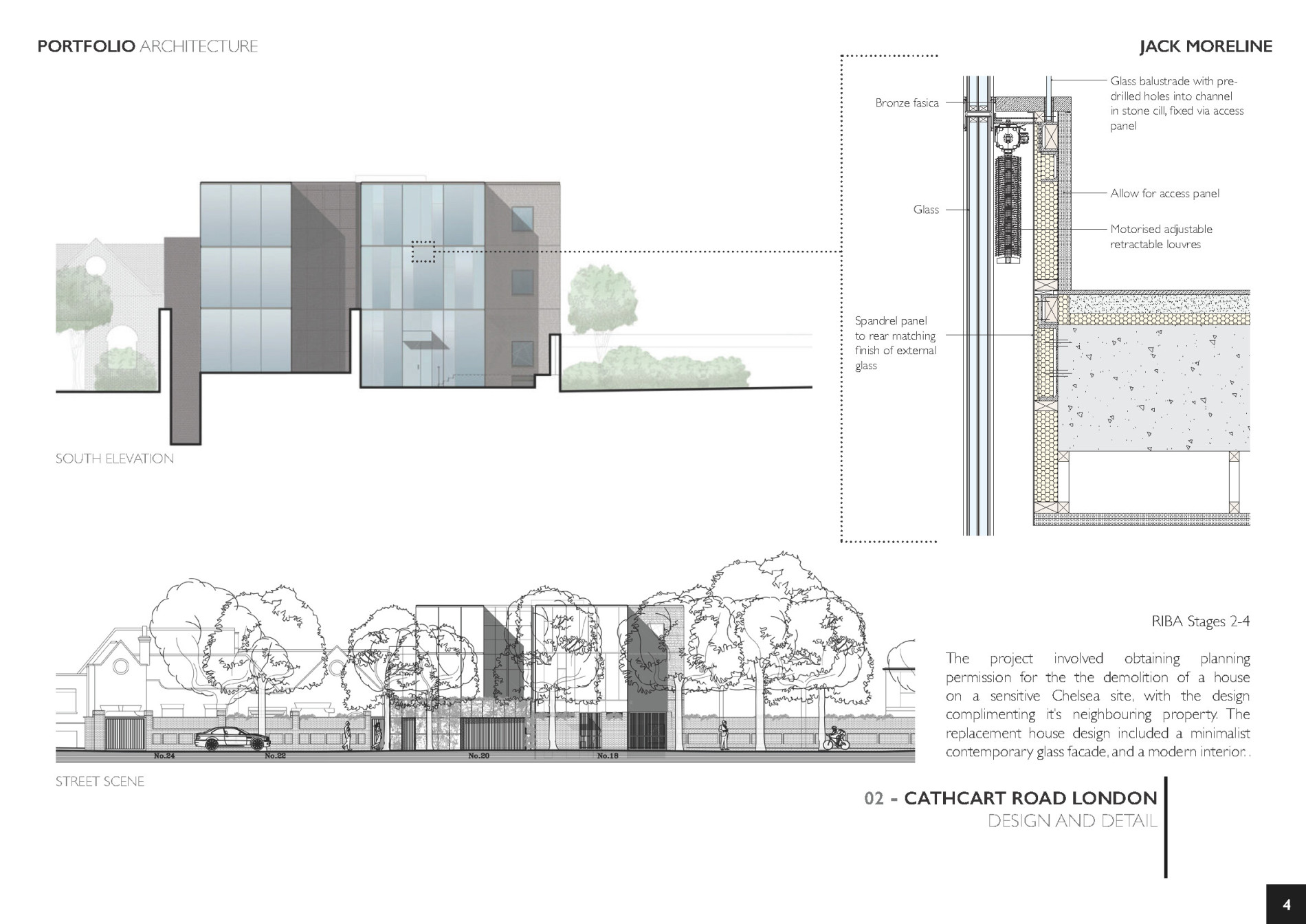
Include technical drawings such as exploded axonometrics, sections, and construction details alongside glossy renders.
-
Demonstrating technical proficiency proves you can contribute to project delivery, which is a primary requirement for early-career hires.
Jack Moreline
Search for architecture and design jobs here
-
Architecture
-
All Architecture
Select sub classifications-
Senior Architectural Technician
-
Intermediate Architect
-
Junior Architect
-
Senior Design Manager
-
Associate Director
-
Architectural Technician
-
Design Manager
-
Associate
-
Director
-
Graduate jobs
-
Senior Architect
-
-
Landscape & Urban Design
-
All Landscape & Urban Design
Select sub classifications-
Senior Landscape Technician
-
Landscape Technician
-
Senior Landscape Architect
-
Intermediate Landscape Architect
-
Junior Landscape Architect
-
Strategic Planner
-
Senior Strategic Planner
-
Associate Director
-
Principal
-
Associate Landscape Architect
-
Associate Planner
-
Senior Statutory Planner
-
Statutory Planner
-
Senior Urban Planner
-
Urban Planner
-
Senior Associate Landscape Architect
-
Graduate jobs
-
-
Strategic Appointments
-
All Strategic Appointments
Select sub classifications-
CFO
-
Sector Lead
-
Associate Principal
-
COO
-
Design Director
-
Head of Business Development
-
Technical Lead
-
Associate Director
-
Design Lead
-
Principal
-
Director
-
Partner
-
Managing Director
-
Graduate jobs
-
-
Interior Design
-
All Interior Design
Select sub classifications-
Director
-
Junior FF&E Designer
-
Senior Interior Architect
-
Interior Architect
-
Junior Interior Architect
-
Senior Interior Designer
-
Intermediate Interior Designer
-
Junior Interior Designer
-
Associate Director
-
Associate
-
Intermediate FF&E Designer
-
Senior FF&E Designer
-
Graduate jobs
-
-
Architectural & Interior Products
-
All Architectural & Interior Products
Select sub classifications-
Junior Account Manager
-
Specification Manager
-
Procurement Coordinator
-
Showroom Manager
-
Showroom Assistant
-
Sales Representative
-
Procurement Manager
-
Sales Support
-
Marketing
-
Sales Manager
-
Business Development Manager
-
Account Manager
-
Production Manager
-
Project Manager
-
Graduate jobs
-
-
Business Support
-
All Business Support
Select sub classifications-
Studio/Practice Management
-
Project Manager/Coordinator
-
Graphic Design
-
Bid Specialists
-
Document Control/Project Admin
-
Marketing & Communications
-
PA/EA
-
Reception/Front of House
-
Facilities
-
IT
-
Administration
-
Operations
-
Finance
-
HR
-
Business Development
-
Graduate jobs
-
-
Jobs at Bespoke
-
All Jobs at Bespoke
Select sub classifications-
Graduate jobs
-
Recruiter
-
Team Coordinator
-
Other
-
Latest architecture and design jobs around the world
NSW
$130,000 - $150,000
Permanent
Award winning studio looking to grow established BIM team
Learn MoreVIC
$90,000 - $95,000
Permanent
Join a leading design studio shaping timeless, high-end residential interiors
Learn MoreDistrict of Columbia
$115,000 - $150,000
Permanent
Lead complex projects and drive design, delivery, and team performance within a collaborative studio
Learn MoreNew York
$10,000 - $135,000
Permanent
Award Winning International Design Firm looking for talented Landscape/Urban designers.
Learn MoreLondon
$60,000 - $75,000
Permanent
Exciting hospitality projects - Popular Hybrid Studio
Learn MoreTAS
$80,000 - $110,000
Permanent
Join a Leading Design Studio – Architect or Interior Designer
Learn MoreVIC
$80,000 - $90,000
Permanent
Shape a high performing office environment on a part time basis
Learn MoreVIC
$150,000 - $160,000
Permanent
Lead finance in an architecture practice that delivers landmark projects in Australia
Learn MoreVIC
$60 - $60
Contract
Contract Interior Documenter, High-End Retail, Immediate Start
Learn MoreTexas
$105,000 - $120,000
Permanent
Project Architect | Design-driven Architecture Firm | Austin TX
Learn MoreTexas
$80,000 - $100,000
Permanent
Project Coordinator | Central Texas Commercial Architecture firm
Learn MoreNSW
$85,000 - $110,000
Permanent
Award winning design studio looking for ambitious architects and graduates to support immediate project needs - Multi-residential focus.
Learn MoreTexas
$75,000 - $95,000
Permanent
Design healthcare environments that make a real impact.
Learn MoreTexas
$120,000 - $140,000
Permanent
Drive high-profile healthcare interior projects.
Learn MoreLondon
$48,000 - $52,000
Permanent
Exciting high-end commercial hospitality projects - Revit
Learn MoreVIC
$90,000 - $105,000
Permanent
Lead Complex Commercial Projects with Precision and Impact
Learn MoreVIC
$80,000 - $90,000
Permanent
Add workplace design to your folio at this collaborative, innovative studio!
Learn More

Looking to hire top talent
 or advance your career? Let's talk.

We connect exceptional firms with talented professionals.
Let’s discuss how we can help you achieve your goals. Get in touch with the team today.
People also searched:
Browse Jobs by Location
London | Sydney | Melbourne | Brisbane | Adelaide | Perth | New York | Los Angeles | Austin | Dallas | Washington DC | Manchester | Auckland
Browse Jobs by Category
Architecture | Interior Design | Landscape & Urban Design | Business Support | Architectural & Interior Products | Strategic Appointments | Contract
Popular Searches
Architecture Jobs in London | Architecture Jobs in Sydney | Architecture Jobs in New York | Architecture Jobs in Melbourne | Architecture Jobs in Austin | Interior Design Jobs in London | Interior Design Jobs in Sydney | Interior Design Jobs in New York | Interior Design Jobs in Melbourne | Landscape Jobs in Sydney | Landscape Jobs in Melbourne | Architecture Jobs in Los Angeles | Interior Design Jobs in Los Angeles | Architecture Jobs in Dallas | Interior Design Jobs in Dallas | Contract Jobs in London | Contract Jobs in Sydney | Contract Jobs in Melbourne
Related Posts


Anticipating future hiring needs can be challenging for an architecture firm or design studio. Employers can always benefit from recruitment planning, even before new vacancies materialise.
Whether you have a large project on the horizon or not, the need to recruit employees will fluctuate at times. Having good practices and strategies in place can help you be more agile when new staffing requirements arise.