How To Become A Great Architect (We Asked 7 Leaders)
Season one of The Bespoke Careers Podcast ran to 42 episodes. This compilation pulls from seven of them.
Season one of The Bespoke Careers Podcast ran to 42 episodes. This compilation pulls from seven of them: the president of the RIBA and one of his predecessors, the CEO of 10 Design, a managing principal at KPF, the landscape architect behind the Diana Memorial Fountain, an AI consultant and one of the first architects to build a real following online. Between them, there’s 195 years of experience.
This episode is all advice: what they’d tell someone starting out, someone stuck in the messy middle, and someone running a practice. The video runs 57 minutes. Below are all 49 pieces of advice they give, guest by guest, in their own words.
Some of it disagrees. Chris Williamson says pick up the phone, because the worst anyone can say is no. Forth Bagley says the profession is a battle of attrition and you shouldn’t be in a hurry. Simon Allford says architects’ money problems are our own fault.
Sabrina Klor, CEO, 10 Design
Sabrina Klor is CEO of 10 Design and Chair of Women in Architecture UK. Before that she spent 20 years at Broadway Malyan, moving from running projects to commercial director to COO. 8 pieces of advice from Sabrina:
Treat the business as seriously as the design.
 Sabrina Klor
Acknowledging that without a successful, well-run business, there is no design to do. And they are both as important. So it's not about removing the importance of design or business. It's about having both at the same time. And that's hard, because as architects, we are not trained as business people.
If you're doing two jobs badly, pick one.
Sabrina KlorI was at a point doing both, still running projects and trying to run the business. I couldn't do both. It was too much. I wasn't doing anything right. So I said, I do one or the other. It was the best decision I've ever made for me. I never looked back.
Judge a team by its data, not its hours.
Sabrina KlorYou normally think the busiest teams are the most productive teams. But when you look at the data, maybe that wasn't the case. Maybe the brief was not clear, or the team's skills are not right for that project. They're working really hard and staying really late, but they may be doing lots of extra work, or the wrong work.
Take the project everyone tells you to avoid.
Sabrina KlorEverybody was telling me not to take the project. The project had so many problems that it was unsolvable. And I enjoyed a challenge, so I took it. It was one of the hardest and probably the best decisions that I've made, because that project showed me how much I enjoyed solving problems.
Prevent problems instead of fighting them.
Sabrina KlorI shifted my thinking from how to resolve the problems to how to prevent the problems from happening. I was a very lonely voice at the time. But I kept talking about prevention more than cure.
Get a coach who'll tell you the truth.
Sabrina KlorMy first ever coach, who is now a very good friend, really opened my eyes. She was very, very cruel and crude with me and told me things that no one else ever told me, which was fascinating, because then I could understand why things were happening.
Surround yourself with people who have the answers.
Sabrina KlorI learned on the way that I didn't have to have all the answers. I just had to surround myself with a team that had all of the right answers.
Use AI without shame.
Sabrina KlorThere's no harm or shame in using AI to resolve those things, or any other tools that are there. The younger generation today are doing things that we could never do, and it's really helping them to improve the quality of the design that they are delivering.
Chris Williamson, President of the RIBA
Chris Williamson co-founded Weston Williamson + Partners and is President of the RIBA (2025 to 2027). 7 pieces of advice from Chris:
Line up the next job before this one finishes.
 Chris Williamson
It was a different era when Denys Lasdun was around, or Michael Hopkins, who I worked with. Their modus operandi was to do a great building, get it published, and that would get them the next project. These days you can't afford to go more than a few weeks without the next job. So you've got to line the next job up.
Learn the business skills university doesn't teach.
Chris WilliamsonI did a project management master's at South Bank University as soon as we started the practice. If I hadn't done that, I don't think we would have won the Jubilee Line project. It taught you what other people in the property industry are looking at in an architect. They want you to be a great designer, but they also want you to be a good manager.
Let the creatives create and the managers manage.
Chris WilliamsonI'm a big fan of the advertising industry, which has a creative team and an accounts team. The accounts team look after the client and make sure everything gets done on time, and that leaves the creative team to do the work.
Specialise.
Chris WilliamsonMy mailbag is full of complaints about low fees and low wages. In order to do something about that, we have to let people specialise. If you became an expert in sustainability or conservation or AI or management, you'd stand a chance of a better salary or better fees.
Enter competitions that are run properly.
Chris WilliamsonIf the competitions are run properly and they don't ask for too much work, it's just really exciting to come up with an idea and submit it. You're convinced it's going to win, because it's the best you can do. And by the time the results come out, even if you haven't won, you've moved on to something else.
Pick up the phone and ask for help.
Chris WilliamsonWe're all so frightened about being turned down by phoning up and saying, look, can you help us? And what's the worst that can happen? The worst that can happen is to say no. Architects are collegiate. They do like helping.
Hire for passion. The skills follow.
Chris WilliamsonWhen I'm interviewing people, I always look for energy and enthusiasm and excitement and passion, maybe at the expense of technical competence. If you're passionate about something, you'll develop those skills.
Keir Regan-Alexander, Founder, Arka Works

Keir Regan-Alexander worked at Feilden Fowles and Morris+Company before founding Arka Works, which helps practices adopt AI. 8 pieces of advice from Keir:
Listen when a mentor tells you to leave.
 Keir Regan-Alexander
I went back to Liverpool, and David Dunster saw me in reception and said, what the F are you doing here? You need to go do something else. It was such good advice. He was saying, do something different. You've got an opportunity here.
Join a small practice to become essential fast.
Keir Regan-AlexanderI went into a small practice, and you have to do everything. You become quite essential quite fast. And then I was able to get projects which were way beyond my years, and thankfully managed to deliver them well.
Lead by doing, not saying.
Keir Regan-AlexanderWhat you do is more important than what you say. Turning up and leading by example is important. If things go wrong, how do you take responsibility for them yourself, rather than blaming other people?
Don't micromanage.
Keir Regan-AlexanderI definitely micromanaged people when I started running projects, and I could see it was not an effective approach. That's the first major error people make when they reach leadership level. They think they have to control every detail.
Act on the first nudge.
Keir Regan-AlexanderYou get these nudges and you see things and you ignore it. Then two years later you see it again and you ignore it. And then a couple of years later it's a huge thing, and you think, why didn't I just act on the first impulse?
Keep the time AI saves you.
Keir Regan-AlexanderIf you make a time saving and you use it as a competitive measure against another practice, then you will drive our fees into the ground. And that's how we lose at this whole thing. We need to understand our value, and with the rise of AI, we need to be the best at using it. And we should be paid well for it.
Work out how to become essential.
Keir Regan-AlexanderIf I were going into practice right now, I would be trying to find ways to become essential. In any situation, how do I become essential and indispensable? That's true now. But how you do it is probably different to what it was five years ago.
Ask where you're valuable, not what you want.
Keir Regan-AlexanderWhen you're looking at your next move, you could think, well, what do I want for myself? I thought I should set up an AI-driven practice. Then I thought, I'm not sure we need another practice right now. What I could do that would be more valuable is become really good at something and go help lots of other practices with it.
Simon Allford, Co-founder, AHMM
Simon Allford co-founded AHMM and was President of the RIBA from 2021 to 2023. 5 pieces of advice from Simon:
Stop accepting that architects stay broke.
 Simon Allford
To this day the profession will moan about money and fees and not being properly looked after. And my point is, and I've always said this, it's our own fault. Because we are trained to love architecture. We are preconditioned to think great architects don't make any money. And therefore it's a self-fulfilling prophecy.
Look after your people, or nobody will join.
Simon AllfordYour life without any adequate cash and continuous debt is quite miserable. And as a profession, who's going to be attracted into a profession that doesn't look after its people properly? At least the mindset is changing. People want to be looked after properly.
Go to the public consultation and listen.
Simon AllfordEven if you don't agree with what you're told, you get a feeling of what people are worried about. I remember Will Alsop, who was not exactly a shrinking violet, saying, actually, I enjoy public consultation. It makes you think harder. So anything that makes you think harder is good.
Write it down, or you can't think it.
Simon AllfordA student said, I know what I think, I just can't write it down. And the professor said, if you can't write it down, you can't think it. We use words and text as a way of organising ideas. The more I use Waze, the less I know my way around London. The more you use AI, the less you're able to organise your ideas.
Use AI without switching your brain off.
Simon AllfordIt's an extraordinarily powerful tool. But it's stealing all our IP, and it's a bit like a drug dealer selling you crack cocaine. It's cheap initially, and then it'll become very, very expensive. Will it replace the ability to think? Only if we allow it to.
Kathryn Gustafson, Landscape architect
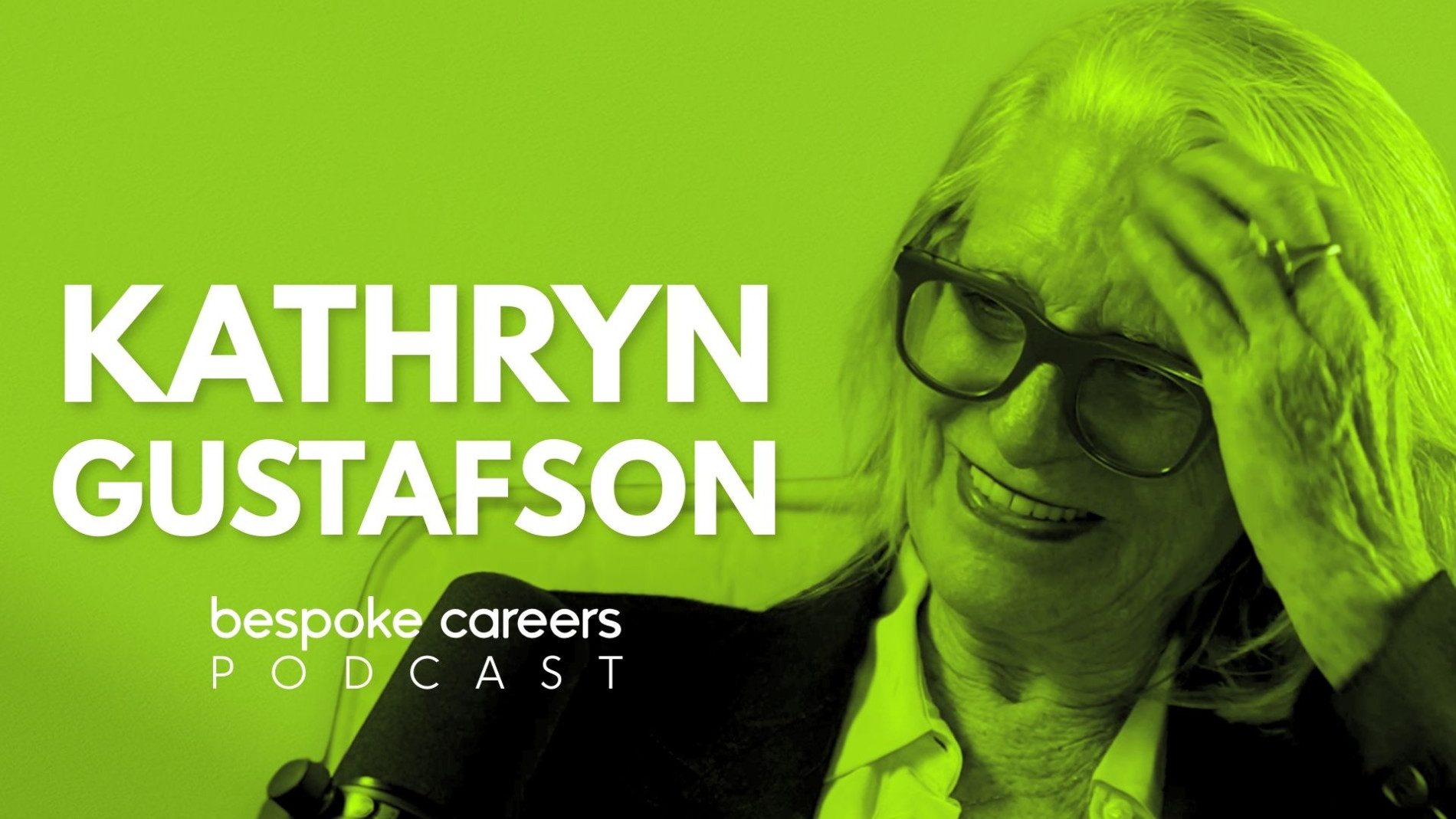
Kathryn Gustafson is a landscape architect and co-founder of Gustafson Porter + Bowman in London and GGN in Seattle. 7 pieces of advice from Kathryn:
Treat contracts and insurance as tools.
 Kathryn Gustafson
We have contracts, we have insurance. You have to do those things or you don't get to do what you want to do. It's not a game at all. It's about making your vision possible. The tools are there to help you. They're not there to pull you back.
Start small.
Kathryn GustafsonJust start small. You take small jobs. You take jobs where you learn. There were two men, probably ten years older than me, who needed somebody to help with their projects. They gave me a room in the Latin Quarter, and they would teach me how to write a contract.
Trade what you know for what you don't.
Kathryn GustafsonI often traded things that I knew how to do for people to teach me. There was a landscape architect I wanted to learn to draw from, and I photograph a lot. So I traded to photograph all his projects in exchange for him teaching me how to draw.
Publish five projects, not one.
Kathryn GustafsonPeter Rice said, you have to publish. But when you publish, you've got to really publish. Not one project. Like five. So I held back for three years. Then I came out in five publications in three months, with five projects. And it was just like, boom.
Find advisors who know your field.
Kathryn GustafsonThere have been two or three key advisors who popped in at the right time and sat me down and said, you have to go this way and not this way. This is how much money you can spend. They're specific advisors for your field.
Keep a friend outside architecture.
Kathryn GustafsonI had a friend I met when I was 23 who is still with me for any major move I make. Having people that are not in your field, that are not architects or designers, outsiders whose sole interest is you, is huge.
Make a place that fits.
Kathryn GustafsonOne of the things I use as a saying is, make a place that fits. You're not designing for you. You're designing for the place you're in and the people you're with. Getting that marriage right is your biggest battle.
Thomas Rowntree, Founder, tomrowstudios

Thomas Rowntree is an architectural designer, the founder of tomrowstudios and the author of Architectural Influence: Mastering content creation and social media marketing. 6 pieces of advice from Thomas:
Look past the job title.
 Thomas Rowntree
The skill set that you get at architecture school is vast. Communication, time management, juggling deadlines, turning an idea into something physical. Many other industries would look at that and say it's extremely valuable. Just becoming an architect and having that title is starting to fade a little bit. You don't just have to be this.
Treat social media as the interview before the interview.
Thomas RowntreeFor an industry like architecture that is so competitive, social media is the opportunity to have that competitive advantage. That interview before the interview. When you show up, someone might have already seen your profile. They already have an inkling of what you can bring to the table.
Share what you know.
Thomas RowntreeA particularly prevalent idea in architecture is gatekeeping knowledge. We don't want people to know what we're doing or how we do it. If people are willing to speak about these things, it opens up the playing field and breaks down those barriers.
Stay a student for life.
Thomas RowntreeYou're an architecture student for life, because there's so much to learn in the profession. The moment you turn around and say, no, I know everything, is the moment you need to get out of the profession.
Don't take the average path.
Thomas RowntreeBe open to explore things, and don't go down the average path. Take a different turn, try something new and push the boundaries a bit. Some of the top architects and designers are the people pushing the boundaries.
Protect your sleep.
Thomas RowntreeI had insomnia for three months at one point because I was so absorbed by everything. Sleep is a really important thing. Managing your time and stress and priorities is really important as well. Look after yourself.
Forth Bagley, Managing Principal, KPF
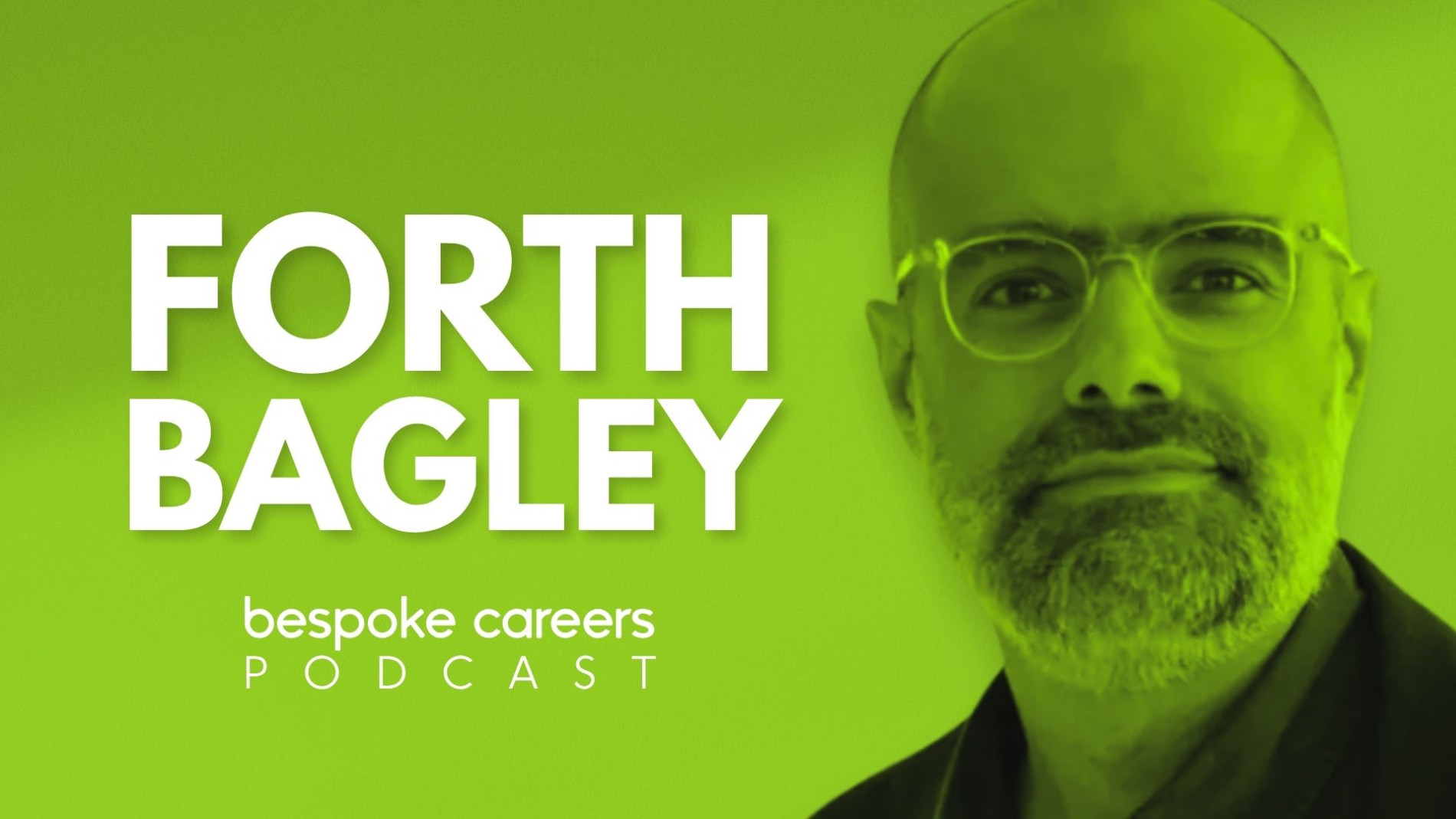
Forth Bagley is a Managing Principal at KPF, where he has worked since 2005. 8 pieces of advice from Forth:
Get through the hardest years as fast as you can.
 Forth Bagley
The hardest part of my career was the moment I was expected to both lead a team and do the work. It was the worst couple of years of my life. I always say to people at KPF, this is the hardest part of your career. The only way I know how to do it is to get through as fast as possible and get your head above the water.
Have empathy and optimism.
Forth BagleyBob Stern said to me, you'll never be a successful architect unless you have two things. Empathy for your clients, because they're taking huge risks. And optimism too, because you have to convince people to build this 500-metre tall building.
Remember it's a service business.
Forth BagleyIt is fundamentally a service business. The business model is really no different than a plumbing business. Someone calls you up to a job. You go do it as best you can, as fast as you can, and make sure nothing breaks. They're happy, and they tell their friends to use you to fix the pipes.
Talk to the person next to you.
Forth BagleyEqually important, if not more important, is getting out into the world. Talking to people on airplanes, reading books that aren't about architecture, friends that aren't architects. I sat next to the inventor of the Squishmallow on a flight from London to Miami. If you don't talk to the guy, you never meet him.
Get comfortable with delayed gratification.
Forth BagleyDon't be in a hurry to get a drawing set out. Don't be in a hurry to get a rendering out. Don't be in a hurry to build too many buildings. The profession is a battle of attrition. Build your building one building at a time.
Become the architect you want to be.
Forth BagleyThere isn't one type of architect, just as there isn't one doctor or one lawyer. There are lots of ways to be an architect. Don't spend your life worrying about work-life balance. Spend your life becoming the kind of architect that you want to be.
Change course if you're being pushed somewhere you don't want to go.
Forth BagleyIt's your first job, not your last job. You can course correct. If you feel yourself being moved into a specialised thing that you don't want, you have to make the change. A culture like KPF or the AIA is never going to care more about your career than you.
Adopt the new technology.
Forth BagleyMy very first summer job, the guy went out of business because he didn't use AutoCAD. The company I worked for in Hong Kong didn't go from AutoCAD to Revit, and they went out of business. Now we're in AI. You've got to find a way to use it.
Search for architecture and design jobs here
Latest architecture and design jobs around the world


Looking to hire top talent
 or advance your career? Let's talk.

We connect exceptional firms with talented professionals.
Let’s discuss how we can help you achieve your goals. Get in touch with the team today.
Related Posts

Employment law updates have been making headlines, and not always for the right reasons. There’s been a wave of misinformation, with reports making the changes sound more dramatic and confusing than they really are.
Here is what our industry experts have been seeing in Perth
It’s a well-known fact in marketing that a brand’s employees make the best influencers, especially on social media channels. Employee advocacy helps businesses achieve results that standard messaging can’t achieve alone.