
The Honest Truth About the Future of Architecture – AIA President, Adam Haddow
"We're at a really important junction." RAIA President Adam Haddow explores what the profession must do to remain politically relevant and socially useful.
Adam Haddow is an Australian architect, partner at SJB and the current National President of the Australian Institute of Architects (AIA).
In this conversation, Adam makes the case that architects have spent decades drifting toward irrelevance, avoiding the hard conversations about cities and housing while celebrating beautiful houses and hoping politicians notice. He believes that needs to stop.
We cover what meaningful influence looks like for the profession, why AI is the biggest democratisation architecture has ever seen, how his own 67sqm terrace house is a direct argument against suburban sprawl, and what the RAIA needs to become to stay worth belonging to.
On regional Victoria…
Growing up in rural Victoria in the 70s was pretty different than it is today. You were remote and there wasn’t a lot of connection, but it was a very relaxed childhood. We lived on the edge of town in the bush, so we had little connection to the town itself. The thing that keeps coming back to me is the smells and the sounds. The Australian bush is pretty special. We lived on the back of a national park and we had horses and would go riding all the time. There was this very strong sense of connection to the landscape and a strong sense of community because it was a small place where you knew everybody.
Mum and dad were quite good at instilling the idea that anything was possible. Even in this small place where there wasn’t a lot going on, you could do whatever you wanted. We would just get up and go out for a day and not come back for 24 hours, and no one was particularly worried about you.
On early threads…
My dad was a plumber originally and then became a school teacher. He built the house we grew up in. The house was never really finished. When we moved in just after I was born, there was no floor in the living room, just a dirt floor. My mom eventually told him we needed a floor or she was moving out. Dad building that house from scratch embedded the idea of making things and making space in me.
I never wanted to be anything else. There was never any choice for me. I was always going to be an architect. I just had to work out how to get there. I was a bit worried that I wouldn’t get into university, so that was the focus, how to fit the system and become an architect. It is literally the only thing I’ve ever wanted to do. My brother is actually pissed off with me because he is 50 and still doesn’t really know what he wants to do, whereas I knew exactly.
On university days…
It was unbelievably fantastic. Because I lived in the country, I had to move to Melbourne, and for me, that was like opening a whole new world. I was lucky enough to go to Newman College, which is the largest building designed by Walter Burley Griffin and Marion Mahony on the Melbourne University campus. It was a phenomenal experience where it would take me seven minutes from waking up to getting to a lecture.
The school was headed by Peter McIntyre when I started, one of the famous modernist architects in Melbourne. There was a clear agenda about precise planning. It was essentially planning, planning, planning. Then Haig Beck came in as an amazing educator and instilled an idea about tectonics, narrative, and the strength of architectural ideas in the end product. It was an amazing experience, though exhausting. By the end of five years, I was ready to leave.
On working abroad…
During my studies, we were forced to take a year off in the middle of our degree. I traveled to the UK and worked at the Hampshire County Council Office in Winchester for about six months. I worked as a student helping design schools, which was an amazing experience. I traveled the world and then went to China for a university field trip. We were measuring 13th-century courtyard housing in central Beijing in 1995.
On the walking catchment…
My physical footprint when I lived in the country was pretty small, basically everywhere you could ride your bike. Everything had to be within a walk or a bike limit. When I moved to Melbourne, it wasn’t particularly different. Even today, my footprint exists within a working catchment of my house and my office in Surry Hills in Sydney. We joke that I can’t go to a restaurant in Rose Bay because it is outside my catchment, even if it is only a 10-minute drive. I took that idea from country living into the city, trying not to stretch that footprint and finding a place to live that sat within a walking catchment of practice.
On starting at SJB…
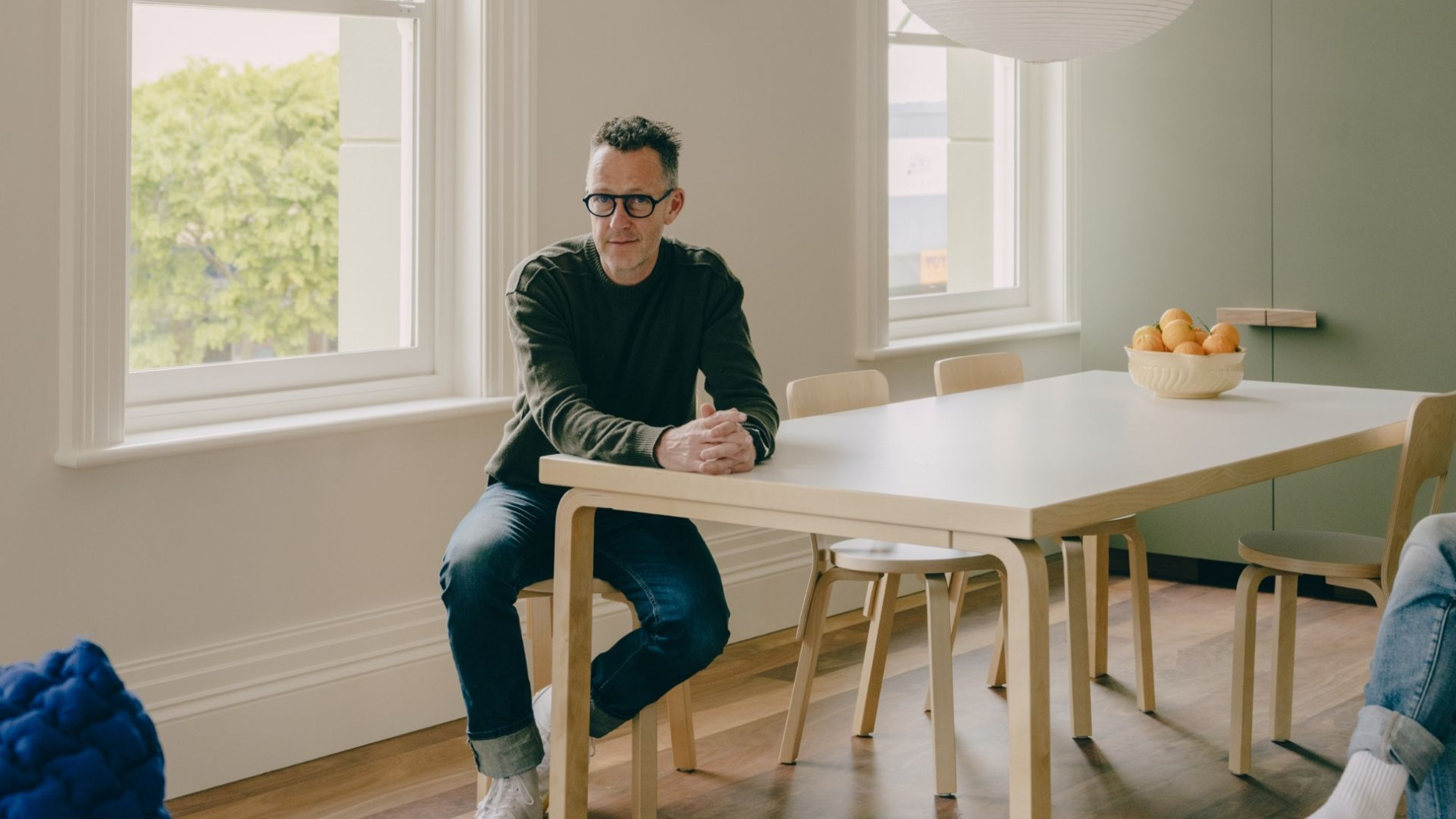 I started at SJB as a student on my year out for work experience. I always joke that I got the job because the previous intern’s name was Adam and it was easier for the directors to remember my name. It has been an incredible gift from the original partners in terms of the opportunities and capacity building they allowed. The three partners were all children of Holocaust survivors. Melbourne has a very large community of survivors, and that brought a particular perspective to the practice.
There was a great sense of generosity, but it was also very much about making money. There was no wealthy parent to prop the business up. There needed to be a clear avenue to success to ensure the practice would survive. At the same time, there was a great sense of generosity toward diversity. There was no question about where you were from. You were accepted as you walked through the door.
On moving to Sydney…
After university, I went back to SJB and did a project in Melbourne with Will Alsop. He was invited out for a three-week sketch period, and I was invited to work with him. Will told me to come work for him in London. I was open to it, but then I worked on a competition for a project in Sydney which we ended up winning. I moved to Sydney instead of London 26 years ago. I came for three weeks and never left. SJB then offered us the opportunity to establish a practice here.
On ownership transition…
I am already trying to work out my exit strategy. We have a rule in the practice that you can’t own the practice after the age of 65. You can still work there, but you can’t own any of it. I am 52, so that is not far away. In the last couple of years, we have been thinking a lot about how to transition the practice. We have 120 people in our office. It would have been impossible for me in my 20s to buy into a practice because I didn’t come from wealth. My business partner John is the son of Italian immigrants and also didn’t come from money.
We recently restructured the business so there is no buy-in and sell-out. It is a straightforward relationship between new and existing partners where everyone is equal. No one has to find a couple of million dollars to buy a percentage.
On architectural legacy…
The thing that drove the original partners was context, both physical and client context. It was about understanding long-term relationships and doing multiple projects where that context was expressed in the buildings. There is no architectural motive that becomes a signature. The signature is more about the end product and what the client hasn’t asked us to do that we want to deliver. We want to ensure the project delivers public benefit as well as private gain. Those two things are not mutually exclusive. You can do a great development project that also delivers significant public benefit.
On planning expertise…
The partners in Melbourne originally brought on an interior designer and two planners to help in the delivery of projects. Planning in Australia is a nightmare. Bringing in specialist expertise and seeing architecture in its broadest sense was vital. As a profession, we have been railroaded into the idea that architecture is only capital A, but the partners understood it is much broader. Being involved in urban design, planning, and interior design is critically important to the delivery of great buildings.
When we moved to Sydney, I realized planning was even harder there. We were working on a project and the person on the other side of the table was the head of council planning. We became friends and I asked if she was going to stay at council forever. She said she was thinking of leaving, so I told her to come work for us. Our planning division in Sydney was born out of that relationship.
On multidisciplinary benefits…
Clients see a lot of value in people who understand all those different avenues. They can engage all of us or just some of us. The benefit of having people in-house is that we engage everyone. While I might be working with an external planner on a job, I have planners in the office to talk to about what is happening. The knowledge finding is done with everybody. It broadens our capacity to have a discussion from a greater level of diversity, including discipline diversity.
Planners often come to us when they are working for a government agency and need a third party to help review a set of drawings. Architects sitting on the opposite side of the fence can be the best advocates for architects doing buildings. That broad reach is something we have designed out of ourselves in the last 20 years, and we have to work on designing it back in.
On the tiny terrace…
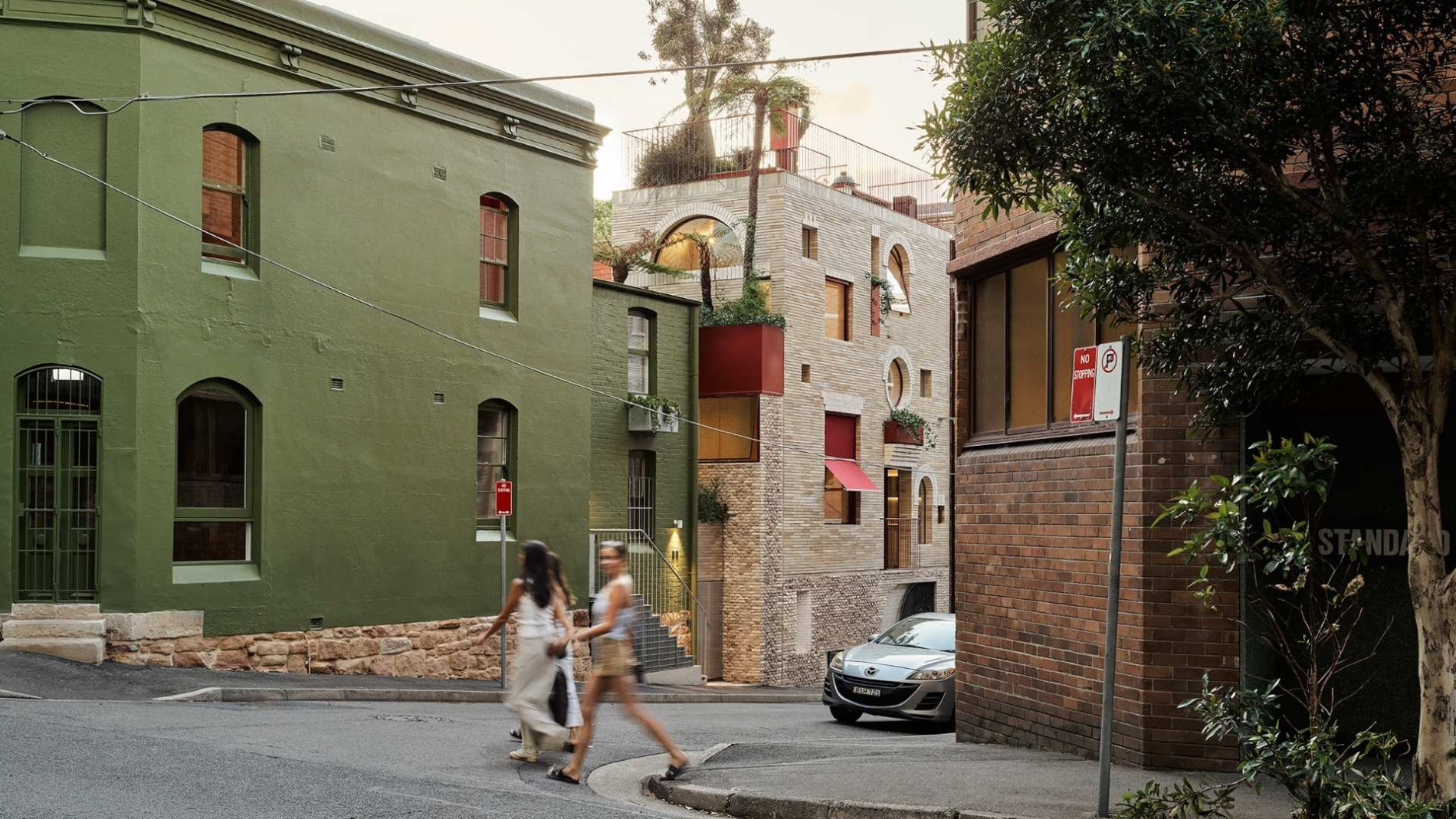 My husband and I had an apartment with a big garden at level six, but it was just the two of us and a dog. We felt we didn’t need that much space. We had walked past this site for years because it was close to my office. The for sale sign had been up for about two years, which never happens in Sydney. My husband suggested buying it to do a small project. I initially said no because it was too small and difficult, but then I drew some drawings and realized we could make it work. Mike offered $300,000 less than the asking price and they said yes.
It is a 92 square meter block of land with a historic terrace that hadn’t been lived in for 10 years. It had been used as a storeroom for the clothing industry. The house is divided into two components. The front building is the restored original terrace. The downstairs is a retail space rented to another architect, and upstairs is a two-bedroom apartment that we rent out. The back piece of land, which is 30 square meters, is our house. It is a four-story terrace on a 30 square meter footprint. The internal area of each level is less than 28 square meters. It is 67 square meters internally, but it is a really enjoyable house to live in.
On the housing crisis…
We do a lot of housing, and one of the challenges in Australia is that we have the largest houses in the world statistically. The average Australian house is larger than the average American house, which is horrendous. A lot of the project was about trying to show how you could live with less. I don’t want to turn more bushland into suburban sprawl. If we are going to stop the concretisation of the eastern seaboard, we need to limit our footprints.
State and federal governments are never going to put rings around our cities for political reasons. We have to change the way the community involves themselves in housing and show them that smaller housing can work better. It is cheaper, easier to live in, and the ongoing costs are lower. We generate about 85% of our own electricity from the roof of the terrace. We walk everywhere and don’t have a car space.
On regional density…
We are doing a regional version of the small terrace in the town I grew up in, Ararat. It is a town of 10,000 people. We are building two terrace houses in the main street that are about 105 square meters. They are three-bedroom, three-story houses on a small footprint. You don’t necessarily have to get in your car if you live there. They should be finished just after Easter.
On investment barriers…
Clients are interested in smaller housing, but governments and estate agents aren’t necessarily. Mass housing in Australia is defined by the investment market. Agents will say you can’t sell it or no one will buy it, but our response is always that they just don’t want to sell it because they’ve never sold it before. It is easier to sell what you’ve sold previously.
In New South Wales, we have some of the best planning controls in the world, the Apartment Design Guide, which sets minimum standards. It is a guideline document, but it assumes the people assessing the application have the same level of design knowledge as the people designing it. There has been a strong resistance to varying those square meter minimums. It has inadvertently stopped innovation in some sectors, even though the quality of apartments in Sydney far outstrips states like Victoria, where the quality is awful in comparison.
On the shift to small…
Governments are interested in the idea of smaller apartments but find it a challenge to approve them because they become a case study for others. However, developers are interested. In the last five years, bigger was better because of boomers moving out of big houses. Over the next 10 years, smaller will be better because millennials wanting to buy will need something more affordable.
On entering leadership…
Architects are really good at critiquing. We are taught at university how to have a crit. That is good because we are aware of our surroundings, but it is bad because it is easy to just pass the buck and say someone else is doing something bad. If you want something to be better, you have to get involved. I wanted the architectural industry to have more influence and to do things from a social justice perspective. I needed to be part of the solution.
On political irrelevance…
One big learning is that you have to see yourself as passing the baton. Presidency shouldn’t be about reinventing the wheel. There should be a consistency of strategy and message, particularly to government. The second lesson is that politicians generally see us as being irrelevant. We have had very little say in what happens within the built environment industry, and to a certain extent, that has been our own doing.
We have shifted as a profession toward easy things like celebrating a beautiful house. The difficult things, like urban design and city-making, we are not particularly good at engaging in. We are not good at communicating the value of early design thinking to the public, so politicians don’t know how to engage with us. We need to stop fighting over the 10% we disagree on and start advocating for the 80% we do agree on.
On design value…
There is no such thing as no design. It is either good design or bad design. The choice happens very early in the process. If you don’t have clear design thinkers early, you will end up with bad design. We need to show the social, economic, and cultural value of what we do. We need to amplify our research to show communities and politicians what the outcome of good design really is.
On registration and protection…
In Australia, we have allowed the Institute of Architects to be defined by the regulatory environment of the registration boards. These boards are consumer protection mechanisms. They ensure that if someone wants a renovation, they get someone with knowledge. That is positive. But it focuses solely on the end state, like whether the gutters work, as opposed to the front end like urban design.
It is ridiculous to say all architects need the same level of knowledge. Someone working in city-making shouldn’t necessarily need to understand facade detailing and waterproofing to the same degree as a technical specialist. We need to be more dogmatic about expressing the differences across our profession. The medical profession is good at categorising expertise, but we have resisted specialisation.
On broadening the tent…
We need to grow our membership base for relevance. Out of the 50 people I studied with at Melbourne University, only six are registered. The other 80% still work in the built environment, just not as capital A architects. They are in government planning, urban design, or working for developers. We are not capturing them in the discourse of the profession. We need to open it up.
On the threat of repeal…
Last year the New South Wales government looked at repealing the Architects Act. There was great consternation. They essentially wanted to move the controls from one bit of legislation to another but did it poorly and screwed with the intent. We worked hard to stop it and were successful. However, repealing the act would have given us an opportunity to rethink what the profession is and what we value. It is now incumbent on us to reconsider what it is to be part of the profession and acknowledge that the contribution from the client side or government side is as valuable as the practice side.
On colleges of architecture…
We should consider defining colleges of architecture. The Institute might have a college of urban design, a college of interior design, or a college of heritage. Instead of relying on registration boards, we should provide the regulation. If you call yourself a heritage architect, there should be minimum standards. In Australia, lots of people use that title with very little knowledge. We need to define if that means adaptive reuse, restoration, or if it includes First Nations heritage. The next 10 years could be a revolution for the profession.
On the 5% problem…
In Australia, you don’t have to be an architect to deliver a building, except for residential apartments in New South Wales. Statistically, architects in Australia are only involved in 5% of housing design because the other 95% is suburban sprawl. Most people designing those houses have some level of architectural education but never got registered. It is better to have them in the tent.
Membership in the Institute should be a privilege, not a right. It would be more interesting if we asked members to think about their specialisation. That helps people understand their restrictions. Architects are an optimistic bunch, ask anyone if they can design an airport and they will say they can start tomorrow. But as the world gets more complex, we need to respond with specific expertise. At the moment, we are like a blunt knife.
On the increase in complexity…
When I started, there was no such thing as mixed-use and urban design wasn’t even a term. Now, projects have over a thousand pages of drawings compared to the hundred we used to have. The regulatory overlay is mental. We are working with ministers to simplify the national construction code because it is almost impossible to read or activate. We need to rely more on professional expertise rather than constantly having to prove everything to a building certifier. We haven’t kept up with the complexity of the city.
On the future of AI…
Architecture is one of the most enjoyable careers you could ever involve yourself in because you get to make things and physically engage with the world. But the profession will be unrecognisable in 15 years. Parts of it won’t exist in two years because of AI. The challenge is to lean into AI to design out the bits we don’t want to do.
The way we personally engage with buildings says something about our culture. Globalisation has already had a negative impact by making Sydney look like London. The big challenge with AI will be holding onto our idiosyncrasies. When you go to different places, you want the buildings to look different, just like the accents are different. We shouldn’t value sameness.
On the death of the middle-aged white man…
The world is moving toward diversity. If you are a middle-aged white guy like me, we are at the end now. The interest sits outside of that kind of perspective, in a much broader understanding of society. AI has the opportunity to bring a greater level of access and democratise the profession more than ever before. We shouldn’t resist the positives, but we must be cognizant of the moral obligations.
On having a plan…
I have never really had a plan. I am definitely a yes person. I just want to enjoy the people I work with and the environment I am in. Architecture is more about the people than the buildings. The relationships with colleagues and clients are far more interesting in the end than the buildings themselves. The interesting relationships are the ones that produce great outcomes. If I had a plan, I would go crazy.
Search for architecture and design jobs here
Latest architecture and design jobs around the world

Looking to hire top talent
 or advance your career? Let's talk.

We connect exceptional firms with talented professionals.
Let’s discuss how we can help you achieve your goals. Get in touch with the team today.
Related Posts

What does it take to become a successful architect? How do you build an award winning practice culture? How do we fix the housing crisis? And are architects still hungry enough to make a difference?
Shajay Bhooshan co-founded ZHA Code with a three-week crash course in writing code. That was 20 years ago.
When sourcing talent for architecture or design firms, it’s not uncommon to find candidates who may be technically brilliant, but who are a mismatch for a particular role in other critical ways.
The challenge lies in recognizing a candidate’s cultural fit from their CV and portfolio – as well as the candidate’s technical proficiency.