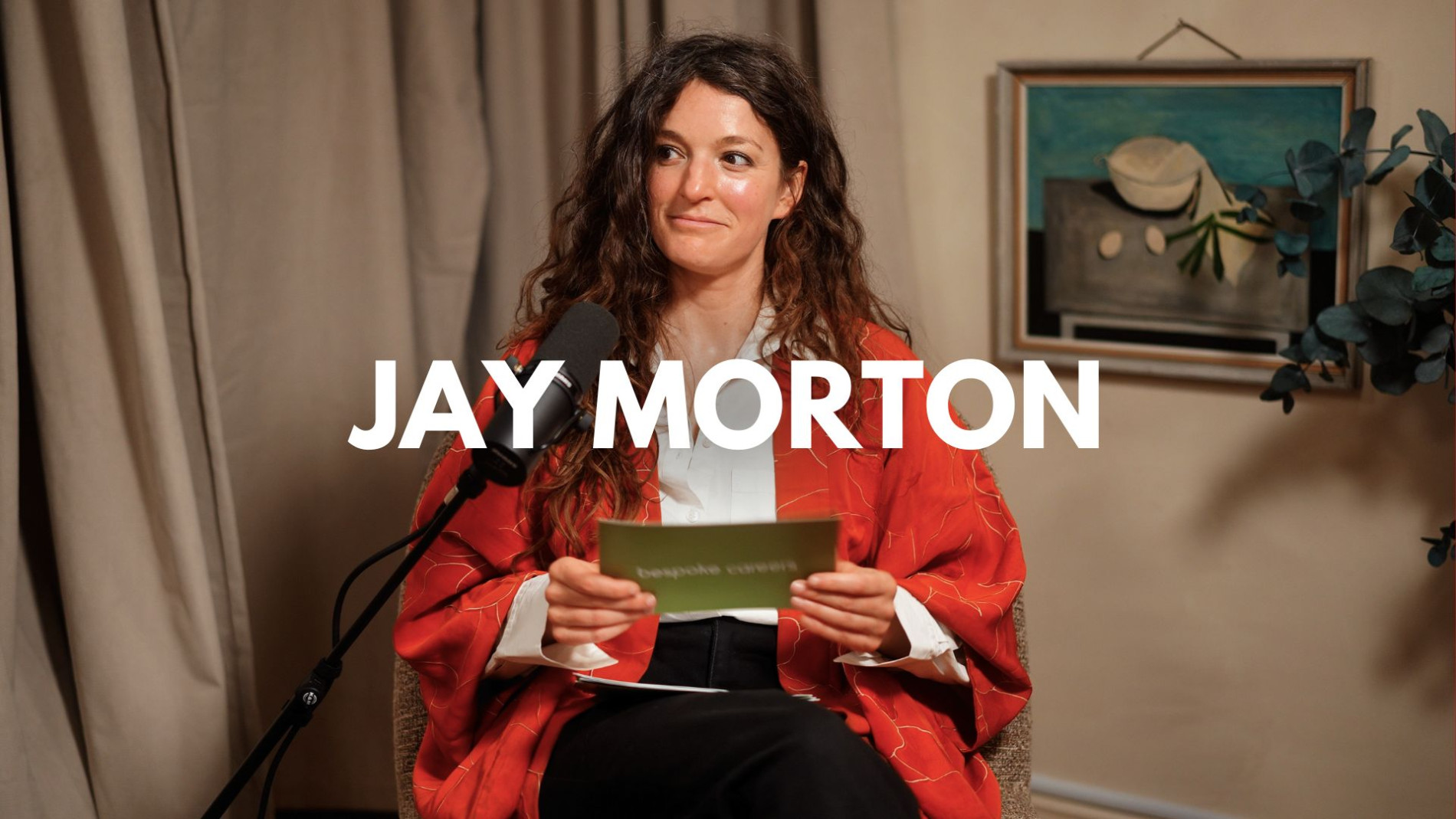
Overcoming Architecture’s Biggest Challenge – Jay Morton | RIBA Elections
Jay Morton on survival in 2026, why there are no architects in parliament, protection of function, and owning AI before it owns us.
2026 feels like a hinge moment for UK architecture. A housing crisis, a climate agenda, the looming impact of AI, and a profession under real pressure as fees, procurement, risk and responsibility all rise at once.
In this series we’re putting the same questions to each of the four candidates standing for RIBA president, so you can compare them like for like.
Jay Morton is a director at Bell Phillips Architects, where she works on large-scale housing, masterplanning and regeneration. Alongside practice she’s spent over a decade shaping housing and built environment policy at local and national level, has stood for parliament, and hosts the Architects for Change podcast. She sits on design review panels and the steering group for Architects Action for Affordable Housing.
In this episode: survival in 2026, why there are no architects in parliament, protection of function, and owning AI before it owns us.
 Bespoke Careers (Chris Simmons)
What experiences in your career brought you here and motivated you to stand for RIBA president?
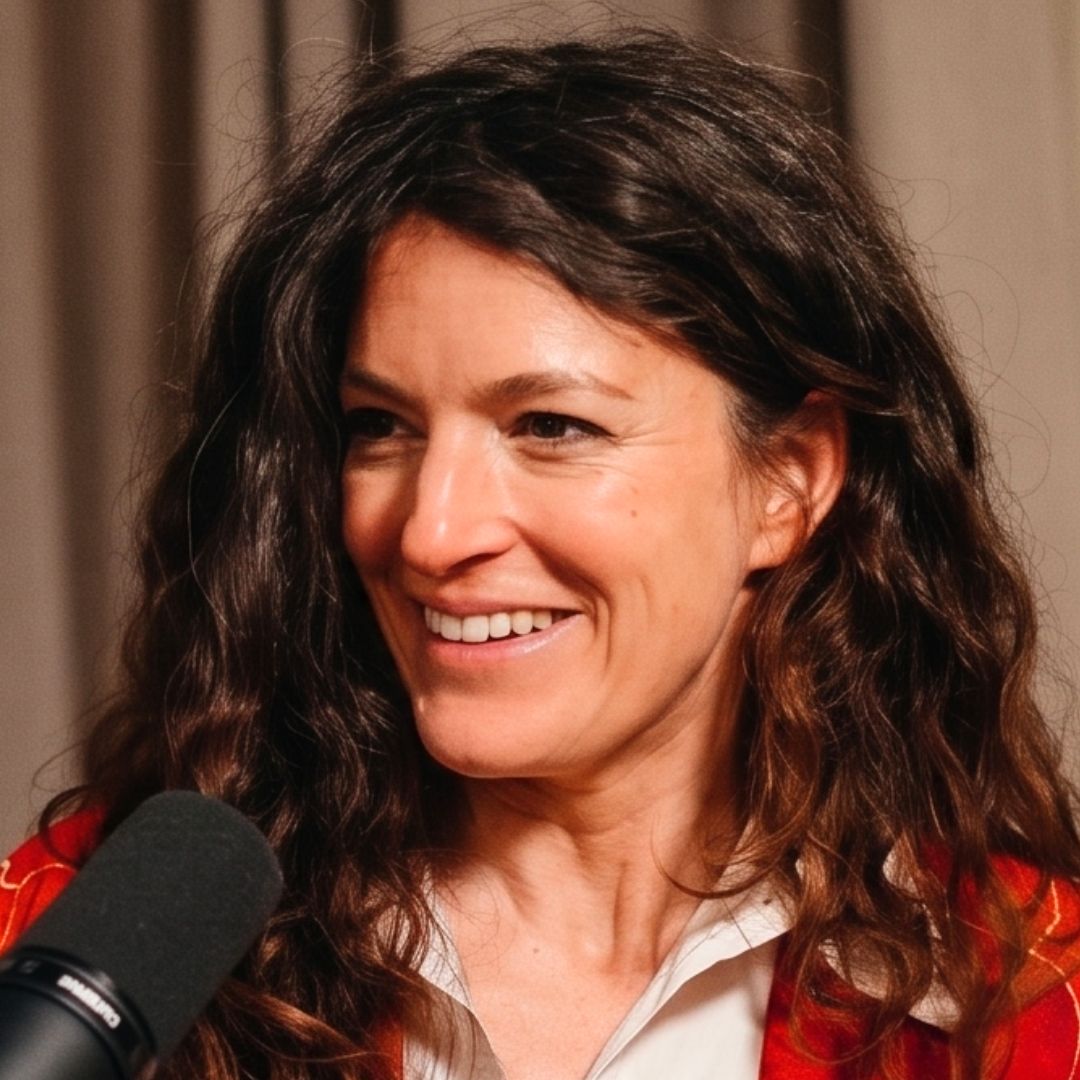 Jay Morton
I’m a practicing architect, a director of Bell Phillips for over 13 years. I’ve spent my entire career with an element of advocacy in everything I’ve done. The reason for joining Bell Phillips was wanting to work on social housing, affordable housing, making places better for wider society. Not just the one-off posh houses, which is great architecture too, but not the work I wanted to do.
I’ve been involved in Priced Out and Generation Rent and all those campaigns, because at the time the housing crisis was really affecting me. I’ve always had that element of trying to change things, make them better. Then I got more political. I stood for election mainly because there were no architects in parliament, which I thought was absolutely insane.
There was a quote from a long time ago from Richard Rogers, saying in the corridors of power there’d always be lawyers, doctors, economists, never architects. He was actually really great at advocating for architecture at a governmental level. So I stood for parliament, in Chichester, which for the party I stand for is very unlikely, but it was part of that journey of trying to make the case for housing. I wouldn’t rule it out for the future either.
Over the past few years quite a few people suggested I should go for it. It gets to the point where the seed is planted and you think, yeah, maybe this is the time to do it. And here we are.
Bespoke Careers (Chris Simmons)When you look at architecture today, what’s the single biggest challenge facing the profession?
Jay MortonIf you talk to most architects, the single biggest challenge in 2026 is survival. And that’s been the case for quite a few years. The market has been really, really fraught. It feels like the perfect storm for architects. We haven’t fully recovered since 2008. Our role, our influence, has become much more fragile.
The ability to just keep a practice running, which I’m seeing every day, in the face of extra regulation, extra insurance, software costs that feel like a bad subscription you can’t get out of. What we really want to do is design great places for society. Our work is our advocacy. But the actual job of keeping a practice going, whether you’re small or large, everyone’s having those challenges.
Two years ago at the Fabian Society conference, everyone was saying we need to get more people into construction to build those 1.5 million homes. I put my hand up and said, do you understand what’s going on in the market right now? Architects are being made redundant. Practices are going under. You politicians need to be paying attention, because architects are the canaries in the mine. If we aren’t keeping going, you’re not going to get your 1.5 million homes in two years.
All the challenges of the day, how we want to live, climate change, retrofitting our towns and cities, building the homes and infrastructure we need in a way that’s healthy, architects have the skills and knowledge to answer those questions. We’ve never been more in demand, but our influence is more fragile.
“
Architects are the canaries in the mine. If we aren’t keeping going, you’re not going to get your 1.5 million homes in two years.
Bespoke Careers (Chris Simmons)You’ve been speaking to architects throughout the campaign. What concerns and frustrations are coming up most?
Jay MortonProcurement is a big one. It’s been a long-running complaint. The cost of getting on frameworks, the cost of tendering, and the way that level of procurement prevents smaller practices from diversifying.
Our practice was founded when Tim Bell and Harry Phillips entered a competition with Newham Council to retrofit the Brooks Road estate. There was this great guy, Roberto Brunai, and others who were more forward thinking. They said, you’ve won the competition. Tim and Harry said, but we don’t have a company yet. They said, set up a company within a month, you’ve got the job. That would not happen now. And we’re poorer for that. It’s got harder for practices to diversify.
The whole market has become so much more risk averse. The new procurement law dictates that clients should be seeking best value, not lowest price. Yet they’re still going down the lowest price route, which doesn’t tally with everything they expect you to do as a professional. You’re overseeing building safety, paying your staff the London living wage, delivering social value, and then they go to the cheapest price.
The unique thing about architects is we’re quite often there at the beginning and at the end, all the way through a project. So we see the bumps in the road, the challenges with viability, with planning, with the Building Safety Act. At a higher level government says it wants to build the homes, the new towns, the infrastructure. What we’re seeing on the ground is that it can’t happen, because there are too many barriers in the way.
Bespoke Careers (Chris Simmons)What do you see as the role of the RIBA today, and what influence does the president actually have?
Jay MortonBefore I decided to stand, a lot of people asked, what does the president actually do? The president’s role is mainly to be that voice, that advocate for architecture and for architects. I see it as a conduit between the members and the institution.
Part of the strength of the RIBA is the number of members it has, not just in the UK but globally. Around 38,000. What an amazing force for collective action, advocating for the value of architecture and architects. We can’t create good architecture without architects who are able to survive and keep their practices running.
The RIBA should also empower those members. With our Architects Action for Affordable Housing campaign, we wanted to use the RIBA as a platform. But the way to do that was just too complicated. The answer should be, how can we help. I’d like to see more of that. It would make members feel heard. It might increase our membership too. A louder, bolder, more political voice for the profession, with a small P, because it’s a neutral role. You can’t do that as one person alone. You utilise those 38,000 people to help do it.
“
We wanted to use the RIBA as a platform. But the way to do that was just too complicated. The answer should be: how can we help.
Bespoke Careers (Chris Simmons)Should the RIBA primarily reflect the views of its members, or lead and challenge the profession on important issues?
Jay MortonA bit of both. Not everyone thinks the same. But I think we should be bolder on issues, particularly policy issues that, through evidence and research, we know will affect the profession.
This is where being political and non-political is a challenge, because the RIBA is a charity. You take inspiration from other charities that are also campaign groups, and ask what’s the furthest we can push. We know Brexit was not a good thing for our profession. There may be members who voted for Brexit, but I think we can safely say it hasn’t been good for the economy, for our profession, or for the ability to employ staff from other countries, which made our workplaces quite rich. On things we know with evidence will affect the profession as a whole, we should be louder.
Bespoke Careers (Chris Simmons)We talk about low fees, limited influence, a lack of public understanding. Why does the profession struggle to communicate its value, and what can change that?
Jay MortonPart of the problem maybe stems from university. The culture was that we worked so hard, we really cared, we were passionate. What we weren’t doing was getting out, hanging out in the other departments, meeting people beyond architects. We stay in our silo.
Historically we’ve been quite elitist. A lot of people would say we still are. If you look at the data on people from working-class backgrounds, people who aren’t white, women, we are still quite a non-diverse profession. That needs to get better. We spend a lot of time talking to ourselves.
We’re really not good at sticking up for our own value. That’s partly what the Architects Action for Affordable Housing campaign is about. Our latest publication with the Architects’ Journal tries to say what value architects bring. By using architects you can deliver more homes on less land, better quality places, healthier places that build better community, which makes them more valuable. If you can get more homes on a site, that makes them more viable. It has to tap into the economic point. Otherwise, beyond the profession, no one’s listening.
We get challenged a lot with, you just want to make things pretty and you don’t understand the numbers. We’ve owned that criticism and tried to communicate so the zero and one thinkers understand there’s economic value. That’s what the RIBA have done with the city architects campaign too, putting a monetary value on what city architects bring. It’s more joined-up thinking, it goes beyond political cycles, it improves placemaking, which improves the value of a place. And that value stems into health, into education.
“
You just want to make things pretty and you don’t understand the numbers. We’ve owned that criticism.
Bespoke Careers (Chris Simmons)If you could focus the profession’s attention on one issue over the next five years, what would it be?
Jay MortonThe one thing that overarches everything is to demonstrate our value, demonstrate that we are a profession. We know we’re a profession, but we’re kind of not treated like one anymore. The key to that is protection of function.
The fact that we’ve just got a title, but not what we do, is completely ludicrous. It filters into building safety. Who actually makes the call? With AI coming through, if we are a profession with a protection of function, at what point do you have to have a human making a decision with their knowledge and experience? The same as medicine. AI is doing great things in medicine, a new vaccine created in super quick time. But the decision making, the overseeing, looking at test results, has a human, the human that relates to the patient. We are designing buildings, infrastructure, towns. We’re almost the doctors of those places. We are the professional in the room who makes the call.
That’s a human decision society needs to make with AI. What are we happy to let the robots do, and what do we let the human do? We collectively have a lot of work to do to shape and define what our profession looks like over the next ten years, to make sure we’re ahead of it before it changes without us.
Bespoke Careers (Chris Simmons)What do you think architects continue to get wrong today?
Jay MortonProbably not charging enough.
We fight for fees, but when times get hard you sometimes need to feed the beast, so we’ve probably all undercut each other at some point. That’s a real challenge. People keep asking the RIBA to bring back fee scales, but it’s been looked at numerous times and the law just doesn’t let you do that. So we need to find another way.
Building safety is the opportunity. There’s a fee flaw there: if you’re not putting in a competent fee to fulfil a project correctly and safely, then that’s on you. So there might be a way of bringing in a fee floor using building safety as the argument. Medicine doesn’t have a fee scale, but because of competition law there’s already a benchmark, which is the NHS. No doctor is going to work in private practice and charge less than they can earn in the NHS. This is where government can lead with the projects it commissions. The client needs to understand what a safe, competent fee is. That’s where the fee floor should be.
Bespoke Careers (Chris Simmons)Has increasing regulation, particularly the Building Safety Act, strengthened the profession or made it harder to practise?
Jay MortonThere are two avenues. First, the thing we can’t control, the economy and the stream of work. We’d already had so many blows to the construction sector, and the Building Safety Act was another, because it added risk and long lead-ins, everyone trying to find their feet. A lot of clients just thought, I’m not going to build right now, or I’m not going to build over six storeys. In that respect it’s been an absolute disaster for the profession. I still think the legislation itself needs to be reviewed. I don’t think architects were consulted enough.
The problem is government and the public don’t really understand what we do. They don’t get that a practice of five people can still be working on a tower or a master plan. When there’s legislation that involves us, the default is to go to the really big organisations.
On the other side, going back to owning our value, it is an opportunity. I remember the debate around being principal designer, whether it massively increases our liability. My view was, we need to own this, because we are professionals. What was the point in studying for seven years if we can’t own this part of our work? We are the right people to oversee it. That’s the bit that gives you respect. It’s about safety, about competency. We need to own that.
“
What was the point in studying for seven years if we can’t own this part of our work? We are the right people to oversee it.
Bespoke Careers (Chris Simmons)What changes are most needed in architectural education to make the profession more accessible and sustainable?
Jay MortonDifferent routes. I understand what the ARB has been trying to do. I don’t agree with everything, and I’m concerned it’s a bit chaotic. I don’t believe in getting rid of the Part 1. It should be the other way round.
We need a much shorter route through. It’s too long, it’s too expensive. The traditional Part 1, Part 2, Part 3 route massively infantilises our young people. I didn’t start getting out there beyond the profession until my 30s. In politics I see people in their 20s who are super connected, confident, knowledgeable about things beyond their day job. People in architecture who’ve just come out of their Part 2 are much older than that, and because they don’t have the work experience, they’re infantilised, stuck in education. We have children later. It’s probably why I’m only going to have one, because I did it all so late.
The key things in education, and how we compete with AI, are work experience, including site experience. With the retrofit that needs to happen, and retrofit is probably the most AI-proof part of construction, plus human skills: how you communicate, sell a narrative, speak to your client and the community. Have the university route, but shorter. I’m a fan of the Bartlett MSci. And apprenticeships. There aren’t that many apprentice routes at the moment. A few months ago, the concept of taking on an apprentice at 18, we had no idea how to do it. The RIBA is in a really good position to help match apprentices, because you have to have the employer first, and to support smaller practices, who are less likely to have admin staff. A shorter university route, and apprenticeships, so we get young people into the workplace much quicker.
Bespoke Careers (Chris Simmons)Do you see AI primarily as an opportunity or a threat, and how should the profession respond?
Jay MortonProbably both. A massive threat, but also a massive opportunity. This is the answer with society as well, where the person ends and the robot begins. Or the other way around, where the robot ends and the person begins.
It’s a threat because I worry that a lot of practices, people my generation who haven’t been on the tools for a while, are thinking, I can get on the tools again, I don’t need those younger people. That’s an error. In 20 or 30 years those younger people won’t have the knowledge and experience to review the information AI is bringing, to make that human call. We need to own it before it owns us. This is where institutions like the RIBA are vitally important, to map out what our profession looks like in a world of AI.
The opportunity is there are services we can start to bring back in house. I was talking to Gary McCuskey from Greyar about this on my podcast. There’s a lot of the construction sector we could bring back in house as architects, project management for instance. You could consolidate the team a bit more. The architect adheres to a code of conduct and has that overall knowledge. That’s a good opportunity, and an opportunity to raise the quantum of work we deliver. But we need to keep those human skills in there. Otherwise, what are we doing?
“
We need to own it before it owns us.
Bespoke Careers (Chris Simmons)If elected, at the end of your term what would architects notice had changed that would make you call your presidency a success?
Jay MortonI want architects to be the first ones called when there’s a conversation about housing, the built environment, infrastructure, beyond the architectural press. Question Time, Radio 4, whatever it is. The only time you hear an architect on the news is the day after the Stirling Prize, and then that’s it. We have Grand Designs and niche things, but I want to hear an architect delivering their opinion on the importance of placemaking, bringing that conversation about the built environment to the wider public.
If we start to feed that into our culture and daily discourse, and that’s achieved in two years, I’d be happy. The fundamental thing is, if the public and the government don’t know what you do, how are they going to value it and pay for it? And hopefully protection of function will be there by then.
Quickfire
Biggest opportunity for architects over the next decade?
Jay MortonAI. It’s an opportunity and a threat, but it’s coming whether we like it or not. We need to own it before it owns us.
Biggest misconception about architects?
Jay MortonThat we just make things pretty and spend loads of money. What we actually do is bring value to projects, make them better, more joyful, better places to be. We bring more value to our clients, make buildings safe and more sustainable, and potentially deliver more homes on a site.
Biggest thing holding the profession back right now?
Jay MortonTwo things. One is the economy. There was the phrase, stay alive till 2025. I’d say it’s just about exist in 2026. The other is about ourselves. We need to advocate harder for our value, demonstrate it beyond the profession, so the public and government understand what we do.
One conversation the profession isn’t having enough?
Jay MortonConversations outside the profession.
One piece of advice for your younger self entering architecture today?
Jay MortonDon’t just stay in the studio. Get networking, meet people, get out of the studio. And develop your human skills.
If architects could only remember one thing about your campaign?
Jay MortonThat Jay Morton, she gets it. She’s going through the same thing as we are. But she’s the one that’s going to get it done.
Search for architecture and design jobs here
Latest architecture and design jobs around the world

Looking to hire top talent
 or advance your career? Let's talk.
We connect exceptional firms with talented professionals.
Let’s discuss how we can help you achieve your goals. Get in touch with the team today.
Related Posts

Here is what our industry experts have been seeing in Brisbane
Rada Daleva on AI in design, learning fast, and redefining the value of the architect.
All designers want to make the world a better place. It’s in their DNA. But what happens when that ambition clashes with reality? How does that clash shape the jobs that we take, the people that we hire, and the careers that we build in 2025 and beyond?