Starting a Design Studio – What’s it Really Like? | WILDFLOWER Founders Cara & Robyn
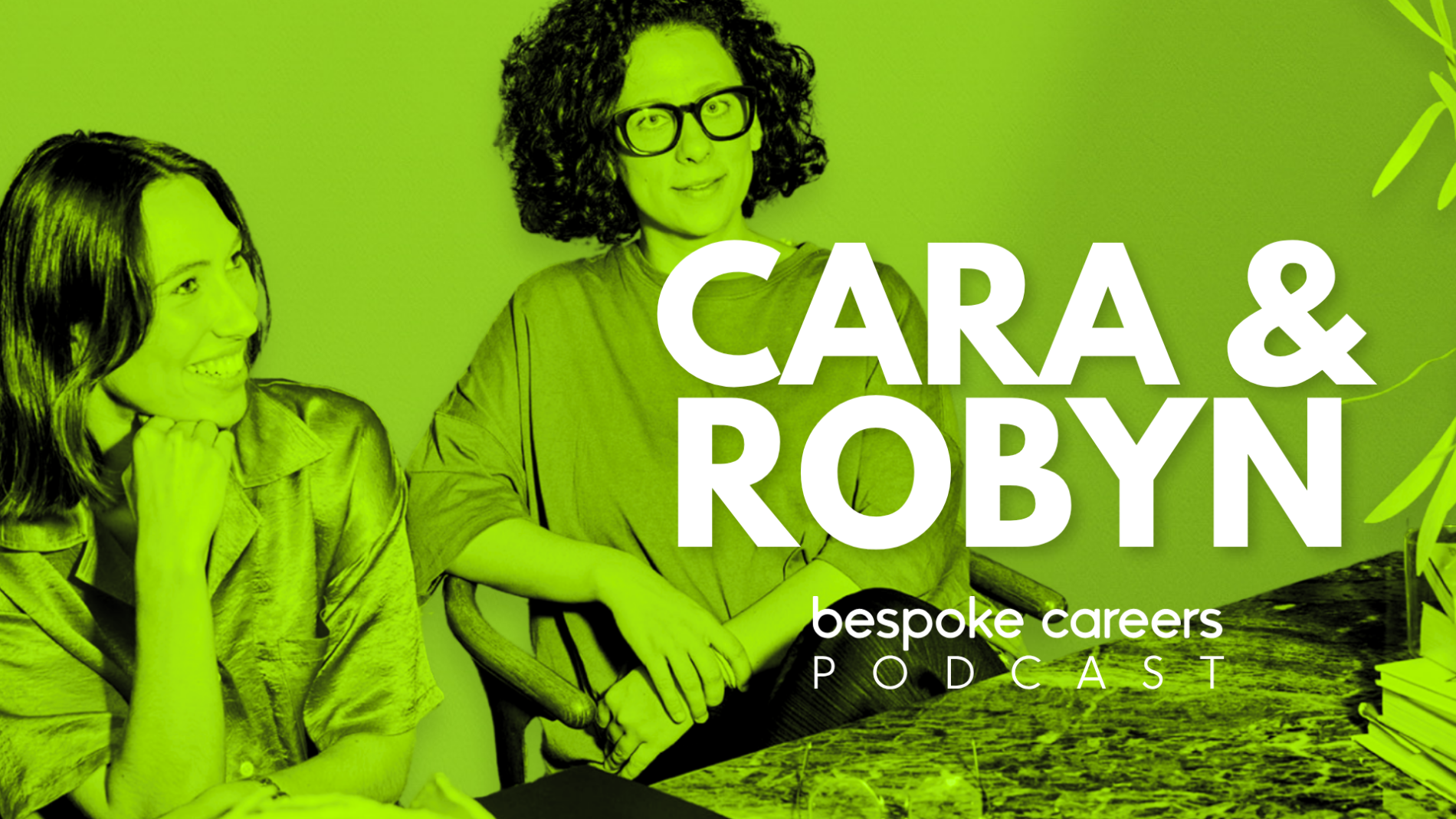
You’ve probably seen their work before. You just didn’t know it was them. Cara Stizza and Robyn Levin are the co-directors of Wildflower, a Melbourne studio specialising in furniture selection, procurement and coordination.
You’ve probably seen their work before. You just didn’t know it was them.
Cara Stizza and Robyn Levin are the co-directors of Wildflower, a Melbourne studio specialising in furniture selection, procurement and coordination. Tip any room they’ve touched upside down. Everything that falls out is theirs. The sofa. The rug. The objects. The cutlery in the drawer.
Cara built an interiors practice into a team of 18 over seven years before co-founding Wildflower. Robin crossed the table from one of Australia’s leading furniture brands, where she spent years watching how pieces are actually made. Together they’ve built a reputation for a model that’s design-led, transparent, and operationally sharp.
This conversation covers the problem they set out to solve, what it takes to protect design intent through procurement, and why some of the best suppliers they work with don’t have a website.

Cara Stizza and Robyn Levin, co-directors of Wildflower.
Tip It Upside Down
 Bespoke Careers (Chris Simmons)
If you were trying to explain what Wildflower does, what do you say?
Cara & RobynIf you tip something upside down, everything that falls out is us. It’s the easiest way of explaining that it’s everything in an interior that is effectively loose. So that means furniture, objects, artwork, rugs. We do everything down to the cutlery in the drawers, basically.
Bespoke Careers (Chris Simmons)Maybe you’ve seen our work before. You just didn’t know it was us. That’s from your website. Feels like such a good window into what you do.
Cara & RobynThat is interesting. I forgot that was on the website. I think it’s because we actually have been around for quite a long time. I’ve been practising in the industry for about 10 years and Wildflower wasn’t actually launched until about three years ago. So there’s been a lot of work in the past that we’ve collaborated on or worked on. Nobody would really know it was a Wildflower project until about three years ago when we started.
“
Tip something upside down, everything that falls out is us.
The Fun Part
Bespoke Careers (Chris Simmons)Where did the idea for Wildflower come from? What problem were you trying to solve?
Cara & RobynAs a practising interior designer, you realise how much is actually involved. You’ve got to be across so many different specifications, so many materials, and especially in the commercial world everything moves so quickly. Even though you need to look at the design holistically, it’s really difficult to get so stuck into every single specification and detail of furniture because you’re trying to manage all these other things.
I found there was a bit of a gap between having all that knowledge about material specification, but then also needing to know everything about furniture. You just can’t spread your time across every single little thing. So we see ourselves as experts in the furniture industry. We’re out there looking at everything that’s getting released into the market. We’re just across more than what your typical interior designer would be, because they don’t really have the time to do that research. We’re in it every day.
Cara & RobynAlso, let’s be honest, furniture is the fun part.
Cara & RobynYeah, that too. It definitely felt like after a few years of being an interior designer, I just kept gravitating back towards the furniture and objects side of things.
“
Let’s be honest, furniture is the fun part.
Nothing to Lose
Bespoke Careers (Chris Simmons)Cara, tell me about the interior design practice you built up. You started at 26. That’s a pretty big leap. Tell me about what you didn’t know and why you did it anyway.
Cara & RobynI didn’t know anything. And I think that is part of why I was able to take that leap, because you’re very naive at that age. And you also don’t have any real responsibilities. I felt like I had nothing to lose.
I was very encouraged by my partner at the time who was like, we can do anything. Jumping in, there was a lot I had to learn. But I just have this personality where I just can’t let people down. So once I was in it, I was all in.
Bespoke Careers (Chris Simmons)How prepared do you think you were?
Cara & RobynI definitely didn’t understand the risks of taking on projects personally. In terms of experience, I had completed an interior design diploma and a bachelor of interior design. I had that knowledge, and then I worked for someone else for a couple of years, which was actually in the furniture field. Furniture selection and procurement, mainly for workplaces. When I left, a lot of what we were doing at the beginning was in the commercial, workplace field. There were some existing relationships, some really supportive clients that were happy to work with me early on. They gave us a chance, basically.
“
I just can’t let people down. So once I was in it, I was all in.
So, You Get the Furniture in the Room
Bespoke Careers (Chris Simmons)It feels like a lot of this is about having that network, understanding the wider industry. In your early career, how did you build that?
Cara & RobynWhen we first started the business, we went out and spoke to so many people. Even though we had more experience, more runs on the board, you’re still very nervous at the beginning. And honing your message. We’d have meetings where we’d talk to people for an hour and at the end they’d go, “Okay, I think I get it.” And we were like, oh my god, what are we not saying? You have to learn how to get across what you’re trying to say and do it quickly.
Cara & RobynThe first meeting we had, we sat across from six people. They’d all gotten in a room with us and we put this presentation up and we got to the end and they were like, “So, you get the furniture in the room.” We were like, oh. We’re like, that went terribly. You need to put that on the website. People are not understanding how simple this is.
“
We’d talk to people for an hour and at the end they’d go, “Okay, I think I get it.” What are we not saying?
The Supplier Side
Bespoke Careers (Chris Simmons)Robin, you spent a lot of years on the supplier side, working for a furniture company. What skills have you taken from that into how you work now?
Cara & RobynSeeing that other side of the industry, you think a lot about the client because you kind of are the client in a way, and you’re dealing so directly with people in such a personal way. I think the way I learned to deal with clients really formed the way I do things. But it also gave me this very deep appreciation for how furniture is made, because I was seeing that production process day-to-day. Just understanding the number of hands that touch something, the process that goes into it, how much is involved in R&D. Even putting together a new fabric range was months and months of work.
It really gave me an appreciation for how deep the industry is, how broad what we do is, and to be able to sell that to clients and have them understand why we’re so passionate about furniture, how it’s come together, what it’s about. When you have that deep passion, it makes it easier to explain it to other people.
“
When you have that deep passion, it makes it easier to explain it to other people.
The Studio
Wildflower at a Glance
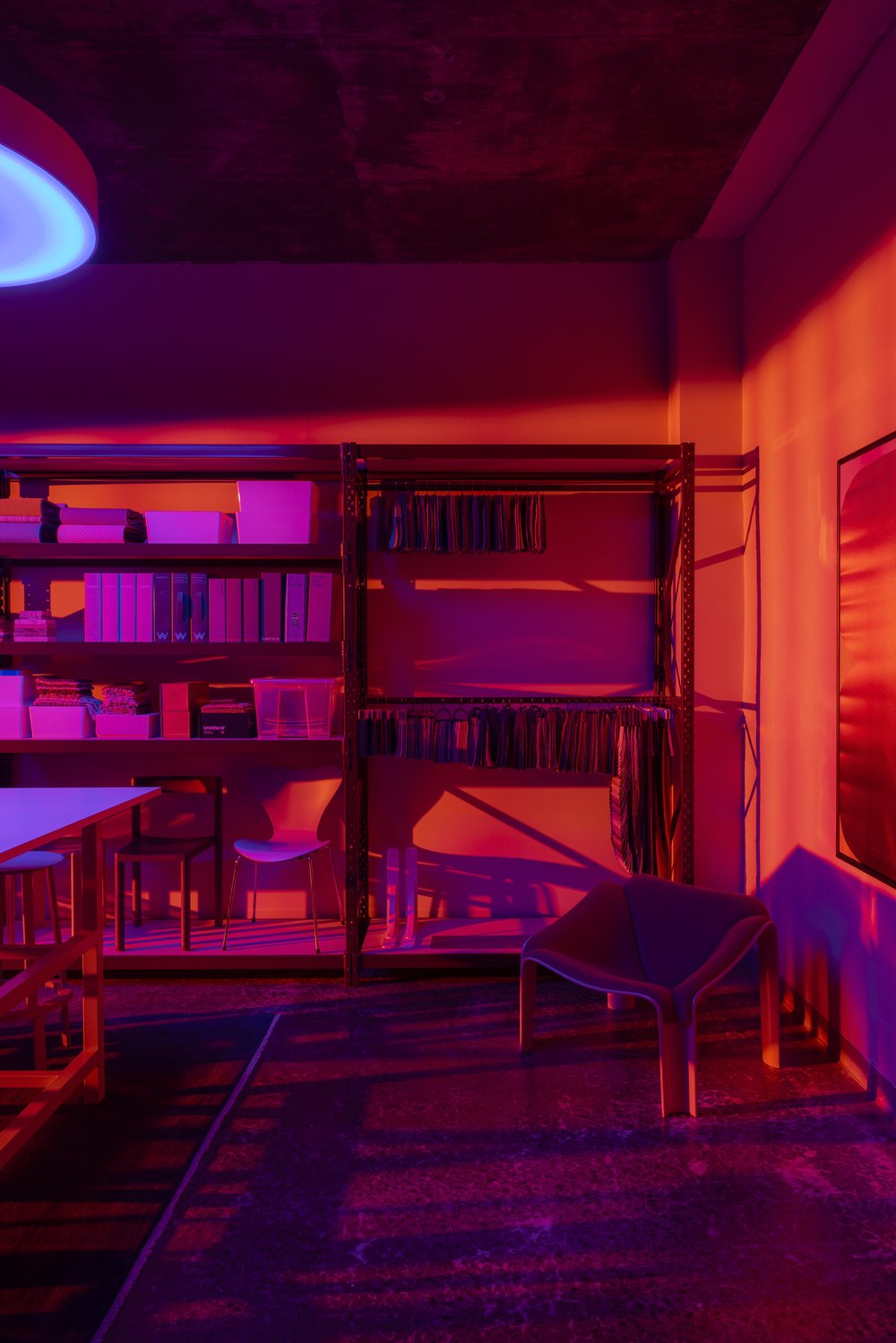

A Melbourne studio founded three years ago, with work spanning residential, commercial and build-to-rent. The model sits between an interior designer’s vision and the finished space, handling everything loose: furniture, objects, artwork, rugs. Currently operating across Melbourne and Sydney.
Every supplier relationship has been built over a decade. Some of them are single makers in a factory producing a side table no one’s seen before. That network is the product.
“The best outcomes come about when we are supporting an architect or an interior designer, because it’s about making sure that what we deliver at the end of the day is the best version of the project.” Cara Stizza
When Furniture Is an Afterthought
Bespoke Careers (Chris Simmons)Where do you see the original design intent get compromised between concept and install?
Cara & RobynWith any project, it’s ensuring that furniture isn’t forgotten. Sometimes that’s the piece that comes last. They’ve built this whole building and that’s been a whole process and then they go, “Oh, hang on. What about the furniture?” Our job is wedging that in early and making sure there’s a really good allowance for it. So it’s integrated in every way possible, whether that’s lighting or power and data, whatever needs to be considered, making sure it’s not an afterthought. When it is, you feel that in a space. That’s when you know it’s fallen apart.
Cara & RobynWe’re very driven by the architect’s design intent. But we also have a client who is usually a homeowner or a developer, and we need to integrate elements from everybody’s brief. So it’s trying to align with everyone, as early as we can. Being able to integrate power, maximise the budget, push it as far as we can so we still get to that vision even though there are all these challenges along the way.
People Are Living Every Day With Your Decisions
Bespoke Careers (Chris Simmons)Can you take me through a project where you can think about when you were pulled in, how the brief was set, and what you do to protect the design intent through procurement?
Cara & RobynWe were brought on last year onto a Heckagathri project. They had a beautiful design for a build-to-rent project and were looking for a procurement partner to work on the communal spaces. There was a really strong design intent. Some furniture pieces had actually been selected, but the real question was around the budget. It was quite over budget at the time. So we had to work really hard to keep the design integrity but bring that budget down by about a third.
Cara & RobynYou’re also weaving in the developer’s requirements. They have rules around seat heights and very specific things. So you’re trying to take this very beautiful thing and make sure it’s practical and ergonomic and performs the way it’s meant to perform and holds up the way it’s meant to hold up. It really is a process of interrogating each and every item on that schedule. Is this going to give us the result we want in terms of the look, the aesthetic, the practicality, the longevity? So that obviously the room looks beautiful but performs the way it needs to perform for many residents in that case, who are using these rooms every single day.
Bespoke Careers (Chris Simmons)People are living every day with your decisions, aren’t they?
Cara & RobynYeah. I agree with that. We had many workshops and we pushed the fabrics as far as they can go in terms of creativity and then commercial durability. Those are all things we consider.
“
People are living every day with your decisions.
Creative and Practical, Equal Weight
Bespoke Careers (Chris Simmons)How do you balance the creative side with the realities of budget and procurement?
Cara & RobynWe really try to keep that equal. It’s balancing that strong creative side with that strong practical side. We’re always thinking: is this the most creative solution, and is this the most practical solution? Not letting one outweigh the other. Because then I don’t think that’s the best outcome for the client or the user.
There are quite a lot of procurement companies that can do the process, but being able to execute on creativity, being design-led and really considered. That’s something new that we bring to the market in Australia.
“
We’re always thinking: is this the most creative solution, and is this the most practical solution? Not letting one outweigh the other.
Leave What You Know Behind
Bespoke Careers (Chris Simmons)Furniture can be very divisive. I imagine there are sometimes difficult discussions about a piece you’ve chosen and the client just goes, what the hell is this?
Cara & RobynOften it’s driven by some previous experience they’ve had. People have this deep relationship with pieces of furniture that translates into their preferences. So we sometimes have to be like, leave what you know behind and let’s look at this for what it is. Evaluate it on face value, not with a history.
Cara & RobynWhen there is already a really strong design intent from the architect, that actually makes our job a lot easier, because there’s already a narrative and a story we’re building on. We’re picking these things with intention. So we have a reason we’ve picked that chair or that fabric and we’re able to articulate it. If it works with the rest of the concept, it’s a much easier sell than just being like, “Oh, we like that corduroy fabric.”
If we don’t have that narrative, we’ll build it for ourselves based on what we’ve learned about the project intent. We’ll create some pillars so we can make sure each decision is aligned with the overall intention.
“
We have a reason we’ve picked that chair or that fabric. If it works with the rest of the concept, it’s a much easier sell.
The Network No Algorithm Can Find
Bespoke Careers (Chris Simmons)Inevitably, I have to ask about AI. It can probably make a mood board, suggest furniture, generate visuals. With your business, what are the real differentiators?
Cara & RobynIt’s the relationships. When you’re in a project with someone, you are speaking to them often multiple times a day for a very long period of time. There’s a lot of intel gathered, a lot of information that is hard to capture and maybe hard for AI to pick up. Like learning how someone else works. We’re often fitting in with a bigger company who has their own way of running things. So we’re adapting to the way they pace a project. That relationship and that problem-solving side by side, the whole way along. I cannot see how AI can replace that.
Cara & RobynWe’re connected to a value that an algorithm doesn’t know about. AI doesn’t know about this network. These are sometimes people that don’t even have a website. So you’ve got to be out there and you’ve got to be meeting people.
Cara & RobynAI still doesn’t have any taste right now. And maybe it’s going to learn taste, but it feels like a slow way off from there. We are feeding that in to get something out. It’s not curating just yet.
“
AI doesn’t know about this network. These are sometimes people that don’t even have a website.
Good Eye Is Only One Thing
Bespoke Careers (Chris Simmons)What do you look for in your staff? It feels like quite a specific role. It’s not just about taste. It’s about operations, network. What are those skills?
Cara & RobynYou’re wearing so many hats in one day in this sort of role. Having a good eye is really only one thing. You need to be organised. You need really good time management, attention to detail. You need to be able to flip from one task to the next, multitask all the time. And a lot of problem solving.
Generally we’re looking for people that have a really great attitude, that want to be involved in brainstorming and problem solving and get out there, get their hands dirty. They might be on a dusty site one day and the next day they’re picking beautiful furniture for an entire house. There are just so many different elements. Looking for someone that’s really keen to get in there, and has the guts to go for it.
Bespoke Careers (Chris Simmons)Does traditional design education give you those things?
Cara & RobynIt teaches you a design way of thinking, how to take a brief, interrogate a brief and tackle it, which is definitely an important skill set. But so much of what you use day-to-day is learned on the job. It really is just work and life experience. Probably a balance of the two.
“
They might be on a dusty site one day and the next day they’re picking beautiful furniture for an entire house.
Reuse Costs What New Costs
Bespoke Careers (Chris Simmons)Where do you sit in the whole lifecycle conversation around furniture? Are there opportunities for reuse, re-fabric, bringing in new materials?
Cara & RobynWe’ve just worked on a big project that had a huge reuse and rework component. A lot of the stuff that was good enough to come straight back in was stored off site and then brought back to the project. For the items that got reworked, what actually worked really well was going back to the original makers of those pieces so they could be updated. They understand how it works, how it functions. So it’s not us coming in and slapping a new top on something. It’s going back to the piece and making sure it comes back in its best format.
Cara & RobynThere’s a big education piece in that. People see reuse as something that should be low cost or free almost. But in fact it’s kind of the opposite. You’ve got to look at it as, I’m doing a really good thing here for the environment, but it’s probably going to cost me a similar amount to getting new furniture. That’s an important conversation to be having more, because people come into it not understanding that’s where it’s going to end up.
Cara & RobynThe other side of sustainability: if you’re specifying quality products from the outset, it’s going to have a better life cycle. You will have the opportunity to refresh it or reupholster it or rework it. You’re making smarter decisions from the outset that hopefully down the road pay off, because you’ve got something that can evolve with the space.
“
People see reuse as something that should be low cost or free almost. In fact it’s kind of the opposite.
A Big Bold Red Table and Total Calm
Bespoke Careers (Chris Simmons)Looking at the website, it looks like a lovely space. What are you trying to communicate as a brand through your own studio?
Cara & RobynEvery person that comes in here firstly comments on the huge red table when they get to the top of the stairs. It’s so big and bold and very crafted. And then the second thing they say is, wow, it’s so calm in here. I think that is kind of saying what we are and what our values are. We’re here, we want to be iconic, we want to be in the industry. But we’re also a very calm studio. There can be a million things going on at once and you can still come in and everyone’s got it. Everyone’s chill.
Cara & RobynMy favourite is when people are like, “Oh, this doesn’t look like an office.” Yes. We’ve cracked it.
The studio. The red table is the first thing everyone mentions.
A Room Full of Fabrics
Bespoke Careers (Chris Simmons)What’s the most fun bit of your job now?
Cara & RobynWe sound crazy, but the problem solving is pretty good. When something comes together, or something’s complicated and there’s a really good solution and resolution. That is an incredibly satisfying part of the job.
Cara & RobynI agree with that. Putting a concept together is always fun, and when we can all jump in a room and workshop together. I love fabrics. You can put me in a room full of fabrics and I will have the best day.
“
You can put me in a room full of fabrics and I will have the best day.
Quickfire
Is an interior design degree worth it?
Cara & RobynYes, because you get to be conceptual and do crazy cool things you never get to do in a real job. So, no.
Is working in design as fun as it looks?
Cara & RobynAbsolutely. As long as you’re doing it with people you want to be doing it with. It’s definitely not as glamorous as it looks, but we have so much fun and I wouldn’t change it.
How do you find your design style?
Cara & RobynWhenever I used to put together my folio, I used to include a page called “what makes me tick.” I’d force myself to put 10 things on there that really summarise me as a person. It helps cement what you like, what you’re drawn to, what your style is.
What’s in for interiors in 2026?
Cara & RobynCraftsmanship. Something handmade, especially right now in a world where everything is looking too perfect. When you know it’s been handmade and it’s going to patina over time, that’s always going to be in.
What’s out for interiors in 2026?
Cara & RobynMaybe those items that come vacuum flat packed. They’re only new, but they should go.
Who’s your favourite designer?
Cara & RobynPatricia. She’s just so broad and everything she puts out into the world is always amazing.
Three things you wish you knew before starting a business.
Cara & RobynHow much time would be spent in Excel. Do a mini course because you’re going to need it. How important communication and relationships is. And that it would be hard but so much fun, so it’s worth the slog.
What does good design mean to you?
Cara & RobynWhen everything is working harmoniously with each other and you achieve that feeling you set out to create from the beginning. It’s all about that feeling.
Do you need to be an influencer to make it in the design industry?
Cara & RobynIt might feel like it right now, but the answer is no. Being a really good person and an active part of the industry will get you much further in the long run.
One piece of advice for someone wanting to work in furniture or interiors.
Cara & RobynReach out to people that you think might not write back to you, because you never know. You might just catch up with someone who’s been in your position before. Just go for it.
Biggest mistake people make buying furniture for a project.
Cara & RobynWhen people go to one shop for everything, it just ends up being a sad solution. A mix of things, a curation, is always going to be stronger. And check the lift dimensions before you buy anything.
How did you land your first client?
Cara & RobynJust by doing any project that anyone would let me do, basically. And doing it really, really well and overservicing it.
Search for architecture and design jobs here
Latest architecture and design jobs around the world

Looking to hire top talent
 or advance your career? Let's talk.

We connect exceptional firms with talented professionals.
Let’s discuss how we can help you achieve your goals. Get in touch with the team today.
Related Posts

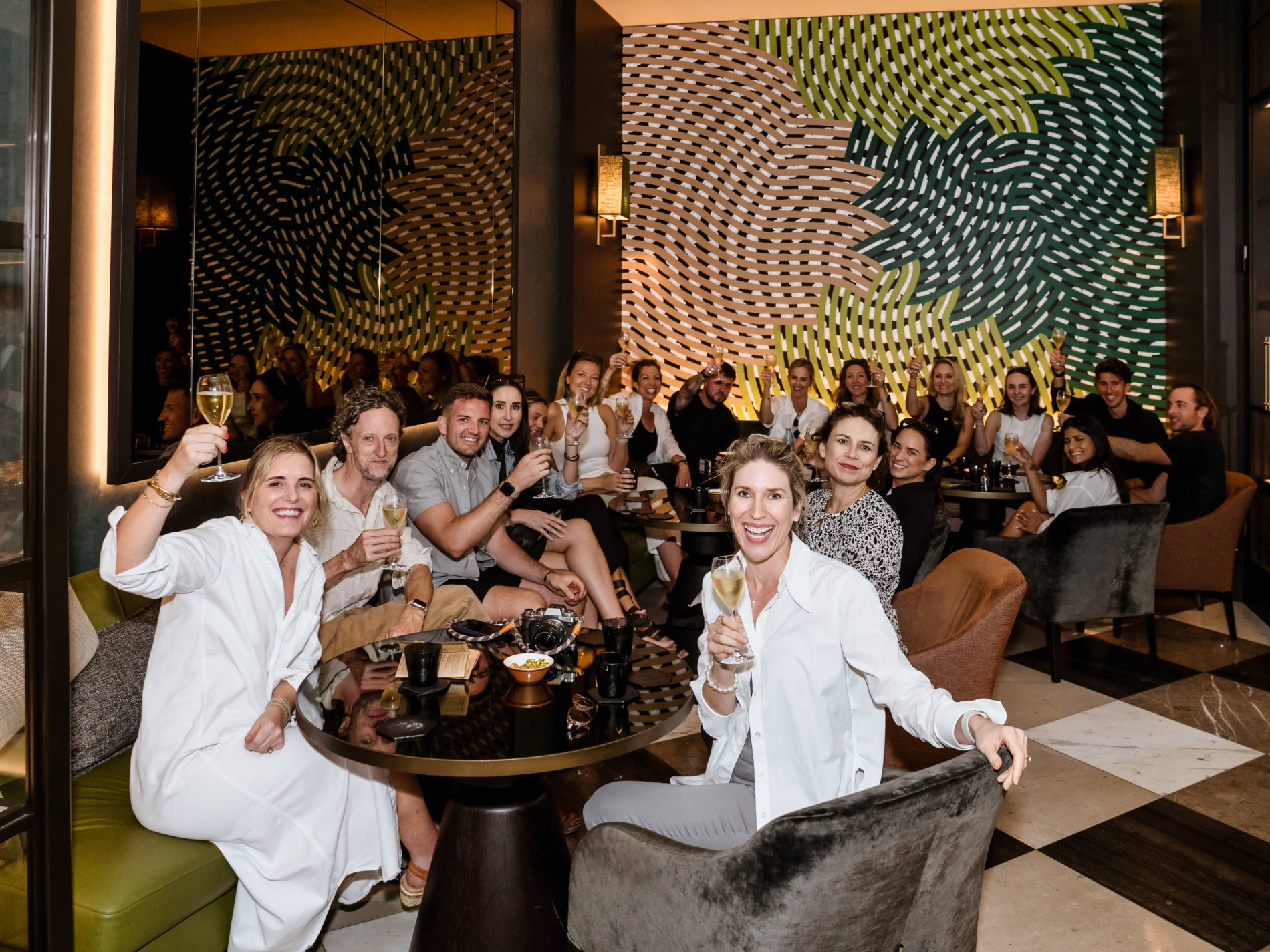
Architects and designers in Australia have a wide range of events occurring in 2026. From networking events, opportunities for learning and even some socialising, the calendar is shaping up to be a varied and interesting mix of events.
We asked a panel of global design leaders what advice they’d give their younger selves
Anticipating future hiring needs can be challenging for an architecture firm or design studio. Employers can always benefit from recruitment planning, even before new vacancies materialise.
Whether you have a large project on the horizon or not, the need to recruit employees will fluctuate at times. Having good practices and strategies in place can help you be more agile when new staffing requirements arise.