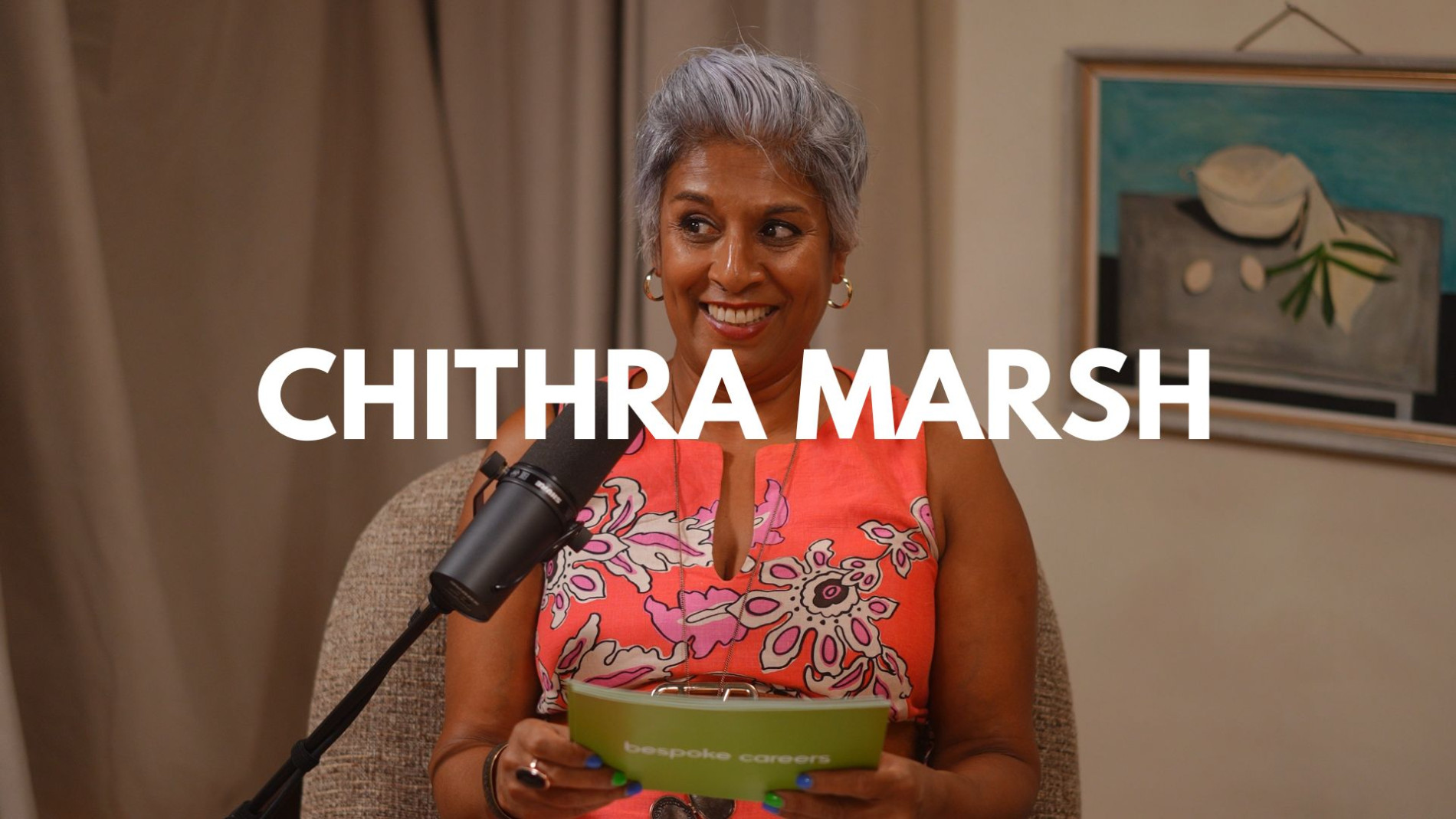
The Most Underestimated Profession? – Chithra Marsh | RIBA Elections
Feeling unheard, representing the underestimated, the approachable face of architecture, and a RIBA that feels like a community.
2026 feels like a hinge moment for UK architecture. A housing crisis, a climate agenda, the looming impact of AI, and a profession under real pressure as fees, procurement, risk and responsibility all rise at once.
In this series we’re putting the same questions to each of the four candidates standing for RIBA president, so you can compare them like for like.
Chithra Marsh is a director at Buttress in Manchester, with over 30 years’ experience across practices of varying sizes. She leads on community regeneration, social value and EDI at the practice, which is both B Corp certified and employee-owned. She has served the RIBA extensively at regional and national level, including on council, committees and advisory panels, and is a former national chair of Women in Property.
In this episode: feeling unheard, representing the underestimated, the approachable face of architecture, and a RIBA that feels like a community, not an institution.
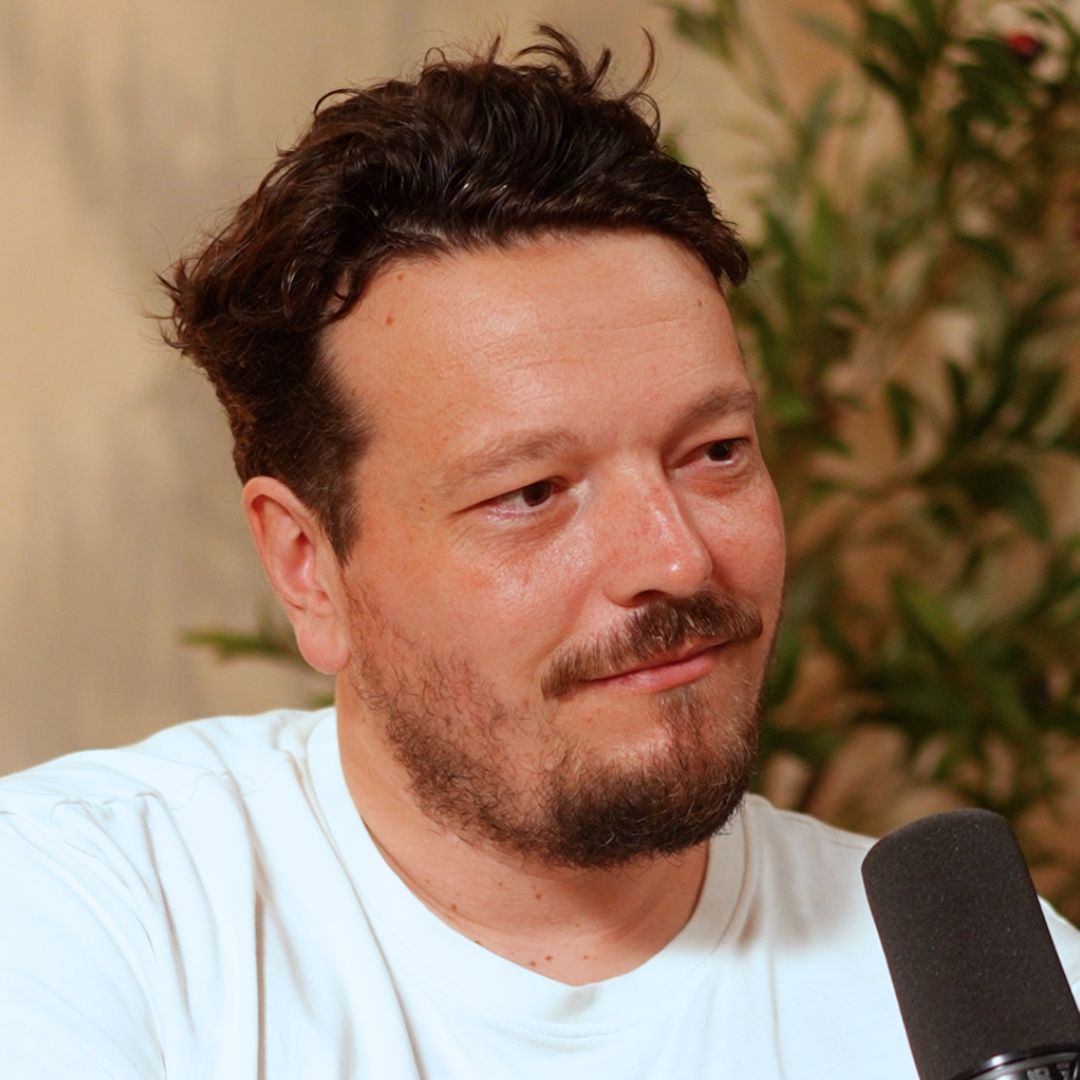 Bespoke Careers (Chris Simmons)
What experiences in your career brought you here and motivated you to stand for RIBA president?
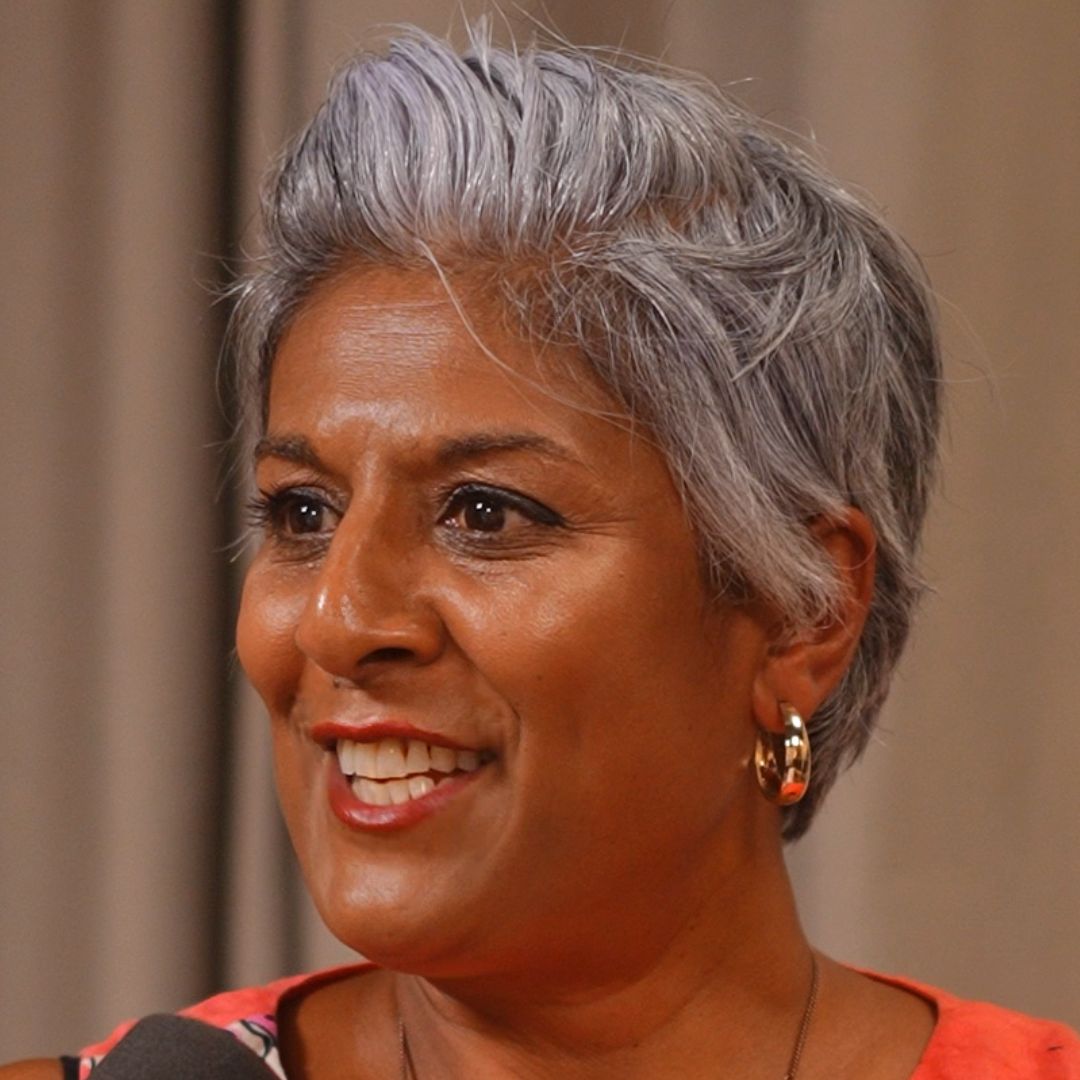 Chithra Marsh
Probably a couple of strands really. One is that through my career I have always advocated for the profession. It’s something I’ve always been really passionate about, maybe because I felt a little bit like an outlier, being different. And I’ve always been keen on supporting people coming through, mentoring, giving people an opportunity to see their potential. I’ve done that from being a student, really, all the way through, and I’ve volunteered for various organisations, social enterprises, anything that supports the profession.
I’m originally from London and I moved up to the Northwest 30 years ago, and I know what it’s like doing advocacy, creating connections and trying to get your voice heard regionally. I’ve been a member of the RIBA from being qualified, really, so I understand that disconnect to a certain extent. And I thought, you know what, I’ve come to a point in my career and it’s time to be courageous, to try and lead from the front and see if what I do can make an impact.
This is such an amazing profession to be in, but it could be better. Things have changed a lot over the 40 years I’ve been in it, and it could be so much better. I want to see if I can make an impact.
Bespoke Careers (Chris Simmons)When you look at architecture today, what’s the single biggest challenge facing the profession?
Chithra MarshI think value, because everything else sort of comes from that really. There’s an element of a negative rhetoric. We seem to be quite reductive to ourselves. Things like, this has been taken away from us, or this has been imposed on us. And actually I think we have the opportunity to take things back.
But I don’t think we can do that alone. In our regions, internationally, centrally. Everybody’s doing really good work separately, but how much of it are we doing together? There’s power in the collective. And on top of that, I think we have the power to take it back. That’s the thing that’s driving my manifesto: doing it together.
“
Everybody’s doing really good work separately, but how much of it are we doing together? There’s power in the collective.
Bespoke Careers (Chris Simmons)You’ve been speaking to architects throughout the campaign. What concerns and frustrations are coming up most?
Chithra MarshIt’s been the same thing throughout my career, so it’s not been resolved. And the biggest thing is feeling unheard. It’s as simple as that really. All the other things come up as well: AI, professional fees, how we’re trying to resolve climate change on our own. But actually, all of those things come back to feeling unheard.
Through this process I try to observe, even when I’m participating in hustings or one-to-one conversations, regardless of where anybody is. I’ve had those conversations UK-wide and internationally. Every time I observe, I feel people feel unheard. They’re standing up to give their point, or they’re telling me something, because they want to be heard.
“
The biggest thing is feeling unheard. I think it’s as simple as that really.
Bespoke Careers (Chris Simmons)What do you see as the role of the RIBA today, and what influence does the president actually have?
Chithra MarshThis is part of my manifesto, this one. I’ll go with the RIBA first. I think it is a mechanism to bring architects together, which I don’t think is quite happening, and that’s why it’s part of my manifesto, that strengthening connections piece. There are so many good people doing good stuff, as I said before. And are the right voices, the right people, being heard and being included? I’m a big believer in inclusivity.
I’d also say the RIBA are doing great things. I’ve been on national and regional council for quite a while, so I get to see the inner workings, and there’s so much good work going on. But it’s not being communicated out. So people will be saying, well, what do I get for my membership? And I’m saying to them, there’s loads going on, you just haven’t seen it yet. So part of my role as president would be to start with something simple: tell everybody what you’re doing, because it’s really good.
I suppose my headline is to represent the underestimated, because I feel everybody’s underestimated. I don’t think it’s necessarily all about representation. I think it’s about feeling underestimated. The role of the president is to be everybody’s ambassador, everybody’s influencer and everybody’s supporter.
“
My headline is to represent the underestimated, because I feel everybody’s underestimated.
Bespoke Careers (Chris Simmons)Should the RIBA primarily reflect the views of its members, or lead and challenge the profession on important issues?
Chithra MarshOh, I think both. You do need to listen to your membership, because that is the source, or the reason for being really. But again, you get many voices in many places, and actually the role of the RIBA is to bring that together into a consistent message.
I want to go back to that presidency role as well. I think it’s really, really important to look at that as a four-year tenure and not two years. And I also think that president role isn’t about one singular person’s aim or ambition. It’s about what that person does for the ambition of the RIBA and its members. It’s all interconnected.
Bespoke Careers (Chris Simmons)We talk about low fees, limited influence, a lack of public understanding. Why does the profession struggle to communicate its value, and what can change that?
Chithra MarshThere are bits that are really important that define you as an architect, and that is about designing buildings. But it’s so much more than that. I’m a community regeneration architect, and ours is about the impact we create. Through our projects we might take one town and do small interventions. Those interventions won’t necessarily all singularly end up in a magazine because of their architectural aesthetic, so to speak. But together, they have a massive impact on changing a town’s external perception: how the community feels about it, how they invest in it, how other people invest in that town as well.
The piece that we miss in architecture is the stuff about people. When I was educated, at the beginning of my career in the late 80s and early 90s, people weren’t even mentioned. We talked about scale, massing, structure. There was a bit of it when I did my postgrad in urban planning, space syntax, understanding demographics, but it was all data. It wasn’t people’s voices. So the work we do at Buttress, we attach voices to our projects. We call them project voices. We go back and look at the impact we’ve made on those towns. We talk to the people and understand what that impact has made, not just on the community but on individual people. People that use the buildings we’ve added to, or taken away, or it might simply be a boardwalk that connects a harbourside that wasn’t connected before. These little interventions.
And we don’t think about the people in the industry as well, in the profession. I’m a business owner, one of the directors at Buttress, and we have to make money to be able to be the purpose-driven company that we are, to be able to say that we’re truly people, planet, profit. But you’re so overwhelmed by all of the criteria that comes at you from different directions that sometimes you really have to work hard at making sure you look after the people in the profession as well.
“
When I was educated, people weren’t even mentioned. We talked about scale, massing, structure. It was all data. It wasn’t people’s voices.
Bespoke Careers (Chris Simmons)If you could focus the profession’s attention on one issue over the next five years, what would it be?
Chithra MarshI’d probably go back to our value. It would be great if people that aren’t in the profession understood us a bit more completely. I like to think of playing a part in being the approachable face of architecture. We’re very closed, and I suppose we’re perceived as imposing on people. Actually, that’s not what we should do. We should be connecting and collaborating and involving them in it, because it’s such a joy to be part of.
I’m a strategic ambassador for a company called Placed. They’re a social enterprise, and they show the joy of architecture and creating spaces through play, and through consultation, almost taking it back to your childhood to a certain extent. I think we should do a lot more of that. Connecting with the public that can see the value in what we bring, because we change people’s lives. We have the potential to change people’s lives. What we create, everybody uses. It’s not like we’re creating something in isolation and you hope for the best. This is something that either falls or rises with how communities accept it.
It’s equally us understanding and appreciating our own value and not undermining ourselves, but it’s also showing other people what our value is. That’s the bit we don’t quite do at the moment, and I think the RIBA could work harder at doing that as well.
Bespoke Careers (Chris Simmons)What do you think architects continue to get wrong today?
Chithra MarshI don’t think we talk to each other enough. We sit in our own little bubbles. I don’t know whether this is controversial or not: the skills of being an architect attract certain talents, and that’s creativity and appreciation of the built form. But I think we should make this profession much more open to other characteristics, other disciplines, other specialities, like geography. A big favourite of mine is social anthropology. I absolutely love the psychology of human beings. If we broaden that out, you get a broader spectrum of individuals within the industry, and we would probably talk to each other a lot more.
We seem to be quite a defensive profession, and we don’t need to be. We really need to collaborate in true collaborative style, and we learn so much from each other. I’ve learned so much from conversations with people with completely different mindsets to me, about the way they approach architecture or the way they look at it. It’s having a deeper understanding of each other, communicating better with each other, understanding each other’s arenas. That’s the bit we get wrong. We really don’t communicate well with each other. And I think that’s a big part of the RIBA as well. Strengthening communication would probably encourage us all to do it a bit more.
Bespoke Careers (Chris Simmons)Has increasing regulation, particularly the Building Safety Act, strengthened the profession or made it harder to practise?
Chithra MarshMaybe both. I think it’s strengthened it in the fact that we are made accountable, which I think is really important. If we’re to be seen as experts, then we need to be accountable for our expertise. The weakening: it’s made us all a bit nervous. Harder to practise, a bit more worried about whether we’re getting it right or wrong. And I think that feeds into that reductive narrative, because when you’re nervous about things, does it make it easier for people to say things away from you?
We do need it, because what we do is really important and it ultimately affects people. So it is really important that we are held accountable for what we do. But there are so many different types of architects as well, and it can scare them. I’ll be really transparent with you: I probably don’t design much anymore. In my day-to-day I am more about creating the connections, building relationships with people, bringing work in, promoting and advocating for my company. So I’m not as closely related to it, but I do see the fear in people’s eyes, and I do see the need, to a certain extent, to bring somebody else on that will take that responsibility for us.
A lot of that is bred by a misunderstanding of the Building Safety Act. We just don’t know everything about it. We have had CPDs about it, and even the people presenting the CPDs will say, we don’t know the full facts yet. It does make some architects think, I don’t want to do this anymore, and I think that’s so sad. So there’s a balance somewhere between that strength and that weakness. If we can find somewhere we can sit comfortably, that helps us show our expertise and value ourselves, and then communicate that out.
“
It does make some architects think, I don’t want to do this anymore. And I think that’s so sad.
Bespoke Careers (Chris Simmons)What changes are most needed in architectural education to make the profession more accessible and fit for the future?
Chithra MarshDon’t make it as difficult as it is to get into it. It’s a long education process, which isn’t what I’ve got an issue with, but it is costly. When I came into the industry I had a grant. I didn’t have to think about whether I wanted to do it or not, and at that age, seven years isn’t a lot really. You don’t feel the weight as much. Nowadays they have so much weight on it, and it stops people. I can’t tell you how many students have said, I thought about doing architecture, and then… It’s a sad thing. A lot of that comes from their own personal family impact. They have to get into a job quick, or they don’t come from a part of society where architecture is encouraged. It’s not promoted particularly accessibly at the moment.
What would make it better is opening it up to different subjects, maybe being able to do a different degree and then coming into it, and I know there are bits of that happening. Making it a little bit less onerous on time. Making apprenticeships a bit easier. It’s not that I don’t believe in apprenticeships, I do. But somebody having to convince a company to invest in them to get into that apprenticeship in the first place, when you’re young, you don’t know how to promote yourself. You haven’t formed those relationships. You learn business development as you go through your career. To expect an individual that early on, so young, to have the skills of promoting themselves is really difficult.
There are students in schools, I’ve talked to many, that believe they have the talent to become an architect, and somewhere along the line it gets chipped at. Maybe that is careers advice, because the people giving careers advice don’t necessarily know what architecture is all about. I’ve done this right from the beginning of my career: going into schools, employers’ fairs, speed-dating careers with high school students, giving them a bit of an insight, making them feel like they’re welcome. That goes back to that approachable side, knocking away that elitist view of architecture. We don’t need to be elitist. We need to have our doors wide open so that students can look in and say, I’d like to be part of that, and what bit can I contribute with my talents? If they’re great at English or they’re great at geography, there is a route in somehow to architecture.
“
We need to have our doors wide open so that students can look in and say, I’d like to be part of that.
Bespoke Careers (Chris Simmons)Do you see AI primarily as an opportunity or a threat, and how should the profession respond?
Chithra MarshI see the threat in that reductive narrative. We can talk ourselves into being taken over by AI by saying it’s going to take us over. A self-fulfilling prophecy. And I’m a glass half full type of gal, so to speak. We shouldn’t be talking ourselves into it taking over. We should be seeing what the benefits are. It’s not going anywhere. And what we bring as architects is we bring the humanity to it. AI can’t do that.
I’m not going to lie, I use it a lot. If I want to write a script, or I’m looking at a tender, it gets me out of blank page syndrome. But what it doesn’t do is write the answer for me, or write the script for me. I put that in, because I know me best, or I know that project best. AI will never know that, no matter how much it tells me well done and I say thank you. I know that’s the wrong thing to do from an environmental point of view, but I was brought up well, so I think I have to say thank you at the end.
I thank it, I take it away, and I put whatever I think needs a human touch back into it. And I think that’s what we need to do. Not give over to it, but work with it.
“
What we bring as architects is we bring the humanity to it. AI can’t do that.
Bespoke Careers (Chris Simmons)If elected, at the end of your term what would architects notice had changed that would make you call your presidency a success?
Chithra MarshFeeling that the RIBA is more connected to its members, and the members feel more connected to the RIBA. That people feel they’re getting what they pay for, and more. That feeling of being heard, feeling part of a community, not an institution. That’s a big thing for me. I think the biggest thing I’d like to see is that people describe the RIBA as a community and not an institution.
That communication has got better. That not just the RIBA is celebrated, but also members are celebrated. That there is a deeper connection, that you all feel part of one thing. So there isn’t a central, a regional, an international: you’re all feeding in, and there is a genuine two-way conversation going on.
I suppose I’d round that all up with a greater sense of belonging. That we are in it together, we’re communicating with each other better, we’re helping each other out. And that we are treasured for our expertise. That people, communities, government, institutions are drawn to us for our expertise, and we’re the first people they come to talk to. I think that would give me some element of success.
Quickfire
Biggest opportunity for architects over the next decade?
Chithra MarshBuilding connections with communities and people, and a sustainable future for the profession. We need to big ourselves up.
Biggest misconception about architects?
Chithra MarshThat we’re an elitist profession. We need to be seen as much more approachable and welcoming, because we’re great people.
Biggest thing holding the profession back right now?
Chithra MarshThis is a bit cheeky, but I think it’s us.
One conversation the profession isn’t having enough?
Chithra MarshHow we create a sense of community and belonging in the profession.
One piece of advice for your younger self entering architecture today?
Chithra MarshI would say to myself that I belong.
If architects could only remember one thing about your campaign?
Chithra MarshI want the RIBA to be a community that people feel part of, not simply an institution they belong to.
Search for architecture and design jobs here
Latest architecture and design jobs around the world

Looking to hire top talent
 or advance your career? Let's talk.

We connect exceptional firms with talented professionals.
Let’s discuss how we can help you achieve your goals. Get in touch with the team today.
Related Posts

With the dawn of a fresh year, we’re gearing up for a jam-packed calendar of thrilling architecture and design events in the USA, and we’re eager to dive into as many as possible!