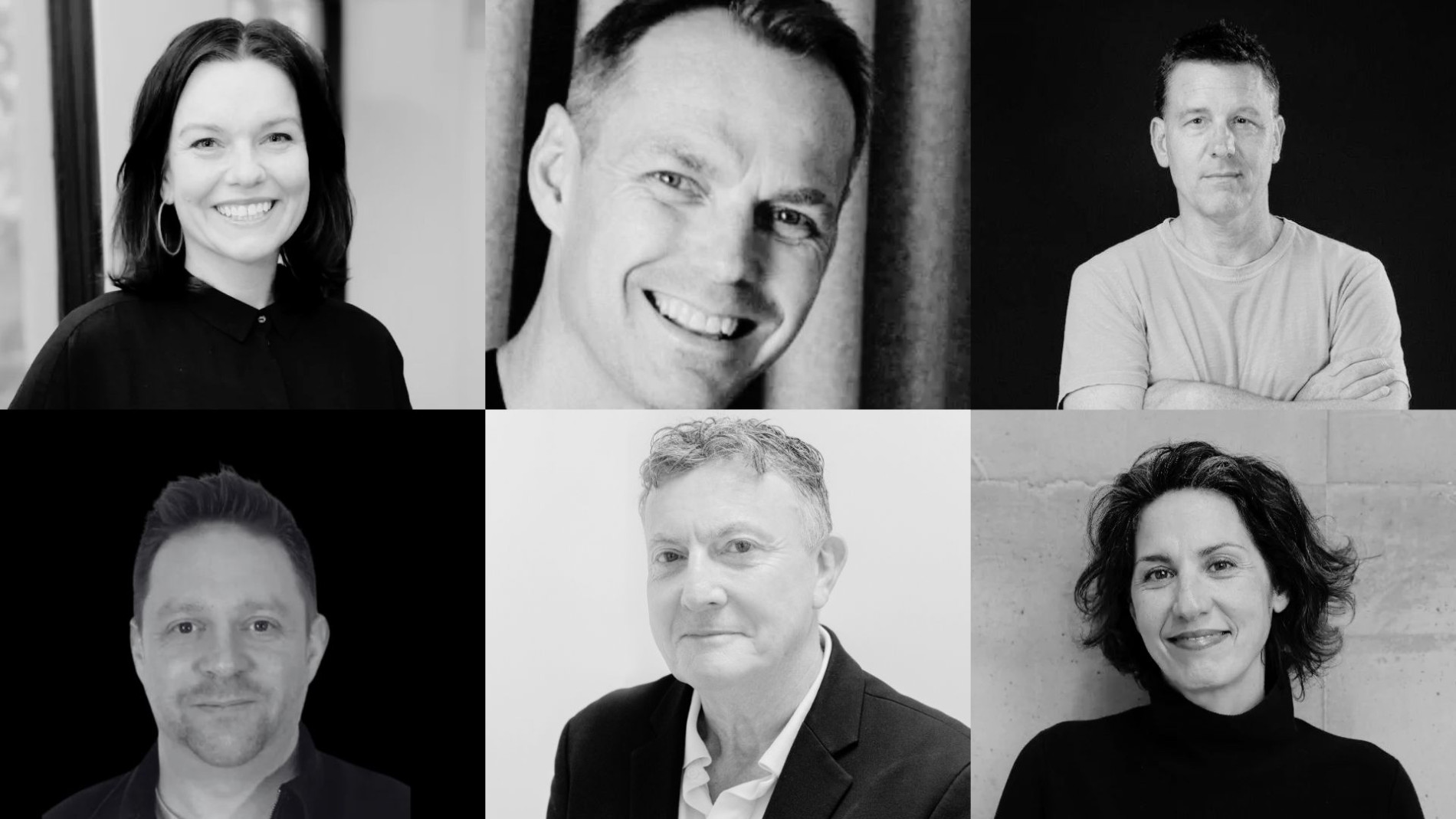
What’s been your biggest failure and what did you learn from it?
We asked a panel of global design leaders. Here's what they had to say.
There’s a lot of emphasis in the Architecture & Design industry on celebrating the wins. We tend to remember the projects that go smoothly and the moments that validate hard work.
But some of the most defining lessons don’t come from success at all. They come from the projects that didn’t work out. I, myself, have made plenty of mistakes over the last 20 years.
I’ll start, then over to the panel.
“I’ve learned that in business, having the right people is everything.
Over the past 20+ years, I’ve given successful individuals within Bespoke the opportunity to open a new office and build their own team. We support these ventures operationally and financially, and I place a great deal of trust in those stepping into leadership roles.
For the most part, this approach has been incredibly successful. It’s played a big part in Bespoke growing from strength to strength.
But not always.
There have been two occasions where I backed the wrong leaders. In both cases, the businesses ultimately failed and no longer exist.
What I learned:
Being good at your job doesn’t necessarily mean you’ll be a good leader or a reliable business partner. No amount of coaching or support can create something that simply isn’t there. I’ve also been guilty of holding on too long, hoping things would turn around when they weren’t going to.
That said, I’ve made mistakes the other way too. Early in our US journey, I gave up on someone too soon — someone I had, and still have, a great deal of respect for. It’s a decision I’ve always regretted, and one I’ve been honest about with him.
Leadership judgement isn’t just about backing people—it’s about knowing when to keep going, and when to cut your losses.
“I’m a big fan of Simon Sinek and he says there’s no such thing as failing – just a learning experience. When you are starting out it doesn’t seem like that but when you look at any architect’s work there are lots of brilliant schemes that weren’t realised. (Foster’s Hammersmith roundabout and Rodger’s Coin Street?) The world of architecture can be very frustrating but we still love it. Rem Koolhaus says you cant be an architect without being an eternal optimist. I’m entering a competition at the moment and I’m 100% convinced I will win. I even turned down the offer to judge the competition because the brief is so great. I’ve had great fun designing, drawing and building a model. By the time the results come out I will have moved on to something else and the disappointment will be short lived.
It wasn’t always the case. In 1988 we won a competition to design the HQ for the Port of Tilbury together with some speculative offices for rent. The competition was run by RIBA who put us on the shortlist alongside some big practices. This was quite common. The RIBA team always put a young practice on a shortlist of 6 and having been chosen for the 1985 RIBA 40 under 40 exhibition we made it onto the shortlist. This is one of the reasons I wanted to stand as President- to ensure RIBA encourages young architects. The Institute has been very helpful in my career and should be doing the same for a new generation. We won the competition and were suitably elated. It was a £6m project when all our previous projects had been less than £1m. It was also new build when all our other projects had been conversions/ refurbishments.
We obtained planning permission and prepared all the working drawing to go out to tender but then encountered our first experience of a recession when interest rates rose sharply and the project was deemed unviable. We were paid for the work we had done but had lost our biggest project and what we thought at the time as our first “big break’
What I learned:
Without much work we entered a competition for Venice Bus Station. It seemed like a good project and James Stirling was the judge. It was won by Jeremy Dixon and Ed Jones but we were commended and it came to the attention of the Italian architect Roland Paoletti who had been brought over to commission architects for the Jubilee Line. He came to see us and put us on the shortlist for London Bridge Station. We won, largely due to the help of QS Colin Hayward Hon RIBA and Ron Herron who were already working on the project and gave us help and advice. I’d also recently completed a MSc in Project Management which helped with all the form filling, box ticking and quality management necessary for London Underground tenders at the time.
The Jubilee Line project led to other similar repeat business both at home and abroad working on some fantastic city shaping projects. If the Tilbury project had not been cancelled we probably wouldn’t have entered the Venice competition and would have had little relevant work to show Paoletti. It wasn’t a failure it was an opportunity.
“Starting from a place of recognition that each mistake offers a lesson learned, my biggest failure is to not take risks, raise my head above the parapet, be more outspoken, call things out, etc, by fearing that I would make a mistake. Therefore, there were a number of personal growth opportunities missed, as avoidance does not really nurture a growth mindset.
What I learned:
The biggest lessons learned in life are a consequence of massive failures, as opposed to massive successes. There can be no success if there is no failure in the process. It is those failures that help us grow resilience, that teach us the importance of perseverance, that make us human, and that ultimately help us re-build our confidence in the long run. Nobody is infallible, some people just learn to hide it better than others.
“For most of my career, after university, I’ve been my own boss. But I did a 10-year stint in a design and business development role with a Fortune 500 company in the States. During that time, I had many different bosses, but very little real leadership. I was working in a vacuum.
What I learned:
It’s a simple lesson. I learned that a leader makes decisions. But a good leader makes good decisions.
“Early on, I was probably a bit too rigid in how I approached our terms of business. I saw things in a very black-and-white way and focused more on getting the agreement “right” rather than building the relationship behind it. In hindsight, that limited some opportunities to develop longer-term partnerships.
What I learned:
Recruitment is a relationship business, not a transactional one. Flexibility, trust, and long-term thinking will always outperform rigid terms. I learned that being ‘right’ on terms isn’t as valuable as being trusted. Investing in long-term relationships, understanding context, and showing flexibility ultimately delivers far better outcomes for both sides. Applies to personal relationships too!
“Not taking action, embracing risk and taking the big scary decision soon enough!
What I learned:
I’ve too many times put off making the big decisions because I might have been scared or you want to gather enough information to make sure you do the right thing. What I’ve learnt is that I do make the right decision and that I should have made them earlier. Be brave, follow your gut and get on with action.
“1) Not being more vocal about my talents and achievements. 2) Allowing my mental health to take me down from the inside, and then being too honest about it, letting the sharks see the cracks, which they were able to use to their advantage and throw me under the bus, to the further detriment of my mental health. Although some days are better than others, I now have daily struggles to keep moving forward and not second-guess every decision I make.
What I learned:
1) Champion yourself; no one else will. Keep a log of all the good things you do and the positive feedback you get, because in this negative mindset, you never believe you do anything well, and this will help you see that you do good things and achieve greatness. And read it weekly!!
2) Not everyone is your friend. Despite how they appear, most people are only in it for themselves, and if they sniff blood in the water, they will go for the kill if it advantages them. Just be careful about oversharing and present a strong facade, even if all isn’t well underneath.
3) Related to 2 — keep a small trusted group of people — 2 or 3 — that have your back and you can confide in. One for business, one for life.
Search for architecture and design jobs here
Latest architecture and design jobs around the world

Looking to hire top talent
 or advance your career? Let's talk.

We connect exceptional firms with talented professionals.
Let’s discuss how we can help you achieve your goals. Get in touch with the team today.
Related Posts


We asked a panel of industry leaders about the impact hybrid work is having on our industry and the people within it.