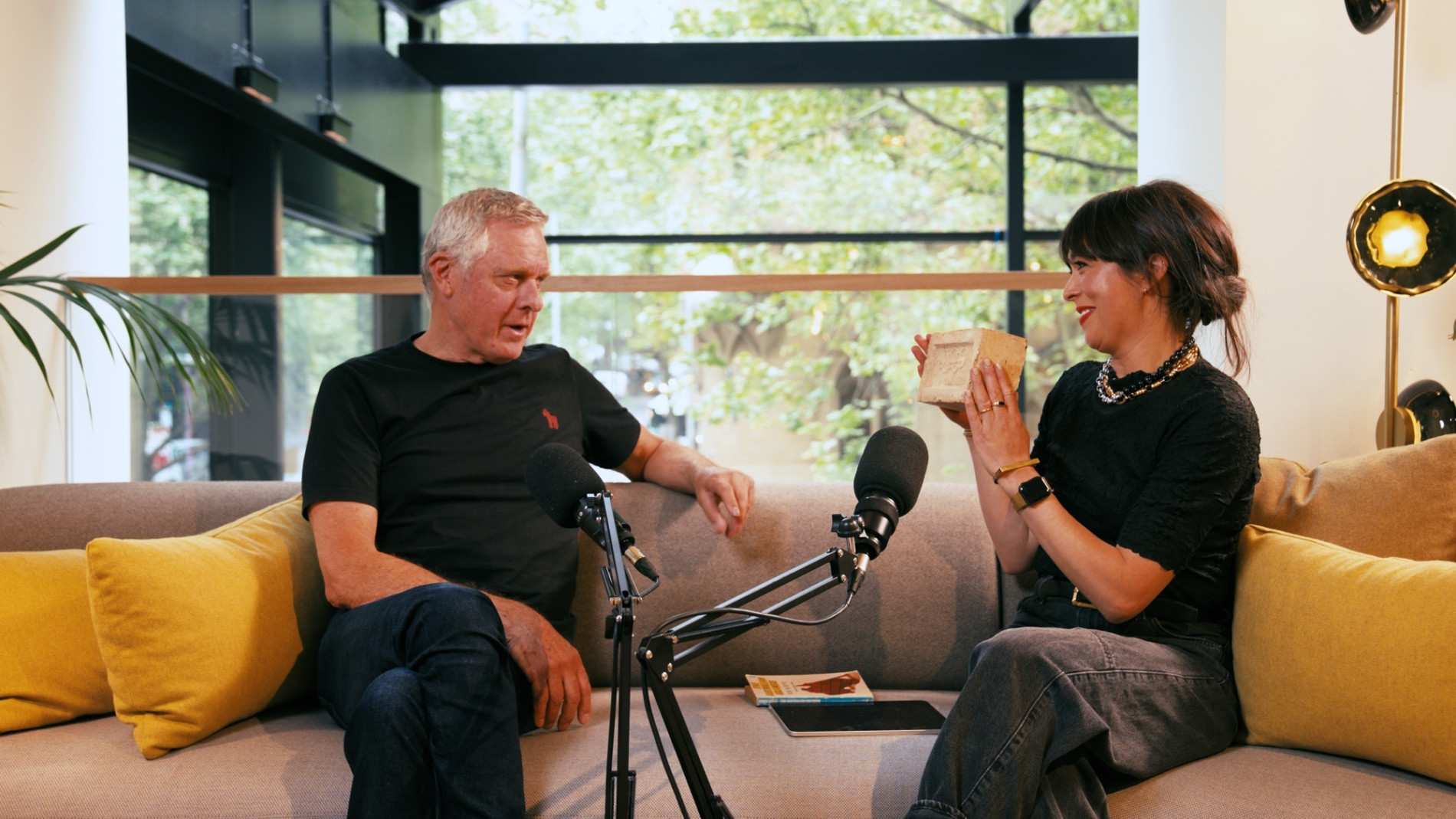
What Grand Designs taught Peter Maddison about architecture
Rosie Morley, our Australian host, talks to the founding director of Maddison Architects, who fronted 108 episodes of Grand Designs Australia.
What Grand Designs taught Peter Maddison about architecture
Rosie Morley, our Australian host, talks to the founding director of Maddison Architects, who fronted 108 episodes of Grand Designs Australia.
Melbourne|October 2026|46 minutes
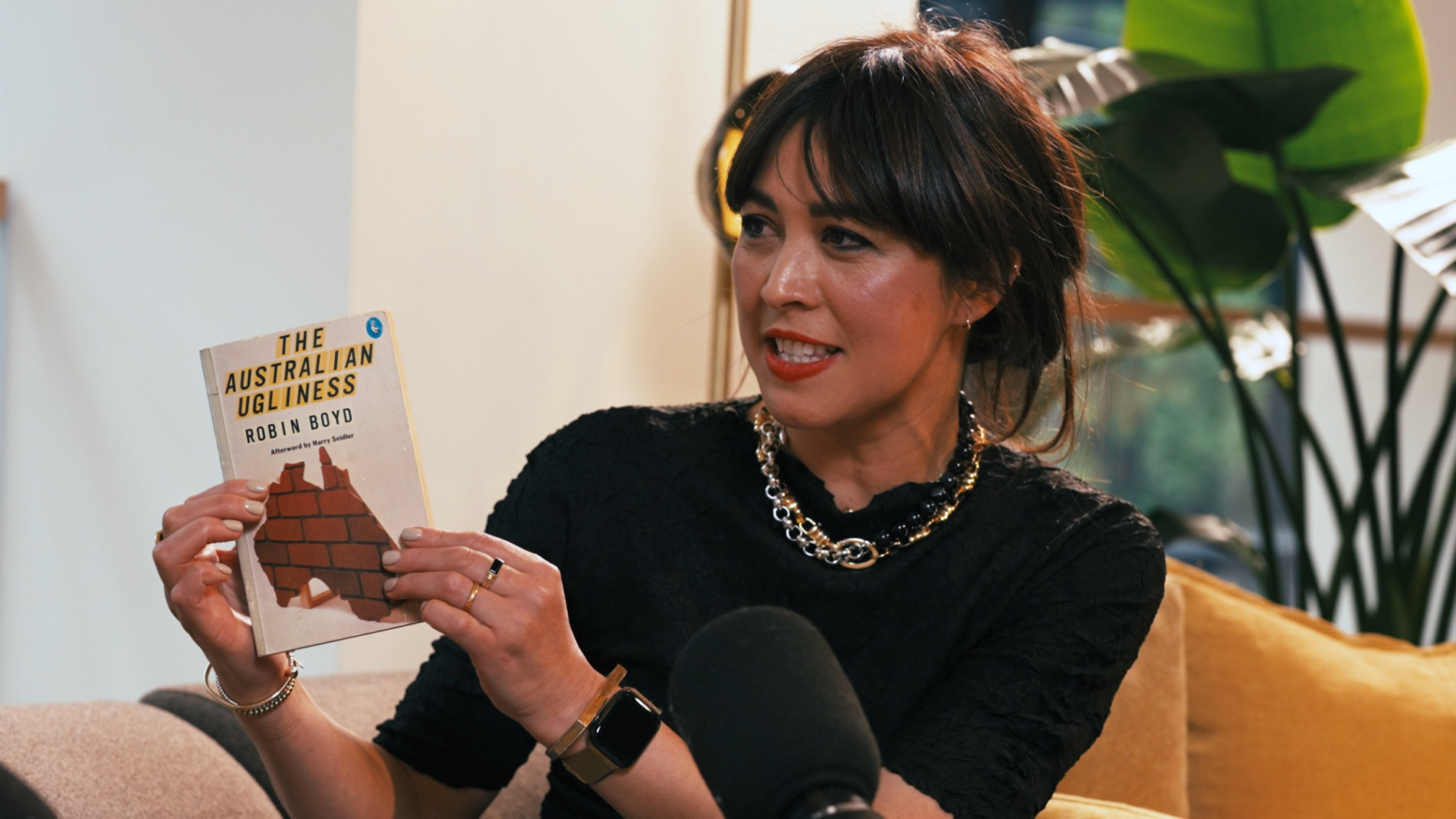
Robin Boyd’s The Australian Ugliness argued that architecture was confused and immature, and that the fix was to educate people about the importance of the principles of architecture. Fifty years on, millions of Australians listen to you. It’s the architect’s job as much as anything to communicate the value of what they do, and you’ve spent an entire career doing exactly that, on a national level.
And international. The show goes overseas. Don’t sell me short, Rosie.
So I want to know how you’ve done that.
So important, isn’t it? Robin did it so well, and was able to practise, as I’ve tried to do. There’s an appetite to learn more about architecture and design, so it’s not a hard sell. Robin was a freak in terms of his output. He had a very important story to tell, and his era was one where design aspiration was changing. Post-war optimism in the population. Australia was a wild frontier. There’s lots of opportunity here. He saw, coming out of architecture school, the opportunity to move away from the cookie-cutter imported styles, Georgian, Victorian, Federation, Edwardian, and he saw that as ugly because it was not original. He had a particular skill, as you mentioned, to be very persuasive with his storytelling, but also the architecture he produced. It changed a generation and still does. Robin is still revered around Australia. Died prematurely at the age of 52, in the US of A, so who knows what his career would have produced.
My career is still really based in modernism, which he was the major protagonist of. It’s changed a little bit, but I think architecture, and the ability to storytell, which he did so well, still has a relevant place and an interest here in Australia. People, even though they may not be educated in design, still have a passion for it. So it hasn’t been difficult for me to be able to do, in a small way, what Robin’s done.
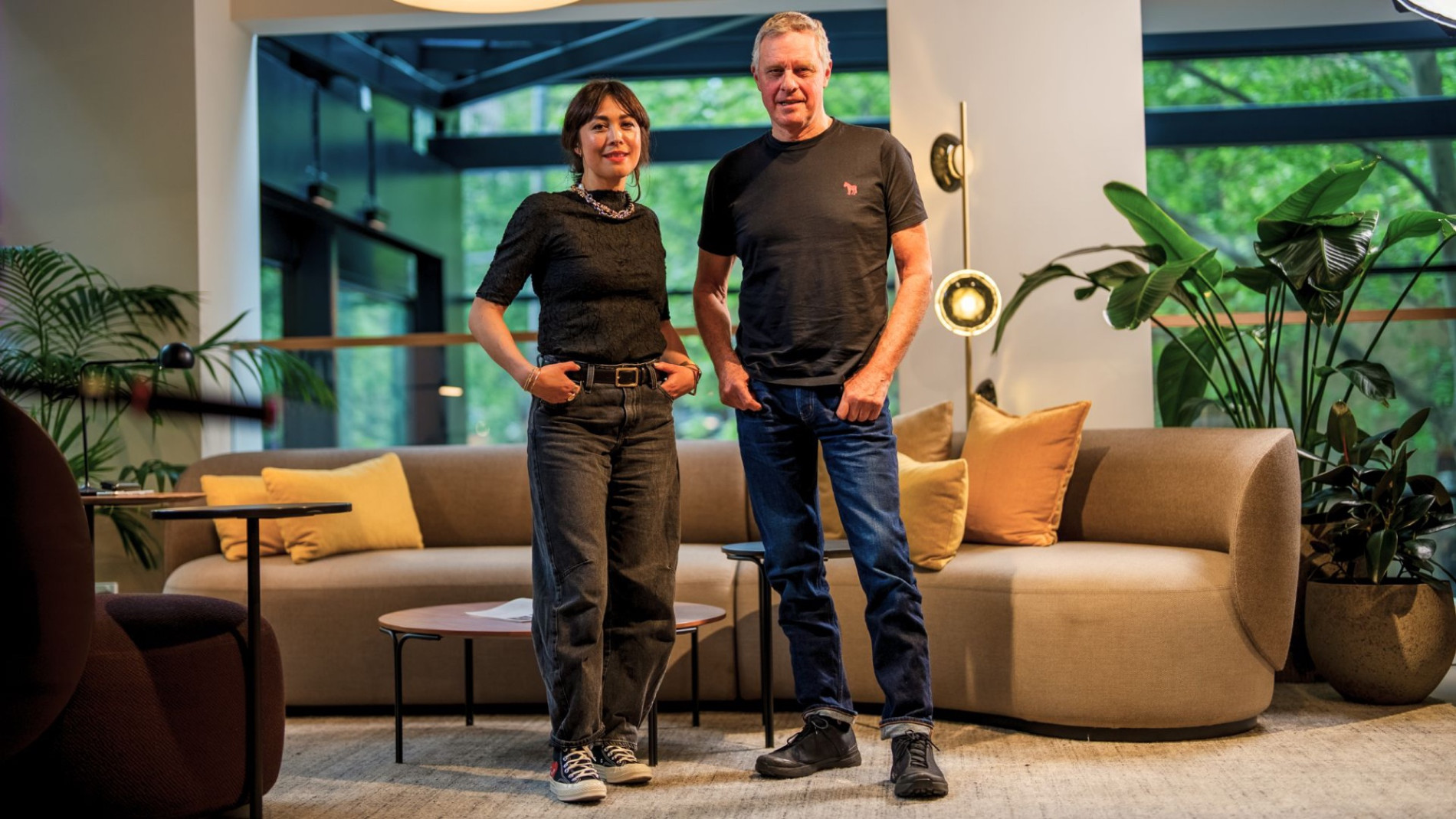
Speaking of storytelling. Tell me about this.
Well, it’s a brick. It’s a press brick. It’s an inert lump of clay. And if you look at it objectively rather than subjectively, it’s designed to hold in the hand and lay. So it’s something that you can lift and locate. It’s made out of clay and it has certain attributes. It has what’s called arrises. It has perpends, which are the vertical joints, and bed courses at the bottom. It’s 76 by 230 by 110. You get to know this as an architect because it’s what many architects use as a measuring device, and you make buildings out of it. So what, it’s a brick.
Although it has all this objective information about it, it can also carry secret messages which transform it from being an objective thing to a subjective thing. If you turn this particular brick around, you’ll see that in the frog, which is the impressed part of the brick where the mortar goes into and holds it in place, this frog’s been impressed with the Olympic rings, and it says Glen Iris Bricks, 1956. So suddenly this brick goes from a lump of clay to something quite different. You and I have an empathy with the Olympics. It was here in Melbourne in 1956. And so this goes from something you walk past and not pick up, to something you treasure because of the memory and the connection we have. It’s interesting how materials can transform, as can buildings, through knowledge and place and time and events that occur in our lives. It’s an analogy between a building and a human being. As this brick tells the story, so does a building.
I don’t know that the brick maker ever thought that Peter Maddison would pick this up and bring it to a podcast.
I think it was celebrating the event at the time. Melbourne had euphoria around the Olympic Games in 1956. There would have been a lot of branding at the time. This brick was hidden in a building we demolished, a project I undertook 15 or 20 years ago. When I saw them on site, I couldn’t believe how lucky I was. I collected maybe 20 or 30 of the damn things. They’re still rattling around at home.
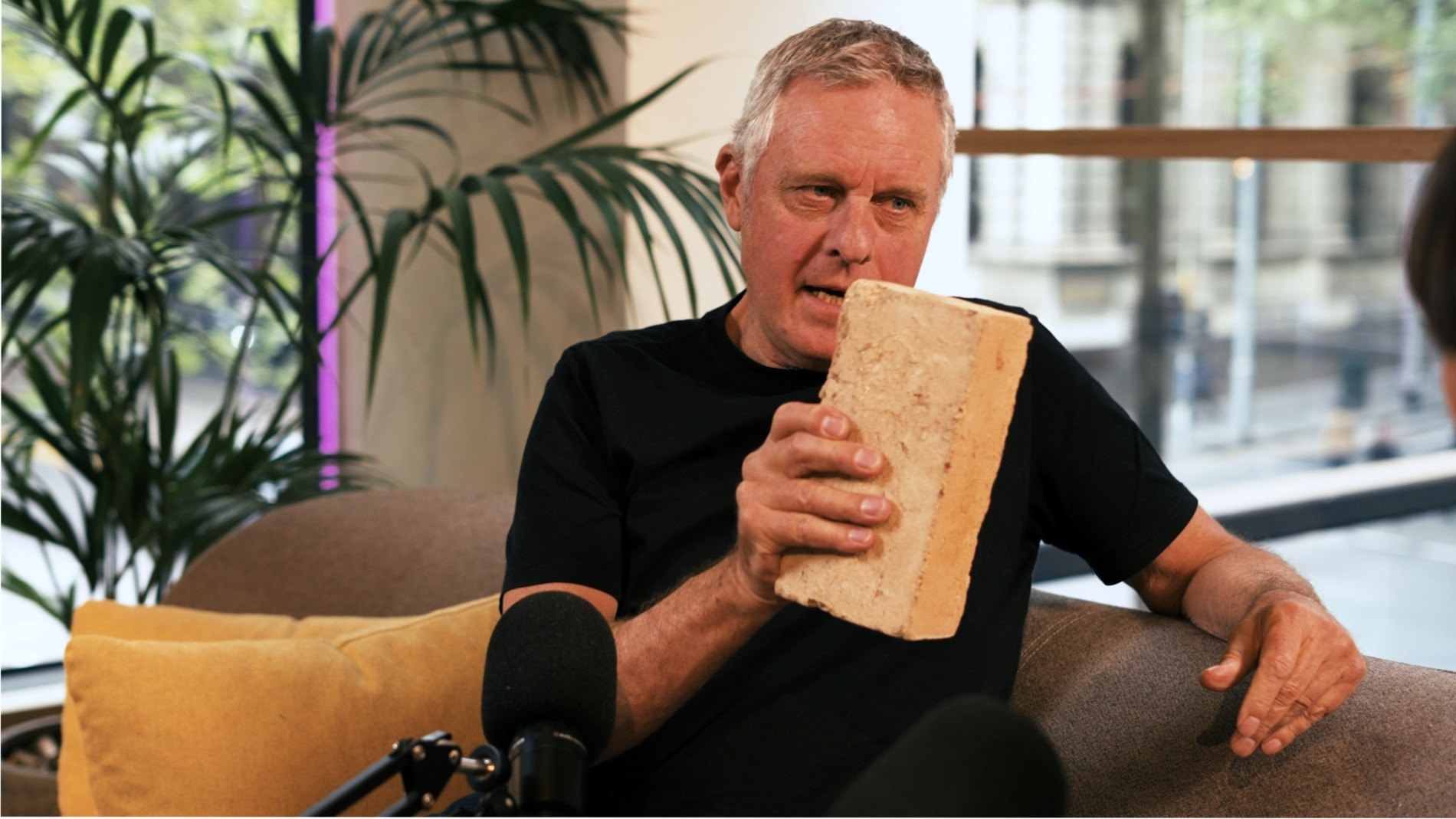
Why architecture? I know that you came to it unconventionally, but what is it about the practice and the profession that you love?
It’s magic. It’s a magic profession. It’s got wonderful standing within the community, you’re respected, and it’s something that’s a lifelong quest that never is quite fulfilled. So there’s a longevity to the idea around architecture. Why me? Not quite sure why, but I think in the end it suited my personality and my aspirations in life.
How would you characterise Australian architecture? What makes it unique from other countries? Does Boyd’s description of the Australian ugliness still hold true 50 years on?
I think architects today still work in a modernist way, although I’d like to call it mannered modernism. Double M. We still live in the mid-century spirit, 1950s to 1970s, and that kind of joy and expression. But today there’s a whole lot of other things. Indigenous respect, material change, technology, a greater knowledge of how to put buildings together, and experimentation. So I think Australia is still finding its feet in terms of its own identity. However, Australia is unique, and Melbourne particularly, because we have a high level of immigration, which gives us cultural diversity. We’re rebellious, basically. We’re a convict class. The ability to cast away what’s been done and make your own journey, and rebel a little bit about convention, that all leads to experimentation.
Also we have a great multi-faceted design culture here. Graphics, interior design, furniture design, like this show we’re sitting in, sculpture, art, architecture, landscape architecture. That collaboration, and sense of being part of a cultural movement, an artistic movement, leads to experimental architecture. And I believe Melbourne is probably, well, it is. It’s the most experimental and the most adventurous architectural capital in Australia.
Do you think the weather has anything to do with that?
Yes. Long winters make us get inside. We stay inside over winter, and so that means we draw more, we read more, we immerse ourselves in culture. We love partying also. So I think all those things have a part to play.
You’ve built a career as a practising architect, but also as a public broadcaster. How do those two versions of yourself talk to each other? Does one make you better at the other?
Very difficult. I took on the hosting role of Grand Designs unsolicited. I was approached, tapped on the shoulder, and I said go away. They kept coming back to me, oddly. So I’ve had to manage those two personalities. It was very challenging in the early days, sitting in front of a camera. It’s nerve-wracking when you first start. Over time you get used to it. What was difficult was trying to run a practice and invest the time into making stories around architecture. I was working 150 days a year, 12-hour days, just on the show, and what was left was used to run my practice. So it was very challenging, and I have to say it took a toll on my family, working so hard. But what a wonderful opportunity at the same time.
Architecture today, people want to hear from architects, and you’ve got to be able to sell a design idea and communicate. Communication is a big thing in architecture. The skills are kind of parallel in some ways. You don’t have to do any drawing as a host, but you’ve got to be able to draw stories out of people, and keep the communication simple. Architecture is a very difficult profession. A lot more difficult than being a host on television, I can tell you. If I had my life again, and I had the same opportunities, I probably would have given up architecture a long time ago and pursued a career in hosting. Because it’s a lot easier.
I’ve heard you say that one of the best days of your life is when you got into architecture. Can you take us back to that day?
I cherish that opportunity that was given to me. First time round, final year of school, I failed terribly. Only passed one subject, in HSC as it was called back then. Was on unemployment benefits for quite a while, and then I got a job as a clerk in a real estate agency. Lasted three years doing that, but I kept falling asleep mid-afternoon. It was so boring. So I thought, there has to be something else. I enrolled in what I thought would be a drafting course, that morphed into applying for architecture, and then I had to go back and repeat my VCE. Then, with fire in my belly, I did very well, and met some wonderful mentor tutors that helped me get into architecture. Getting into architecture, having done that journey, was extraordinary. If there was a moon, I would have jumped over it. It suddenly went from despair, not knowing what to do, to being accepted into a course which I thought I was not capable of. A frontier opened up for me.
There’s a story I’ve only heard in whispers. Around the age of 23 you drove around Europe in a teeny tiny car.
I was working part-time for an architect called Peter Crone when I studied. Wonderful guy. He had a great fascination around Le Corbusier, the Swiss-French architect. I got very interested in this character. So I took three months off, jumped in a small car, and slept in the car and ate out of the car for three months, and looked at all the buildings I could that Le Corbusier had designed. That’s the story.
You’d finished the course?
No, I hadn’t finished the course. I think it was Christmas holidays. I just went to Europe, hired a car, and that was my home for three months.
You’ve collected a series of experiences that have enriched this process of becoming an architect. You go to architecture school, you’ve ticked that box, but then there’s all these other moments in life.
It’s very much around the people who you meet, and I was very lucky to bump into the characters that really inspired me and supported my journey. You can be lucky or unlucky in that. I had wonderful tutors, lecturers at RMIT. Then my first employers were terrific also. I was very fortunate to have those experiences that gave me faith and drive.
In the 80s you went out and started your own practice. That’s a pretty brave thing to do early out of university. And your first house was your mother’s house.
Oh yes. That’s embarrassing. First year of architecture, it might have been second year. My mum said, you design a home. Never designed a house before. What I’d done was a bit embarrassing, actually, because I hadn’t designed a house. The orientation was correct, but I look back on it now and wish she had asked me a few years later.
She was willing to be the guinea pig for you.
She loved it. Of course, because I designed it. But it wasn’t great. She’s passed away and the house is gone.
But that was fundamental to your learning.
Anything you build, you learn a lot. If you’ve drawn it and you oversee the construction of it, you learn greatly from that. I learned never to do a building like that again. I made a classic error, in that I made the bathroom and the toilet very close to the front door. It wasn’t great acoustically, I have to say.
Those first few years on camera. You do all these years of training to become an architect, but then to turn up and expect to do the job without any formal training. How do you resolve that?
I had moisture coming out of all my orifices, I have to say.
I’m getting a real nasty vision.
Although it might not have shown on camera, I was very nervous. When I look back at myself after filming, I go, you look convincing, man. But it wasn’t that way at all, I can tell you. The skill you don’t train for is being on camera. I think the most convincing pieces to camera I did were where I ignored the camera, basically. The best performers are themselves. Don’t try and be anyone else. I was a bit surprised they selected me to do it, because I wasn’t looking for the job at all. I told them to go away at the start and they kept hounding me. I did a few screen tests and I thought, I’ve stuffed those up, they’re not going to come back to me again. And then suddenly I’m selected, after negotiating a contract, and signed up ready to go. So I arrive and there’s these cameras in front of me. Of course you do a number of takes, because you have to. But it was very difficult. Generally, talking to people is okay, but it was the opening and closing pieces to camera which I found tough. They had to be totally memorised, word perfect, under great pressure, because you’d have a number of crews around you, maybe half a dozen, a dozen people, all the gear, sun’s going down, you’ve got 15 minutes to nail this. You have to walk out confidently, hit your marks, get it out, and then the sun goes down and everyone’s happy. If you don’t do that, it’s a bit embarrassing. So that was the hardest thing.
Kevin McCloud is an icon in his own right, and you are our version of him. Meeting him, what was that like for you?
I was a little bit intimidated to start off with, but then as I got to know him, I realised he had flat feet, a little pot belly, he’s going bald. I don’t think the teeth that he has are his. They’re not English teeth. And he’s just another human being. He has a wonderful way with people. He’s not an architect, but educated in art and design, and a great education background, which helps him. But he’s just another guy really, and he does a terrific job.
The show, even though it is about architecture, almost isn’t about architecture. Was there a moment where you felt that?
Very early on, some of the early episodes, I said, hang on, where’s the architect? Why haven’t we consulted more on the history of the design that we’re looking at? Very quickly I was advised by the producers that architecture is part of it. Building is part of it, and the process is part of it. It’s more around the human story, and that’s the link, the key, the hook that gets people in. We all want to know about the human story. Following that human story, you relate to that, and that’s what gets people back and back and back. Sometimes we went to the architects’ offices, tried to engage with them. Not all architects can talk on camera. It’s really not about the architect. In some ways it is, but it’s more about the homeowners and their journey.
Were there any episodes that really resonated with you?
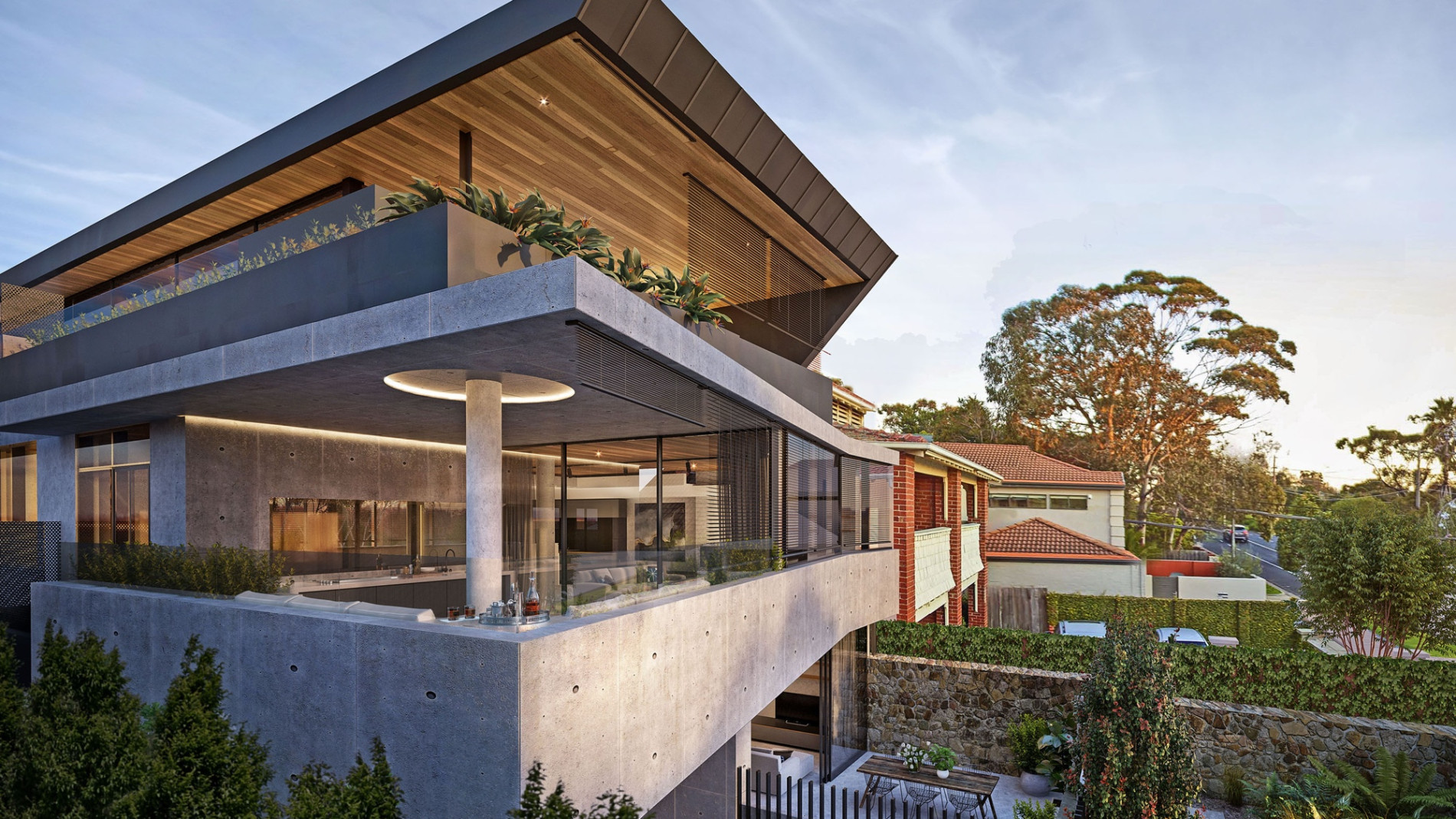
I’d say half a dozen over the 108. One particular episode was at Mystery Bay, which is near Tilba Tilba, mid-coast New South Wales. Father and son team. Father Rob, an architect, son Jack, a young architect, collaborating on a site which had great cultural heritage. A wonderful family story around doing architecture together, and a great outcome. That one really stuck by me. Had all the ingredients.
108 episodes, 12 series, 12 years. What do you think that level of commitment cost your practice?
I collaborated with my staff before I took on the gig, and we all decided this is going to be great for Maddison Architects. Do you know how many jobs the office secured through doing that show?
Don’t know.
Nothing. So there’s no rub-off or benefit for my practice. In fact, it would have been financially better for me to give up my practice. It cost my practice quite a lot, taking on the show.
So there was an immense amount of trust in your team. You couldn’t be there with them.
I had to give my team more responsibility, and therefore greater salary, to keep the show going when I wasn’t there. So I probably would have been better to give up my practice. Financially, for sure. But I’m an architect, and you can’t give up your skill and your identity. That’s always been key to my identity. You can’t stop practising and still really pretend you’re an architect.
If you were giving so much to the show, and people were drawing down on your knowledge and your articulation of architecture, was there something in return? Did that production teach you something about architecture?
Doing Grand Designs opened up a lot of doors for me and my family and my wife. We went to incredible places. We’ve met amazing people. Been given great accolade. I wouldn’t be sitting here talking to the lovely Rosie unless I had done that gig. And they paid me. But I’d have to say it’s been a great honour to be able to do that.
What has it been like since you’ve stopped filming the show?
It’s a little bit like you’ve broken up with a partner, because you give so much to these things and it stops pretty dramatically. It just stops. Suddenly you’re not out on the road doing this every week, being given great access to people’s stories and homes and private life, and it just stopped. It’s been accepting it had to happen at some stage. I never thought I’d be doing it for 10 years when I started. I thought two or three years would be maximum. I thought if I ran the gauntlet into 10 years, that would be a great outcome, and that happened. So I’m very happy in that regard. But it wasn’t easy giving up. Life moves on and you have to go with it.
It’s fascinating that it was unsolicited.
When I knocked them back at the start, after I’d done the screen test, they started to do more screen tests for different architects. I thought, this is one [a certain rival] is not going to get. I’m going to deny him. He’s not going to get this.
That’s what motivated you to do it. I love it. The production sounds like it was pretty lean and mean. It was you and a small crew.
The filming would be only maybe four or five people, as a hit team to go in, get the information, do the filming. Got to know them all very well. The cameraman, the sound recordist, the producer, director. It was like a family. Still very good friends with them all, but don’t see them on a weekly basis.
Have you got any anecdotes or behind the scenes stories?
Heaps of them. One of them, maybe five or six years ago. They were having trouble selling the underground railway, the North West link. They’re spending billions on it. We need to get someone up here to Sydney to sell the story. What about that guy, Peter Maddison? So up we go. They closed all the public access to the Harbour Bridge, sent film crews up, and I was able to do pieces to camera from the top of the Harbour Bridge by myself. They didn’t stop the traffic going back and forth, but they stopped any other tours while I did this thing. Then I went into a tunnel that was under construction. They put off about 15,000 workers while I walked through this tunnel, and it cost them 60 grand for the hour, while I walked through and did a piece to camera. Given great responsibility, and the opportunity to go to these places and do these things. I look back and go, that was pretty amazing.
It is amazing. Who gets to do that?
We are very interested in why Australians don’t necessarily use architects. Only 5% or so of projects engage with an architect. What do you think about that?
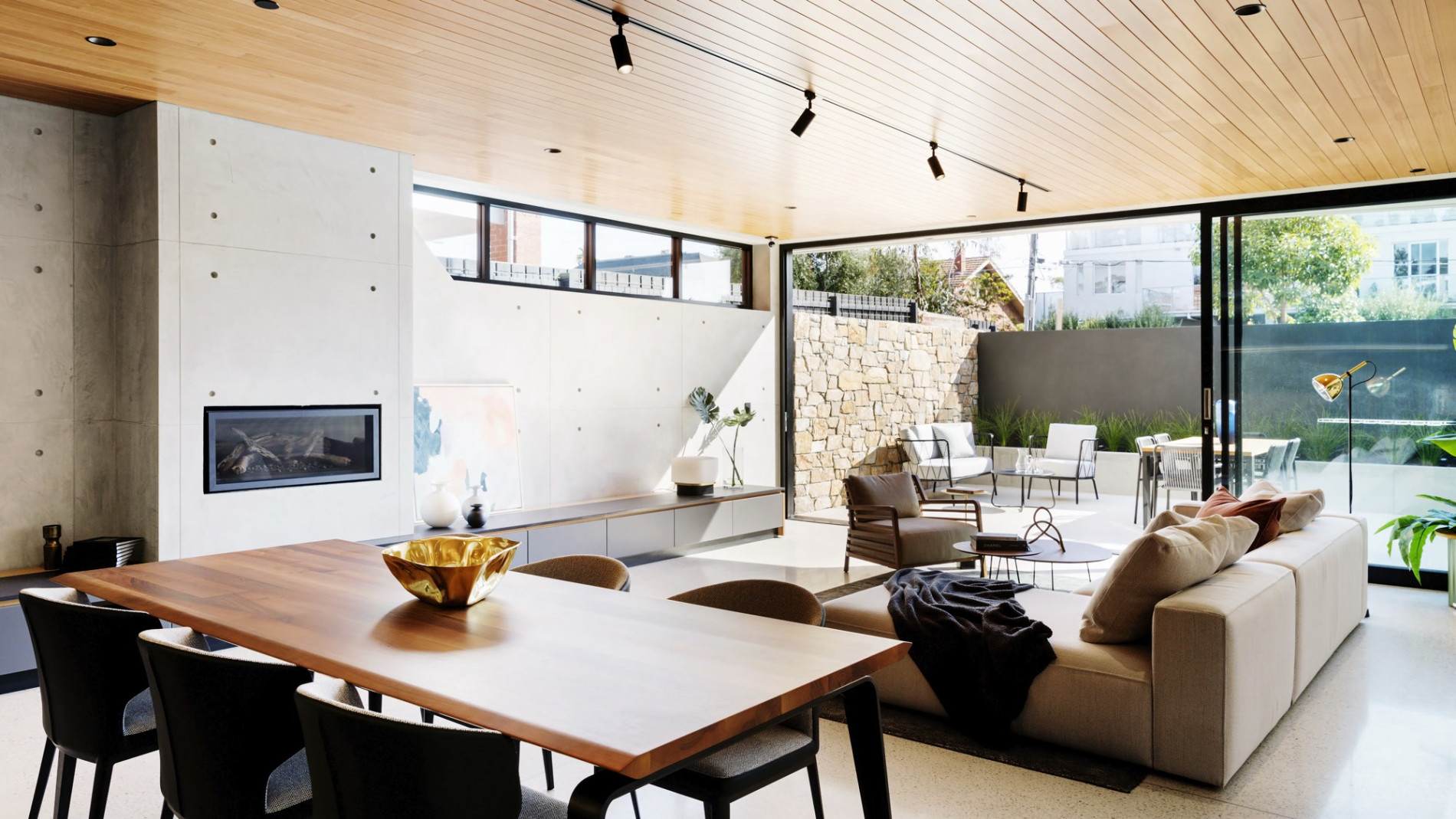
Part of my life has been trying to promote the use of architecture and design, because it’s so important. There’s a part of the Australian psyche which rebels against paying more than they need to, and it goes back to the convict era, I think, and the Irish suppression by the English. There’s a natural push-back Australians have, particularly if they don’t have any history or education around the importance of design. They’ll look at a showroom like this and go, waste of money. Other people go in, like I do, and look underneath the chair to see how it’s constructed. I think it’s changing. Slightly changing. And there’s also the cost. It’s an added cost. My argument’s always been, don’t build a 400 square metre home, build a 300 square metre home. You’re going to save a third of your budget and pay the architect a measly 10% to do it for you. Forget about the media room and the gym and the underground garage. Reduce your aspiration and do it properly. Australians still have the idea that they have to build bigger than their parents did. There’s a reality, as we know today, that’s not occurring. But there’s still this aspiration. It’s a ship we’re gradually turning around. I think. I hope.
It’s almost perceived as a luxury to have an architect on a project, given the cost of living. Design fees, the way you wrote a fee 20 years ago, how different is it really to now?
It’s a thorny question, isn’t it? What we’re talking about today on the podcast, and what I’ve done over my career, is try and get out there and show we’re human. We offer something that’s really good. It’s going to change your life. You’re going to have a much better experience in life, and a building that works for you, rather than one that’s facing the wrong way, it’s cold, it’s draughty, and has no value at the end of the day. So you’ve got to keep on telling your story.
When you think about the cross-section of homes and people that you met, how many had an architect driving the process? Were there people out there just instinctively building with their construction team?
What’s fantastic about Australians, as opposed to other nationalities, is we’re happy to have a go. A lot of Australians just want to get their hands dirty, get in and do it, and create their idea of what it’ll be. That’s terrific. Some of them are disasters, and others are really quirky, and some work really well. That having-a-go spirit is unique to Australians. Why don’t they want to use architects? There’s a sense of the control being taken off them, and perhaps something will be produced that they won’t like, and there’ll be conflict. There is the cost, which is small in the scheme of things. A builder’s going to charge you 20% on a construction. An architect charges 10% of the construction cost. It’s good investment. I think Melbourne’s design community is strong, and we’ve got a lot of exemplar work out there. My observation is that developers are now leaning into what architects are doing, to influence even the cookie-cutter houses.
If communication is absolutely fundamental, and back in my day it was a pin-up culture, do you think there’s a missing piece in an architecture degree? That it doesn’t focus enough on being able to get up on your feet and tell a story?
Totally. Being able to get up on your feet and tell a story is hugely important. You’ve got to do it in front of clients constantly, and to builders. Communication is a big part of being an architect. Architecture is a very complex thing. Maths, science, creativity, a business head, being able to communicate. All key attributes. When I was at RMIT, I took almost a year off to produce and direct an architecture revue, and almost failed that year doing that. At the end of the day I had to produce a document to hand in, but that experience of producing and directing an architecture revue has held firm with me through my career. It’s enabled me to realise the importance of corralling people, and hanging on to the fun and the creativity whilst running this proposition. The ability to be a little bit extrovert and communicate is hugely important.
What advice would you give to younger people who are really nervous, who’ve got to go in and present a design?
Totally be yourself. Don’t worry about what you say. Just let it all come out, and people love you for it.
You can be a Greg Burgess, totally introverted, and still have a great practice.
Because he’s a kooky guy and people just love him. A lot of architects don’t communicate that well, and are grumpy. Peter McIntyre is a great performer, but a difficult character. The public love characters too. The clients just love characters.
Tell us about a time you failed, and what you learned.
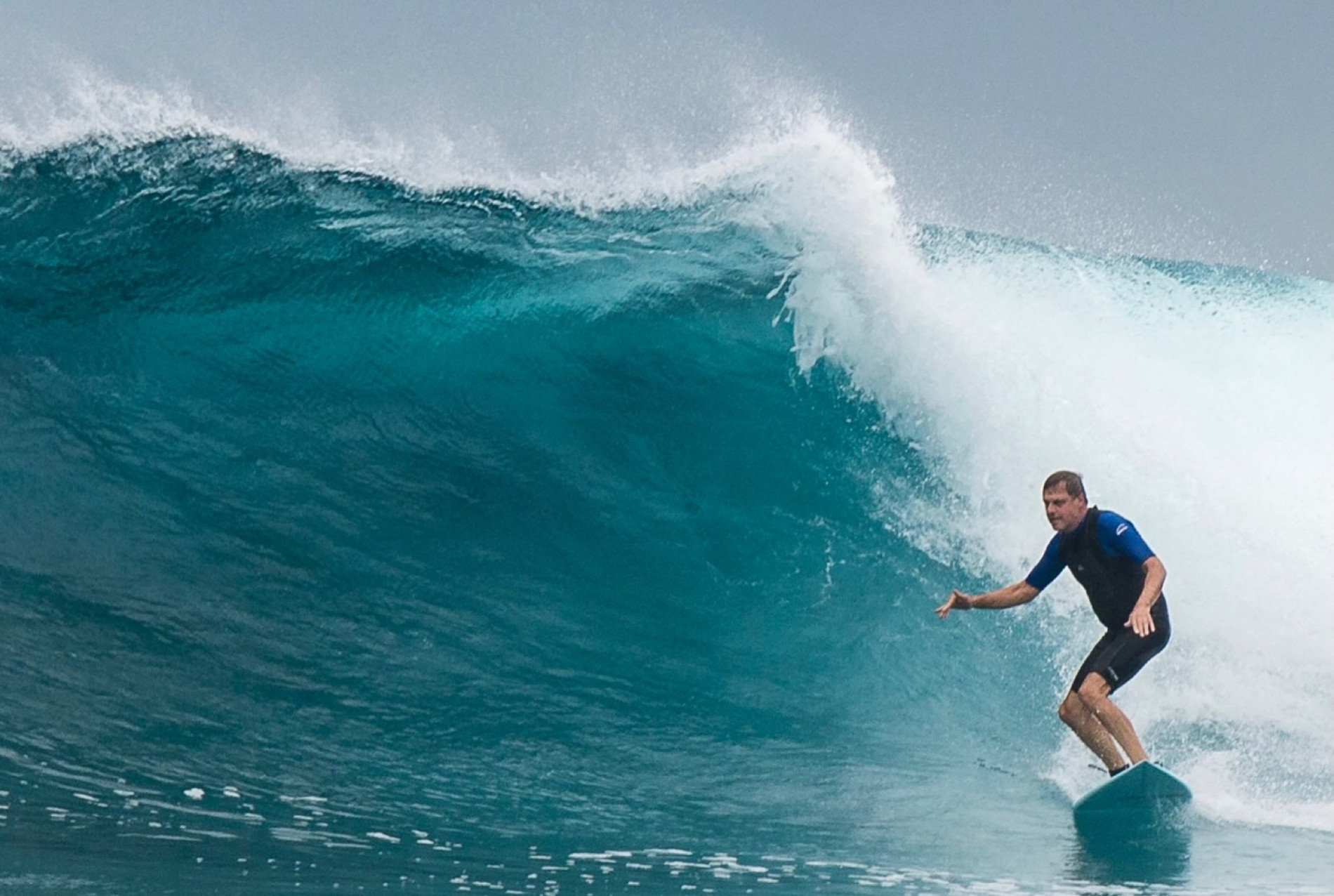
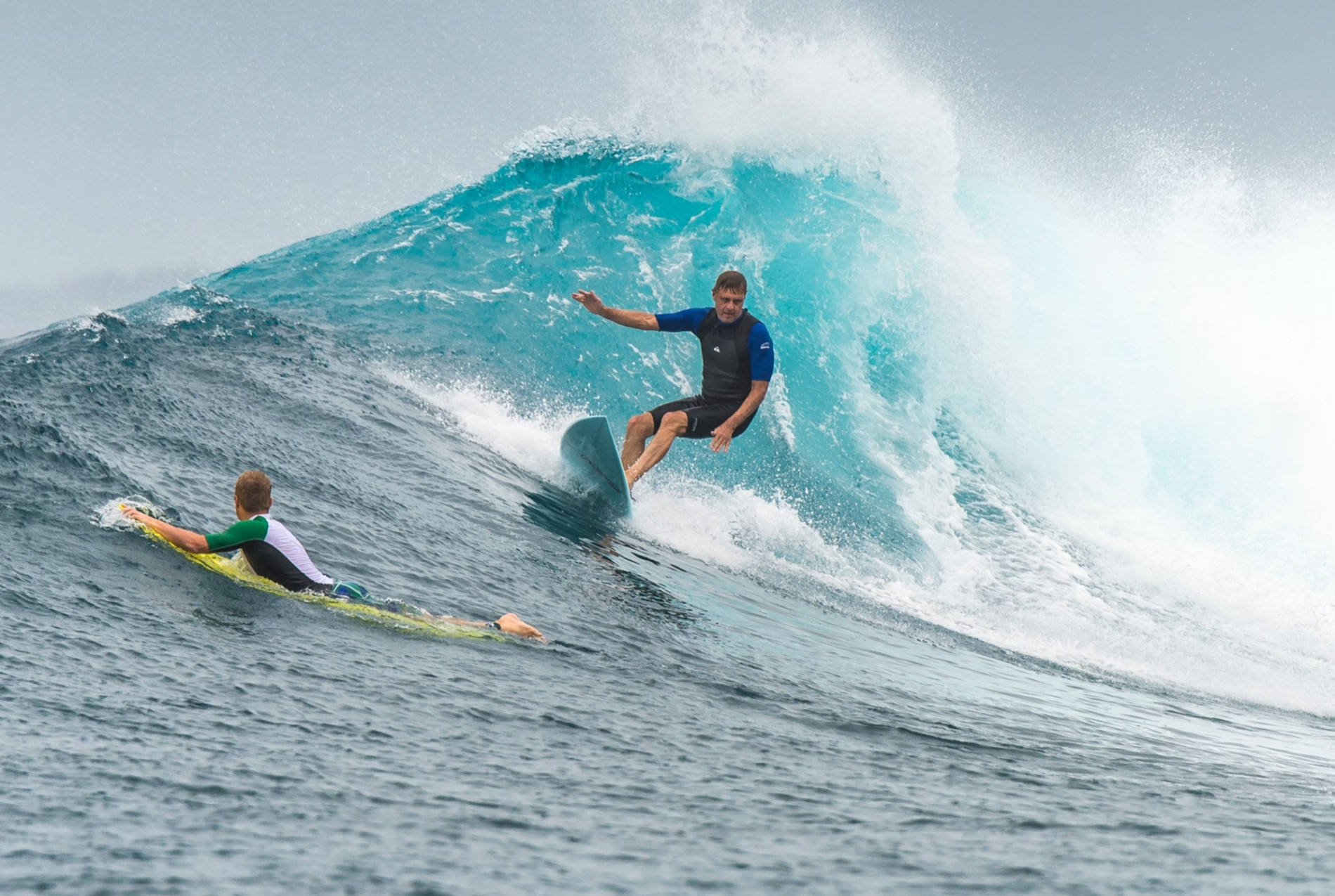
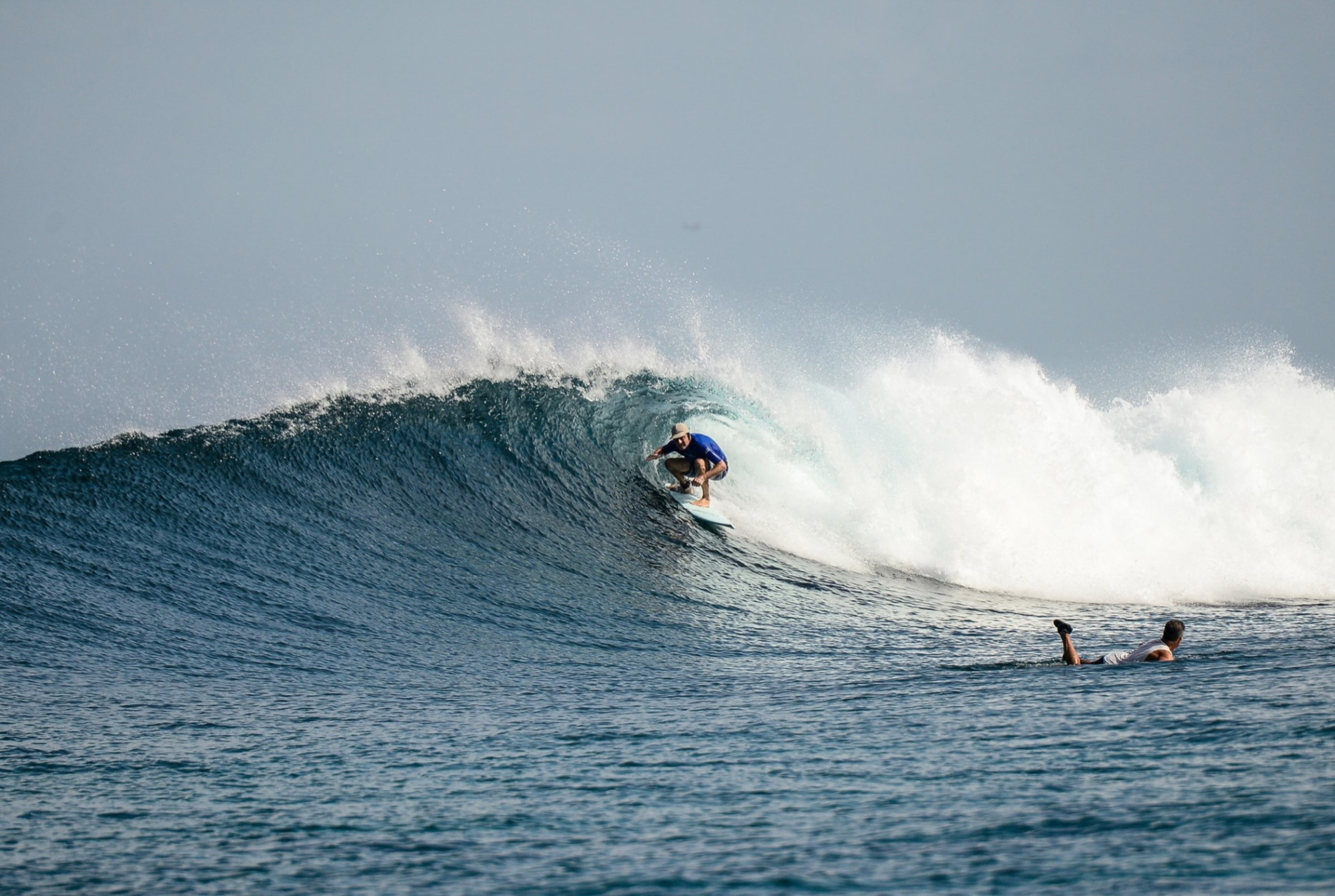
When I first started surfing, I was surfing at Port Phillip Bay and couldn’t stand up. My father took me down to Point Leo when I was 14 years of age, and I got into real swell, and it changed my life. I realised the beauty of the ocean, and what waves can do to take you out of your place. The sheer experience of that changed my life.
What’s something you’re still trying to get better at?
It’s hard when you’re good at everything.
Come on. There’s got to be one thing.
I swim four mornings a week in Port Phillip Bay. I’m an ice-berger, and I’m still trying to improve my performance in the water. My friends call me Mr Average, and I’m trying to shake off that moniker.
And what were you saying before, that you were trying to learn to say no?
Yes, I’m trying to say no. I’m trying to slow down my architectural career, and I’m not going that well currently, because I’m sitting here with you. But I’m trying to say no to things.
What’s the biggest misconception about architects?
That they’re wealthy.
Best tip for hiring great talent.
Look at their interpersonal skills as well as their qualifications.
Who has had the biggest impact on your career?
I’ve been fortunate. I’ve had a lot. Lecturers, employers. But I have to say, a woman. A nurse, who’s now no longer with us. She had four children, and she’s a mothercraft nurse, and had a great influence over my life, as she did over her four children, over two marriages. Her father was an MBE because of his contribution to local community. And it happens to be my mother, Lorna Margaret Galbraith. She’s had the biggest influence in my life.
That’s so beautiful. We’ve come full circle, talking about the house you designed for her.
She loved the house. I thought it was a box.
One piece of advice for an architecture student starting out now.
Be patient. It’s a fantastic profession, but it’s a long journey. Don’t be disillusioned by knockbacks, as I was. And enjoy the journey.
And finally, what makes a great architect?
A great architect has an inquisitive mind about all things, not just the built environment. A great architect has the ability to express themselves beyond their own body. A great architect has patience, and has the inquisitive nature to want to pursue things that others wouldn’t.
Beautifully said. Thank you, Dr Maddison.
Hang on. One more. I wish I was asked more about the essence of who I am. It’s more than just an image on television. Human nature, and not the physical presence that we have, is really important. I think getting to the bottom of understanding people is really important. So I wish I was asked more around that kind of idea.
I felt we almost got there before. One of my questions was going to be, if not architecture, then what?
I think I’m a natural fit to be a real estate agent, and I reckon I missed the bus.
You would have made more money.
Absolutely. No doubt.
What about your new role as a grandfather?
That’s fantastic. I have two beautiful grandchildren, and it’s a whole new frontier for me. You get a second chance, which is what I like.
So that’s what’s next. Being an awesome granddad.
Trying to get that gig together.
You’ve got to do your mum proud, then.
She would love me being a grandfather.
Thanks for bringing all your props, Peter.
Oh, I have this one.
Another one. It’s real show and tell, isn’t it? So what’s this? Laminated ply? And anything else? A cube. All very objective.
Where’s the timber from, and what’s it mean? This is timber that’s hydrowood. It’s been taken out of the bottom of Lake Pieman in Tasmania with an underwater chainsaw, brought to the surface, and it’s hundreds of years old. It’s called Hydrowood, and there’s celery top and Huon, blackwood. They’ve been laminated together by this company that’s harvesting trees that are hundreds of years of age. And no trees have been cut down. So it goes from a lump of wood to something with great meaning. As part of Grand Designs we went down and filmed it, sitting on a boat, chopping trees out of the water. Lake Pieman was flooded in 1972. It’s a hydro dam, and the wood that comes out of it, gold. I thought you’d be interested.
I am interested in that. That would be a great toy for one of your grandkids.
Otis plays with it.
Isn’t that beautiful. That’s the end of show and tell.
Peter Maddison is founding director of Maddison Architects and hosted Grand Designs Australia for 108 episodes.
Rosie Morley is the Australian host of The Bespoke Careers Podcast, based in Melbourne.
Photography: Bespoke Careers. Surfing photographs supplied for the episode. Project photography courtesy of Maddison Architects; Linacre Park by Rebecca Newman. This conversation has been lightly edited for length and clarity.
Search for architecture and design jobs here
Latest architecture and design jobs around the world

Looking to hire top talent
 or advance your career? Let's talk.

We connect exceptional firms with talented professionals.
Let’s discuss how we can help you achieve your goals. Get in touch with the team today.
Related Posts

Sarah Gibson & Nicholas Karlovasitis leave uni, cram a fledgling furniture brand into a Newtown flat, and decide they are going to export Australian design to the world.
Why architects aren’t taken seriously, why fighting the ARB means fighting the government, sending Portland Place’s budget to the regions, and the adaptive reuse economy he says is coming.
Founder of Gustafson Porter + Bowman, Kathryn Gustafson reflects starting a studio in a second language, and learning the business side of practice through trial, mentors, and persistence.